Work-related travel makes a major contribution to LSHTM’s carbon footprint. At LSHTM, we are committed to achieving Net Zero carbon emissions. Reducing travel-related emissions by practising more thoughtful travel is a priority for our institution and community.
Tips for more thoughtful and less carbon-intensive travel
Air travel
- If you must fly, choose a direct flight non-stop flight. Take-off and landing account for 25% of a flight’s overall emissions, so booking direct flights can make a big difference.
- When flying from the UK via a hub such as Paris, Brussels or Amsterdam, take the Eurostar train instead of a short-haul flight.
- Combine trips to avoid having to make the same journey multiple times: opt for fewer, longer trips.
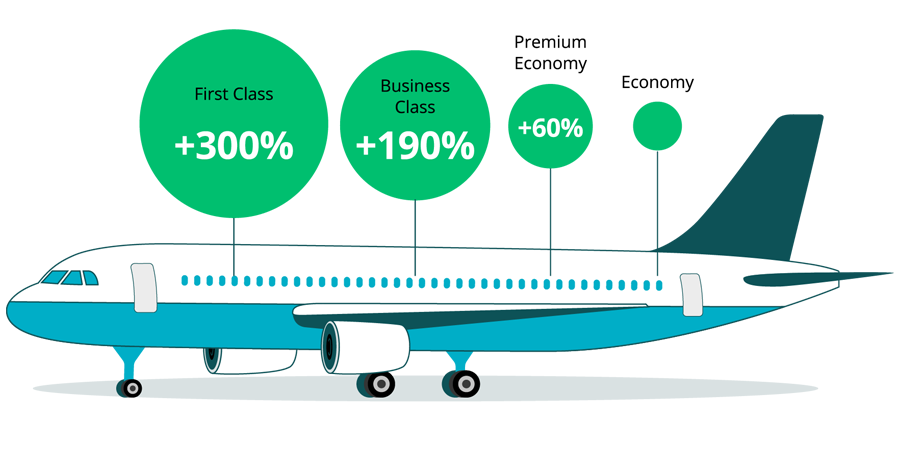
- The LSHTM travel policy mandates Economy Class flights only, unless it is necessary for medical or wellbeing reasons to book a Business Class seat. Business Class and First class seats use far more resources than an Economy. Business Class, for example, is 190% more emissions intensive than Economy Class.
Train travel
- When travelling within the UK and Europe travel by train, rather than plane, especially if destinations can be reached within 8 hours. You can find useful tips for planning your train journey on sites such as The man in Seat Sixty-One, and if you are planning travel within Europe consider an Interrail/ Eurail pass.
Thoughtful travel means...
- Making conscious decisions about the need for travel, how often we travel and how we choose to travel.
- Being clear about your objectives, which may be attainable without the need for travel. For example, you might use technology to connect or delegate work to colleagues or partners who are closer to the intended destination.
- Taking the time to discuss as a team about work objectives and travel needs when planning new pieces of work and having clear and transparent decision-making processes in place to ensure travel is undertaken in an equitable and effective manner.
Balancing work and the need for travel
All travel undertaken for work at LSHTM is governed by the LSHTM travel policy, which gives guidance for planning, booking and undertaking travel.
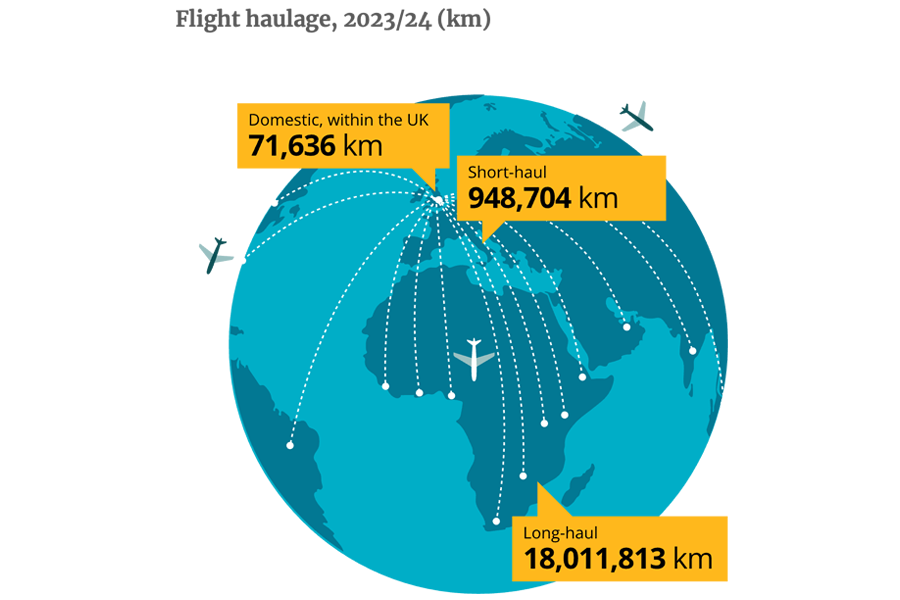
Given our international focus and the global nature of our work, travel often involves long-haul flights, which are the most carbon-intensive form of transportation. While such travel is often necessary, it presents a major challenge to our Net Zero ambitions.
The impact we are having
Efforts made over the past years have shown that it is possible to deliver on our work around the world while travelling less. Between 2019 and 2023 we reduced our travel emissions by 44%, a trend we must sustain going forward. Data from 2024/25 show an uptick in travel emissions, requiring renewed efforts to reduce our travel-related carbon footprint.
Find out more about our environmental sustainability ambitions in the Energy and Carbon Management Plan.
Thoughtful travel case study: The Plus Project
The Plus Project, a large-scale research initiative, involved academics from LSHTM working with partners globally to co-develop, pilot and evaluate models of Perennial Malaria Chemoprevention. The international nature of the project required a lot of air travel – a key contributor to human-induced climate change.
At the project’s outset, the team developed an innovative travel policy to support staff in planning and booking travel, ensuring air travel was only booked when essential.
The results, published in a new case study report, show that the travel policy led to a reduction in the project’s travel-related carbon emissions by 24% compared to the business-as-usual approach, equivalent of the annual energy consumption of 15 UK households.
The report not only outlines the methods used by the Plus Project but also provides lessons learned for any future research projects looking to lower their travel-related environmental impact.
Read the full case study report: Plus Project: Project level carbon tracking.