This internal grants scheme provides up to £1,000 for LSHTM staff and doctoral students in any Faculty or MRC Unit to plan and deliver public engagement projects about our research. In 2019, we introduced a Continued Development Grant of £3,000-£5,000 for a project which builds on previous engagement activities, learning and/or public engagement experience. Discover more about the projects of previous recipients below.
- 2021
Continued Development Grant
Healthy ageing in the Middle East and North Africa: engaging older people and their informal carers
Shereen Hussein, Department of Health Services Research and Policy, Faculty of Public Health and Policy
Population ageing is happening at an unprecedented pace globally, with most older people projected to live in Low and Middle-Income countries (LMICs), including the Middle East. The UN Decade of Healthy Ageing provides a unique opportunity to raise awareness of the need for older people (and those at the trajectories of old age) to adopt healthy behaviour and activities. However, ageing in general and healthy ageing receives little policy and public attention in the MENA region and other LMICs due to competing policy demands and priorities. Furthermore, the voices and perspectives of older people, and their families who provide most of the care and support they need, are seldom heard.
This project aims to engage directly with older people and their families in Cairo to identify cultural and gender-sensitive healthy ageing behaviour and interventions. We will hold two engagement events with diverse groups of older people and their careers and involve them in producing a mosaic video to be used for advocacy, policy and cross-learning activities in the future. We will also conduct a regional multi-stakeholder workshop to communicate findings with key stakeholders in the region.
Small Grants Scheme
Cancer and me – my story in pictures
Yuki Alencar, Bernard Rachet & Sara Benitez Majano, Department of Non-communicable Disease Epidemiology, Faculty of Epidemiology and Population Health
Project partners: Alero Dabor & Steph Lawler, Patient representatives
Joanna Furniss, Photographer
Libby Ellis, University of NottinghamWide differences between cancer patients from wealthier backgrounds and those less fortunate are persisting, despite successive national policy initiatives. Understanding the challenges faced by people from certain socio-economic backgrounds or ethnic groups is key to improving outcomes and tackling inequalities. However, the voice of those most affected by these disparities is seldom heard. Engaging with those that experience worse outcomes, listening to the real stories behind the data, will open opportunities for mutually beneficial conversations.
This project involves workshops and follow-up sessions with cancer patients and carers from under-represented populations, where a professional photographer will introduce the participants to the photovoice methodology giving everybody ‘the opportunity to represent themselves and tell their own story’. The participants will create a ‘photo-novella’ or visual representation of their cancer stories. With their permission, these will be exhibited along with their text or audio recordings in public places (libraries, community centres, web-based collection).
COVID-19 community ‘Bantaba’ on the prevention and participation in a treatment trial in the Gambia
Omar Ceesay, Disease Control and Elimination, MRC Unit The Gambia at LSHTM
The current outbreak of COVID-19 pandemic has caused unforeseen and extreme challenges to the global population. This has resulted in misconceptions about the virus leading to stigma and fear of the disease, which can affect our ability to conduct research. To address this, we will conduct a series of COVID-19 community ‘Bantaba’ open discussions to understand people’s perceptions and to address the misleading information being circulated on COVID-19. The Bantaba will reach village development members, head of the villages, adolescent, and female leaders within the community. This Bantaba will be a discission where every attendee will be given the opportunity to contribute their ideas. Key themes and messaging identified from engaging with the community will be used to create a script for a video, which will be shared with the wider community.
Rift Valley fever drones: a Zooniverse project
Kallista Chan, Isabel Byrne & Steph Key, Department of Disease Control, Faculty of Infectious and Tropical Diseases
Rift Valley fever (RVF) is a viral mosquito-borne zoonosis. Though it primarily affects animals, humans can also contract the disease, usually through contact with infected livestock. RVF outbreaks cause serious disruptions to economic and agricultural systems, as well as loss of animal and human lives. Using the citizen science platform ‘Zooniverse’, we plan to map the distribution of livestock and wild animals in aerial drone imagery taken from study sites across northern Kenya. Due to the volume of expected images, this would be an enormous task without the people power citizen science initiatives can provide. With the help of volunteers, we hope to characterise fine-scale landscape patterns influencing Rift Valley fever transmission in Kenya. Additionally, the project aims to build interest in infectious disease research through the creation of educational materials for schools in Kenya and UK, a dedicated social media campaign, and opportunities to create online dialogue between researchers and volunteers.
‘!Obi nha storia!’ (Listen to my story): The journey and experiences of frontline MDA teams in the remote communities of the Bijagós Archipelago, Guinea-Bissau
Claire Collin, Harry Hutchins, Anna Last (Department of Clinical Research) & Katie Greenland, (Department of Disease Control), Faculty of Infectious and Tropical Diseases
Project partner: Sra Eunice Teixeira e Silva Cassama, Director de Region Sanitaria Bolama-Bijagós, Bubaque, Guinea-BissauCommunity health workers – Agentes de Saúde Comunitária (ASCs) – are the frontline distributors of Mass Drug Administration (MDA) campaigns in the Bijagós Archipelago, Guinea-Bissau. Although they are crucial to the success of MDA implementation and uptake, their voices and experiences are rarely heard.
As part of the MATAMAL clinical trial for malaria control, we will use photovoice to provide ASCs and their communities with the opportunity to describe their experiences of MDA delivery. Their stories, including challenges and successes, will be shared with key local and regional stakeholders and decision-makers during a one-day participatory community dissemination event and during the ‘Codewa’ (‘Healing’) pirogue roadshow which will bring ASCs back to their communities. Both events aim to empower ASCs and the community to act as advocates for malaria and MDA programmes and to generate ideas and recommendations on how to improve MDA processes for future campaigns.
Development of a Community Scientific Advisory Board for community-based TB and HIV research in Blantyre, Malawi
McEwen Khundi, Department of Medical Statistics, Faculty of Epidemiology and Population Health / Helena Feasey, Rachael Burke & Peter MacPherson, Department of Clinical Research, Faculty of Infectious and Tropical Diseases
As researchers at Malawi-Liverpool-Wellcome Trust, we are dedicated to research which contributes to ending the TB and HIV epidemics in Malawi and worldwide. To improve the quality of our science and to best serve the communities most affected by TB and HIV, we are developing a Community Scientific Advisory Board.
Initially, we will host a festival of public health research for a large network of volunteers who have assisted with our community-based research projects in the past, to showcase our work and spark discussions. Following this, we will co-develop training workshops where knowledge is shared between community members and researchers about epidemiology, TB/HIV research, community priorities and community experiences of research. This will enable us to launch and support the first meetings of our Community Scientific Advisory Board, as a forum to co-produce research with meaningful input from people most affected by the TB and HIV epidemics.
Zvatinoda ‘what we want’: a youth-led film on young people’s health needs and preferences in Zimbabwe
Constance Mackworth-Young, Department of Global Health and Development, Faculty of Public Health and Policy & Aoife Doyle, Department of Infectious Disease Epidemiology, Faculty of Epidemiology and Population Health
Health services are often poorly designed to meet young people’s health needs. However, young people are continuously excluded from communicating their needs and their preferences to improve health services.
This public engagement project is nested within the Zvatinoda study, which is working with young people in Zimbabwe to improve health services for young people. The Youth Advisory Panel within Zvatinoda expressed a keen desire to communicate their health needs and preferences.
The aim of this public engagement grant is to support the Youth Advisory Panel to produce a short film, including a song and dance, to communicate their health needs and preferences. Engagement with the film, its messages, and the Youth Advisory Panel will be with:
community members and healthcare workers within the Zvatinoda study community; and young people and those who work with young people across Zimbabwe and the UK.
Seeking sanctuary in England: co-designing resources (a film and a written narrative) to reduce mental health impacts of asylum-related interactions
Petra Mäkelä, Department of Health Services Research and Policy, Faculty of Public Health and Policy
People seeking sanctuary in England are required to give accounts of past traumatic experiences to healthcare professionals, Home Office officials and others when making claims for asylum. The mental health challenges of such interactions, and asylum seekers’ strategies for coping with them, have received little attention to date. Forms of support do not specifically address the impact of interactions nor promote the voice of those with lived experience. This engagement project will enable co-design of a short film and written narrative resource on coping with such challenges, for people seeking sanctuary in England and professionals supporting them. Experts by experience (with refugee status) will take part in two linked workshops to determine priorities to include in the film, which will be co-produced in a next-stage project. A graphic facilitator will capture workshop participants’ ideas in a visual map, to share insights and to help develop the film content.
Exploring Nigerian parents’ and guardians’ perspectives on childhood immunisations
Oyinkansola Ojo-Aromokudu, Sadie Bell & Sandra Mounier-Jack, Department of Global Health and Development, Faculty of Public Health and Policy
An online workshop for Nigerian parents living in the UK to discuss experiences of accessing vaccinations for their children to help inform a PhD project. The workshop aims to introduce the doctorate project and gain insight into what research areas are important to this community. Discussions will focus on vaccination perceptions and key decision factors for childhood vaccinations. Participants will discuss where they receive vaccination information, issues pertaining to timeliness and what factors make them decide to vaccinate or not. Interested participants will be able to take part in further workshops and continue their involvement in other areas of the research. Infographics will be developed from the workshop discussions to provide a visual representation mapping out the research and the community’s priorities, which will be shared with community groups and LSHTM research units.
- 2020
Continued Development Grant
Climate change = time to change – MRCG science festival
Ana Bonell, Department of Clinical Research, Faculty of Infectious and Tropical Diseases / MRC Unit The Gambia at LSHTM, Pauline Scheelbeek, Department of Population Health, Faculty of Epidemiology and Population Health, Kris Murray and Zakari Ali, MRC Unit The Gambia at LSHTM
Human caused environmental change needs urgent action to reduce the multitude of adverse effects. We will focus on the youth as future leaders and strong drivers for change. Therefore, we will run an environmental impact, adaptation and mitigation science fair in MRC-Gambia, entitled Climate change = time to change. This will be a highly interactive, fun, science-filled fair, to engage youth (ages 13-16), scientists, climate action groups and policymakers. There will be 30 stalls demonstrating either climate change consequences and/or adaptation/mitigation solutions. 10 stalls will be for schools, 10 for scientists and 10 for climate action groups/NGO/conservation groups. We will invite 400 children from local schools, scientists, collaborators, climate change groups and policy makers to attend. We will develop a learning-and-action pack – a practical guide to enable replication of the stalls and a technical summary detailing proposed adaptation and mitigation methods to present to policy makers in The Gambia.
“Support TB care Gambia”: Engaging the lay members in the community as TB treatment supporters in the Greater Banjul Area of The Gambia
Olumuyiwa Owolabi, Vaccines and Immunity Theme, MRC Unit The Gambia at LSHTM
Support TB care is a three-day interactive mutual learning public engagement workshop between landlords and TB experts in the Greater Banjul Area (GBA) of The Gambia. Early diagnosis and initiation of treatment, with full adherence to treatment, is essential to control TB globally. This project is designed to collaborate with landlords, who will act as a link between the communities where TB patients reside and the Leprosy and TB Inspectors at the government health facilities in the GBA.
Effective referral of TB patients from the community to public health facilities designated for TB care, coupled with treatment support from significant and respected members of their respective communities, is urgently needed in TB endemic regions working towards achieving TB elimination in 2035. The outcomes of the workshops will be shared with other significant members of the community to foster involvement as stakeholders in TB control.
Crying for heLPs: how overcoming my fear of the death needle helped to save my life
Nabila Youssouf, Joseph Jarvis and Mosepele Mosepele, LSHTM/Botswana Harvard HIV Partnership
In November 2019, we delivered a successful workshop aiming to demystify the lumbar puncture (LP) procedure. LPs are the cheapest method of relieving symptoms of neurological infections and the most effective way of diagnosing meningitis in resource-limited settings; however, its negative reputation remains a great barrier to implementation with many patients and their families refusing treatment. We sought to understand how LPs acquired this reputation and to provide attendees with impartial knowledge on LP risks and benefits through engagement with community members, presenting videos of the procedure, conducting a laboratory tour and lastly, hearing a graphic yet compelling testimony from a patient representative who received a LP.
The new project is a theatrical play, based on the testimony of the aforementioned patient representative who is now a passionate LP advocate: his story is the inspiration behind this work, starting with its title, ‘Crying for help’ as he was in intense pain and delirium, crying for help to relieve his headache. As Botswana retains a visual, story-telling culture, a theatrical play should appeal to a wide audience. This project could have wide and long-lasting impact, educating a range of members of society and empowering them with health-seeking behaviours.Small Grants Scheme
Elevating the voices of expectant parents during the COVID-19 pandemic
Elizabeth Brickley, Tanaka Nyoni, Amber Raja, Leila Mendonca, Grace Power, Nuria Sanchez Clemente, Aisling Vaughan, Enny Cruz and Ludmila Lobkowicz, Department of Infectious Disease Epidemiology, Faculty of Epidemiology and Population Health
The COVID-19 pandemic presents new challenges and concerns for maternal-child health. This project aims to use digital storytelling to elevate the voices of expectant parents and to promote an inclusive and respectful conversation around the impact of the pandemic on pregnancy, childbirth, and new parenthood. Using social media platforms and a website, we plan to create a virtual community to engage with expectant mothers, fathers and other carers to-be and provide a space for them to share their experiences. Using this virtual platform, we will also provide a hub for reliable pregnancy-related resources during this pandemic.
Mal de Chagas Londrespis kan (Chagas disease is in London too): A co-produced workshop featuring discussion and dance with the Bolivian community in London
Natalie Elkheir and David Moore, Department of Clinical Research, Faculty of Infectious and Tropical Diseases
Chagas disease, a potentially fatal but treatable parasitic infection, is under-diagnosed in the UK. Bolivian migrants in London are particularly at risk but have poor access to formal healthcare. This project brings together LSHTM researchers and the Bolivian community, to share ideas and traditional Bolivian dance performances, in a co-produced world café-style workshop.
Community members will rotate around facilitated group discussion tables, each focussed on a different theme identified as important to the community (e.g. access to testing, stigma). Building on the popularity and power of traditional Bolivian dance to tell stories, the workshop will be punctuated with dance performances telling the story of a patient journey. Community members and researchers will work together to understand the barriers to diagnosis and shape future research perspectives to find ways to bring testing into the community. Key learning points will be captured alongside the colourful dance performances in a short video.
Birth on the Borderlands: Refugee women’s artistic depictions of pregnancy, birth and early motherhood on Europe’s peripheries
Esther Sharma, Department of Global Health and Development, Faculty of Public Health and Policy
Large numbers of forced migrants transit through Serbia en route to the European Union. During this time, many women are pregnant or give birth but there has been no research exploring the experiences of these women or how they interact with maternity services in Serbia. This project aims to provide a platform for forced migrant women’s perinatal experiences in Serbia to be heard, through the creation of webcomics. These will be shared virtually with Serbian women’s groups as well as health professionals, to create a dialogue and increase cultural understanding among the host country of migrant women’s experiences of pregnancy and birth.
‘Being a Mum and Me’: Using reflective artwork to share experiences of motherhood and adolescence with Syrian refugee adolescent women attending an antenatal care centre in Beirut, Lebanon
Kerrie Stevenson and Daniela Fuhr, Department of Health Services Research and Policy, Faculty of Public Health and Policy, and Oona Campbell, Department of Infectious Disease Epidemiology, Faculty of Epidemiology and Population Health
The Médecins Sans Frontières (MSF) antenatal care centre in Beirut provides care to 500 adolescent Syrian refugee girls every year. These young women face a number of challenges during pregnancy owing to their refugee status and age. Through a reflective art workshop we aim to engage 30 pregnant adolescent girls who attend the MSF clinic and MSF/LSHTM staff in exploring their views of motherhood and suggestions for how to improve the support on offer. Participants will create posters representing their reflections during the workshop. These will be displayed in an exhibition in the clinic waiting room for all antenatal patients to view. An exhibition launch event will welcome local NGOs and adolescent women to engage in more informal dialogue whilst viewing the posters, in the hope of highlighting the challenges facing these young women and the support on offer via the MSF centre.
- 2019
Continued Development Grant
Staff Project 
Fiona Cresswell Spreading hope in advanced HIV disease
Fiona Cresswell, Department of Clinical Research, Faculty of Infectious and Tropical Diseases
Despite extraordinary progress in tackling the HIV epidemic, many people start antiretroviral therapy at the time of ‘advanced HIV disease’, during which there is high risk of death/disability caused by opportunistic illnesses. Of the 1 million deaths from HIV-related diseases annually, half are due to TB and cryptococcal meningitis. Our Ugandan research team is leading cutting-edge research into TB and cryptococcal meningitis with the goal of reducing death/disability. To maximise the impact of our research, engagement with the community, relevant healthcare workers and stakeholders is critical to overcome barriers to accessing life-saving research.
We will reach members of the community through the co-creation of a radio Q&A session with study participants who have recovered from advanced HIV disease. We will engage district hospital clinicians through knowledge exchange. Lastly, though an ‘event of hope’ we will engage key stakeholders (National TB Control Programme, Ministry of Health) to advocate for provision of lifesaving diagnostics/treatment for advanced HIV and spread the word of hope around HIV/disability.
Mark Marchant
Ninajiamini (‘I have confidence’): Partnerships for preventing violence against women in Tanzania
Mark Marchant, Sheila Harvey and Shelley Lees, Department of Global Health and Development, Faculty of Public Health and Policy, and Saidi Kapiga, Department of Infectious Disease Epidemiology, Faculty of Epidemiology and Population Health / Mwanza Intervention Trials Unit, Tanzania
Project Partners: Novatus Urassa, Executive Director, UZIKWASA, Pangani, Tanzania
Flora Madaha, Team Leader of MAISHA Study, Mwanza Intervention Trials Unit, TanzaniaMore than 2,000 women in Mwanza, Tanzania participated in the MAISHA violence prevention study. Among the women who participated, past-year intimate partner violence reduced after two years. Many described their experience as life-changing and remain motivated to share their stories: “This is like a football. Now it has been thrown to me… I have the responsibility of educating the community.” They have asked the Mwanza Intervention Trials Unit (MITU) and LSHTM for support in ongoing advocacy.
Building on previous public engagement using real participant narratives, we aim to support the MAISHA participants, equipping them with skills to be advocates for eliminating violence in their communities. In collaboration with a Tanzanian NGO (UZIKWASA), a three-day workshop will be held to develop and implement a collaborative researcher-participant advocacy strategy that will include more methods of storytelling for advocacy, with support from the Tanzanian research team at MITU.
Small Grants Scheme
Staff Project 
Caroline Ackley
Let the pictures talk: changing the narrative on child health in Ethiopia
Caroline Ackley and Lola Madrid Castillo, Department of Infectious Disease Epidemiology, Faculty of Epidemiology and Population Health, and Yenenesh Tilahun, Hararghe Health Research, Ethiopia
This is a photovoice project aimed at changing health narratives in the Kersa district, Eastern Hararghe, Ethiopia. Currently, the dialogue concerning the health of the Kersa community coming from the district itself, regional and national stakeholders, as well as LSHTM projects, focuses on the poor health behaviours and negative health practices of the Kersa community. This unequal focus results in a disempowerment of the community and a feeling of inadequacy when it comes to caring for their health. In an attempt to shift the dialogue, we will equip 10 lead mothers in the Women’s Development Army with digital cameras to capture ‘What makes a child healthy and strong?’. We hope to learn about positive health behaviours and practices, and hope that through photography this primarily illiterate and semi-literate community can transcend health hierarchy through creative conversations around positive community efforts.

Prima Alam
Sexual diversity in public health research: Creative workshop with LGBTQ+ youth in Bangladesh
Prima Alam, Department of Public Health, Environments and Society, Faculty of Public Health and Policy
Queer experiences are often overlooked in mainstream public health research, particularly in countries where the rights of sexual minorities are not recognised. This project aims to engage with LGBTQ+ youth in Bangladesh to gain insights into their lived experiences and attitudes towards social norms as well as discussing ways in which researchers and practitioners can be more inclusive of sexual diversity.
A peer-led workshop (involving role playing, storytelling and interactive groupwork) is planned in collaboration with a local LGBTQ+ organisation in Dhaka, Bangladesh. After the one-day workshop, we will design and produce an informative booklet outlining key discussion points, challenges and recommendations to act as a ‘toolkit’ for public health researchers and practitioners wanting to better engage with queer communities.
Ana Bonell
Earth day every day
Ana Bonell, Department of Clinical Research, Faculty of Infectious and Tropical Diseases, and Rosemary Green, Francesca Harris and Pauline Scheelbeek, Department of Population Health, Faculty of Epidemiology and Population Health
The impact of human activities on the planet are of growing importance globally and are most likely to impact on low income countries. The Gambia is forecast to experience many adverse effects of climate change. Through Earth day every day we aim to increase awareness of the impact humans have on the environment, and to inspire the young generation to act. We will do this using a fun, interactive session held at a school local to MRC-Fajara, which will cover greenhouse gas emission and climate disruption; impact on food production; and the problems of plastic pollution. School students will be supported to think of ways they may be able to help, and therefore inspiring the next generation of advocates.
Lottie Howard-Merrill
Bringing stories to life: Celebrating the co-creation of a radio drama to prevent age disparate transactional sex between adolescent girls and adult men in Tanzania
Lottie Howard-Merrill and Ana Maria Buller, Department of Global Health and Development, Faculty of Public Health and Policy
Project Partners: Eminaely Tibesigwa, Amani Girls Home (AGH), Tanzania
Aika Kirei, Media for Development International (MFDI), TanzaniaThis project comprises two half-day events following a series of listener feedback groups to inform the development of a radio drama. The radio drama is one element of a Learning Initiative on Norms, Exploitation and Abuse (LINEA) multi-component social norms intervention, due to be piloted in 2020, to prevent age disparate transactional sex between adolescent girls and adult men in Tanzania. During these celebratory events, the radio drama listener group participants will plan and deliver activities to exhibit their contribution, involvement, and ownership of the co-creation of a radio drama with their friends, families and community members. It will also provide an important opportunity for individuals to exhibit their commitment to ending age-disparate transactional sex to other members of their communities, which is an important element of social norms change. This project will provide insights from participants on best practice for the co-creation of evidence-based social norms primary prevention public health interventions.
Leah Kenny
Engaging adolescents in the big data conversation
Leah Kenny, Department of Global Health and Development, Faculty of Public Health and Policy, and Yaa Oppong, Department of Infection Biology, Faculty of Infectious and Tropical Diseases
Increasingly, young people are exposed to the world of big data research, as both subjects and onlookers. Engaging adolescents in the big data conversation aims to demystify this world and empower secondary school aged students to participate in it. Young people will be invited to take part in a one-day event hosted in an informal community space, over the course of which they will create their own public health related research questions emerging from real life antimicrobial resistance datasets, and will be given the coding skills to analyse and present their results. The event will include multiple opportunities for discussion and debate, reflecting the issues that are being raised around big data, ethics and societal implications.
By providing an inclusive space for discussion and learning, we hope to empower our participants not only to explore the data science they see in the headlines, but also to experience the process of big data research itself: from hypothesis formation to interpretation and dissemination of results.
Alyson Lush
Illustrating key concepts in antenatal care: engaging health facility staff and pregnant women to design posters for antenatal care waiting areas
Alyson Lush, Bully Camara, Usman Nakakana and Nathalie Beloum, MRC Unit The Gambia at LSHTM
While attending antenatal visits in Serekunda Health Centre, pregnant women often wait for some time before receiving care. Posters depicting key messages for antenatal care may make this waiting time more interesting and informative. Nurses, midwives, and other health facility staff who provide antenatal care know what information is necessary for pregnant women, and pregnant women can provide insights about how these concepts can be effectively illustrated in posters while they wait to receive care.
Illustrating key concepts in antenatal care will bring together health facility staff and pregnant women attending Serekunda Health Centre to co-design posters for display in antenatal care waiting areas. Concepts for the posters and sketches will be generated during an initial meeting with health facility staff and pregnant women, who will then select the final designs they feel will be most interesting and informative for waiting women. After two months of display, the group will revisit the poster designs and discuss whether they found the posters to be useful in their health talks and engaging as a display for pregnant women attending the health facility.
Dalya Marks
Claire Thompson
Building a network to improve links between LSHTM public health academics, London-based statutory and voluntary partners, and community groups
Dalya Marks and Claire Thompson, Department of Public Health, Environments and Society, Faculty of Public Health and Policy
London is one of the richest and most unequal cities in the world. As such, it faces specific and complex health challenges and inequalities. In 2017, the Mayor of London signed a devolution deal for London giving London Councils and health leaders more control over health and care in the capital and localising decision-making to London. Against the backdrop of continued cuts to public spending, these developments have created unique challenges and opportunities for London-based public health professionals and service users. This public engagement project will bring together practitioners, community groups and academics in a workshop to explore the pressing issues, and explore how a London-based public health network could develop. By the end of the project, we will be able to act on initial membership, setting agendas and establishing discussion opportunities for this network, and harness the traction which the grant has generated, to establish an active, ongoing research-practitioner community in London.
Sonia Rego
Rachel Cassidy
Good health and green spaces in our community
Sonia Rego and Rachel Cassidy, Department of Global Health and Development, Faculty of Public Health and Policy
This project allows children to envision a green future in their communities. While the bulk of climate change work will occur on a large scale, community members, especially young community members, deserve to feel like they are making a difference in their community. We will conduct a walking discussion in a green space, followed by an interactive workshop where children can appreciate the green spaces in their community, and envision how they can be improved; particularly to improve health and wellbeing for everyone in their communities.
Catherine Wedderburn
Neuroimaging in focus: engaging with mothers around child brain development
Catherine Wedderburn, Department of Clinical Research, Faculty of Infectious and Tropical Diseases
Project Partner: Drakenstein Child Health study
The Drakenstein Child Health Study (DCHS) is a South African population-based birth cohort study, investigating early life determinants of child health and development in a high-risk community. A subgroup of children has undergone brain imaging at age 2-4 weeks and 2 years, and neuroimaging is now taking place at 6 years. Our research has shown a high prevalence of developmental delay in children associated with specific factors. The Neuroimaging in focus interactive workshops will engage DCHS participants in practical and accessible ways to improve research processes, understand community perception of child development, work together to develop key messages and discuss approaches to share study outcomes with the wider community. This activity will work towards enhancing the dialogue with the community around these important issues, providing an opportunity to share opinions and strengthening long-lasting reciprocal relationships. DCHS researchers will share lessons learnt at regular Department of Health meetings.
Nabila Youssouf
Changing the views of Lumbar punctures in the community: an educational workshop to reduce mortality associated with Cryptococcal Meningitis in Botswana
Nabila Youssouf, Department of Clinical Research, Faculty of Infectious and Tropical Diseases
Lumbar punctures (LP) are the cheapest method of relieving symptoms of neurological infections and the most effective way of diagnosing meningitis in resource limited settings; however, its negative reputation remains a great barrier to implementation with many patients and their families refusing treatment. This workshop, attended by Chiefs, community leaders and members of the clergy in Botswana, aims to understand how LPs acquired this reputation and to offer attendees impartial knowledge on LP risks and benefits, to enable them to return to their communities and share with their constituents. Testimonies from patient advocates who received LPs and experienced the benefits will be included, as well as a visit to the local laboratory to witness LPs processing from bench to bedside. Following the workshop, leaflets and posters will be designed for distribution to the public and medical professionals and presented during outreach events on World AIDS Day on 1 December 2019.
- 2018
Staff Project 
Sadie Bell
Pauline Paterson. What do vaccines mean to me?
Sadie Bell, Department of Global Health and Development, Faculty of Public Health and Policy, & Pauline Paterson, Department of Infectious Disease Epidemiology, Faculty of Epidemiology and Population Health
This project aims to engage with primary school children in Leeds and explore what vaccinations mean to them, their families and the wider community. Working with partners at Leeds City Council, the Leeds Healthy Schools Team and Public Heath England, Sadie and Pauline will organise an interactive workshop for school children to learn more about vaccines and invite them to design a poster based on ‘What do vaccines mean to me?’
Following the workshop, posters will be displayed at a local venue for the children’s families and other community members to see. When the posters are displayed, a vaccinations Q&A with an immunisation nurse will be held and conversations around vaccines will be triggered with attendees using statement cards (e.g. what have been your experiences of vaccines?) and other interactive approaches.
Fiona Cresswell
Improving diagnosis and treatment of HIV-associated TB meningitis in Uganda
Fiona Cresswell, Department of Clinical Research, Faculty of Infectious and Tropical Diseases
In the wake of the HIV epidemic, Tuberculous meningitis (TBM) is a leading cause of meningitis in Africa. Our work in Uganda has shown that clinical outcomes from TBM are extremely poor, with >50% of adults dying. Why? Important reasons include late presentation to hospital, and delays in performing lumbar puncture, making a diagnosis and initiating treatment. The RifT study, a randomised clinical trial of high dose rifampicin in TB meningitis, will soon begin enrolment in Uganda.
We will engage members of the community by hosting a circus event in a high HIV/TB prevalence community in Kampala. The actors will convey public health messages about meningitis that will enable the audience to recognise the tell-tale symptoms earlier, reduce anxiety around lumbar puncture and know where to seek help and engage with research study. We will demystify lumbar punctures by screening a short film (“Mulalama”) that tells the tale of a Ugandan girl caring for her sick mother and a lumbar puncture that helps in making a diagnosis and finding the correct treatment. By engaging with members of the community before and during the event we will also explore what challenges are experienced in the community in relation to TBM.
Meghann Gregg
Voices in design: Nigerian women's perspectives on postpartum haemorrhage research
Meghann Gregg, Department of Health Services Research and Policy, Faculty of Public Health and Policy
Working with Nigerian-British Health Researcher Ngozi Kalu, and founder of the Black British Female Artists (BBFA) Collective and Multimedia Textile Designer Enam Gbewonyo, Meghann will use designvoice to engage Nigerian women who have recently moved to London at the interim stage of her research on health-seeking behaviour for postpartum haemorrhage. Nigerian women will reflect on the intermediate results and share their own ideas in order to ensure the research reflects their needs and opinions. Through drawing and textile design women will communicate their ideas, as visual representations can be a powerful medium to initiate the communication of thoughts and ideas. Textile designs will be printed onto scarves that will be given to the women and displayed at a future exhibit. This engagement gives women the opportunity to develop skills in design, and share their voices (through a public exhibition of their designs and towards research that is about them).
Sari Kovats
Peninah Murage
Action on heat: exploring perceptions of heat risks and protection through Forum Theatre
Sari Kovats, Department of Population Health, Environments and Society, Faculty of Public Health and Policy, Peninah Murage, Department of Population Health, Environments and Society, Faculty of Public Health and Policy, Tara Quinn, University of Exeter, & Kath Maguire, University of Exeter
Climate change poses a threat to human health and one of the ways this is experienced is from extreme weather events such as heatwaves. Our NIHR Health Protection Research Unit in Environmental Change has a research programme on climate resilience looking at the effect of heat risk on health, health behaviour and health service capacity. We also work closely with Public Health England to improve the evidence for heatwave planning and health protection.
The objective of our proposed public engagement work is to increase public awareness of heat risks and heat protection behaviours, and to explore the effectiveness of communication on heat risks. We will use the format of Forum Theatre; a popular interactive form of theatre that engages the audience in examining different ways of responding to issues. The audience will explore situations that may arise during a heatwave, such as care for the elderly, and will collectively explore potential opportunities for communicating risk and for behaviour change.
Sneha Krishnan
What women empowerment means. Through the eyes of adolescent girls and boys: a photovoice project
Sneha Krishnan, Department of Population Health, Faculty of Epidemiology and Population Health
In collaboration with Ekjut, an Indian NGO, we will work with adolescent girls and boys in rural areas of West Singbhum District, Jharkhand, India. In a one-day workshop titled, Kishor Kishoriyan ke najariye se kya hota hai mahilaon ka sashaktikaran? (What women empowerment means. Through the eyes of adolescent girls and boys) we will conduct a morning session using story-telling and games, and an afternoon session on handling camera equipment and the basics of taking photographs. Following the workshop, the participants will work in groups to take pictures of their environment, community and family to depict what they think represents the answer to the question “What does empowerment mean to you?” In a dissemination workshop, the participants will speak about their images, provide their perspectives on the above question and share their learning and challenges during their engagement in the photovoice project. These images will be printed and exhibited at the local to generate further discussions.

Hyun Ju Lee
Young Climate Change Ambassadors for a healthier future: empowering students to address climate change and health concerns
Hyun Ju Lee, Department of Population Health, Faculty of Epidemiology and Population Health
Working with colleagues in the PigSustain group, we will engage with UK school students via three activities: a workshop, a photo-taking session and a photo exhibition. The aim is for students to explore the impact of climate change on health and to develop their own suggestions for climate change mitigation or adaptation. In the workshop, students will discuss the impacts of climate change and come up with a list of actions to mitigate or adapt to the effects of climate change at the individual, school, household and community level. Following this, the students will carry out some of their suggested actions that were developed during the workshop, promoting them to their community as local Climate Change Ambassadors. With help from their teachers, students will take photos of these actions and the photos will be exhibited to friends, teachers, families and neighbours at the students’ schools. During the exhibition, students will also share their learning experience of being a Climate Change Ambassador. The list of actions and accompanying photos taken by the students will be shared both online and offline.

Edward Joy, Sofia Kalamatianou, Anna Marry, Chris Turner & Joe Yates
Map your Food Environment: Engaging school children in food environments research
Edward Joy, Department of Population Health, Faculty of Epidemiology and Population Health, Sofia Kalamatianou, Department of Population Health, Faculty of Epidemiology and Population Health, Anna Marry, Chris Turner, Department of Population Health, Faculty of Epidemiology and Population Health, & Joe Yates, Faculty of Epidemiology and Population Health
We are all part of the IMMANA programme: Innovative Methods and Metrics for Agriculture and Nutrition Actions. IMMANA is a research initiative funded by the UK Department for International Development (DFID) and led by LSHTM.
The purpose of our project is to engage young people in food environments research to equip them with the tools to critically think about their own food environments, how this impacts lifestyle choices and how consumer choices can impact the environment. The target beneficiaries are schoolchildren aged 14-15 from diverse areas of South London featuring high levels of deprivation and where significant proportions of pupils receive free school meals.
The proposed activities consist of several inter-related stages:
- An interactive workshop on Food Environments and basic GIS methodology
- Field research – students map their food environments using a GIS app on a smart phone
- Reporting back – students extract data, prepare maps and present their work
- Project exhibition – students work with a graphic designer to prepare a visualisation of their results, which will be featured on the IMMANA website and printed as posters to be shown at the school and at local libraries.
Anthony Matthews, Yuki Alencar & Camille Maringe
Our cancer journey: artistic expressions of living with cancer
Anthony Matthews, Yuki Alencar & Camille Maringe, Department of Non-communicable Disease Epidemiology, Faculty of Epidemiology and Population Health
We will run a one day mono-print workshop with around 10-15 people in the Newcastle area that are currently living with cancer, or have had a cancer diagnosis in the past. They will be invited to work with a local artist to produce mono-prints that represent their bodies and feelings at two time periods: the time of their diagnosis; and the current day. The participants will then produce a blurb to explain and accompany their art work. All artworks will be presented in a series of exhibitions locally and nationally. We hope that, by producing these pieces of art, participants will be able to reflect on their diagnosis and think about how their body and feelings have changed over time. We also want to raise awareness that each person diagnosed with cancer goes through their own individual journey, with no two people dealing with their diagnosis in the same way.
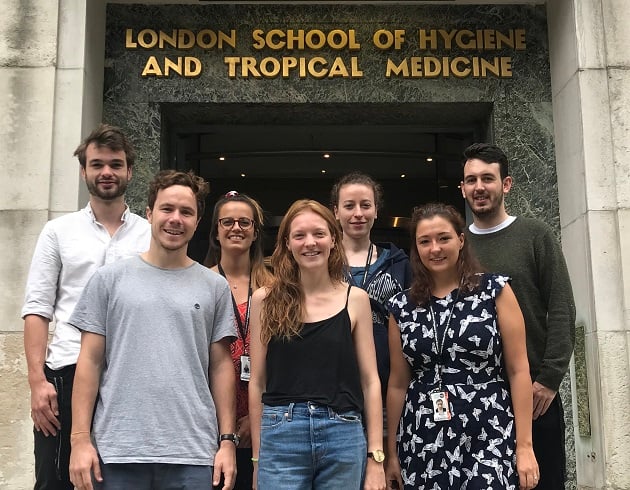
MRC LID Doctoral Training Programme Cohort
Outbreak control: an introduction to careers in public health
MRC LID Doctoral Training Programme Cohort: Paula Josefina Gomez Gonzalez, Faculty of Infectious and Tropical Diseases, Alasdair Henderson, Faculty of Epidemiology and Population Health, Amy Ibrahim, Faculty of Infectious and Tropical Diseases, Poppy Mallinson, Faculty of Epidemiology and Population Health, William Rudgard, Faculty of Epidemiology and Population Health, Charlotte Rutter, Faculty of Epidemiology and Population Health, John Tazare, Faculty of Epidemiology and Population Health, Naomi Walker, Faculty of Epidemiology and Population Health, & Rhodri Edwards, Faculty of Infectious and Tropical Diseases
Aiming to inspire the next generation of public health professionals, we will prepare an interactive half-day workshop to take to 3-4 London schools in the autumn term. Starting with a short video newsreel announcing an outbreak of an unknown infectious disease in London, students will work against the clock to identify the disease and save London. Through five interactive demonstrations, featuring props from marbles to mosquitos, students will be introduced to the work of epidemiologists, statisticians and lab scientists in an outbreak situation. London’s fate will be determined when the students come together to decide how they will spend their limited budget to save the most lives. At a time when students are making important A-level and university decisions, the exercise will be a memorable introduction to the diversity of science-based careers and skill-sets involved in controlling a disease outbreak.
Olumuyiwa Owolabi
Think TB: Tuberculosis Awareness Campaign for Gambian Youths
Olumuyiwa Owolabi, MRC Unit The Gambia at LSHTM
A one-day interactive workshop using creative methodologies such as infographics, games, videos and drama activities will engage high school students and their teachers. This workshop aims to provide an environment for mutual learning between the researchers and the school and to raise awareness of Tuberculosis (TB). The recognition of TB disease symptoms and appropriate measures or roles for the students in the control of TB in the community will be discussed. This workshop is expected to equip the students and their teachers with knowledge about types of TB disease, symptoms, spread and prevention, thereby supporting them to become TB ambassadors starting from the school environment and progressing in a viral fashion into their respective communities at large. A meaningful engagement of the other members of the community through these students and their teachers is a stride anticipated to contribute to TB control in The Gambia.

Neisha Sundaram
Adolescent health matters
Neisha Sundaram, Department of Global Health and Development, Faculty of Public Health and Policy
Adolescent health is increasingly a global priority as adolescents bear a substantial burden of disease, and adolescence is a critical period when choices and circumstances can have major immediate and future health impacts. Yet, little is known about adolescents’ perspectives, needs and priorities with respect to health and health interventions, especially in lower income countries. Our project aims to explore perceptions of health and illness, and the importance of global health goals among adolescents attending a government-aided school in Bengaluru, India. We also aim to increase awareness about preventing illness among participating adolescents and make connections between adolescent views and needs with public health authorities and wider society. We will do this through discussions with adolescents culminating in an art installation curated by a local artist documenting stories and photographs taken by participating adolescents. Public health officials and the public will be invited to experience and engage with this exhibit.

Cally Tann
Let Hope Grow: Communicating family experiences of caring for young children with disability through imagery
Cally Tann, Department of Infectious Disease Epidemiology, Faculty of Epidemiology and Population Health
This project aims to raise public awareness around families’ experiences of child disability in Uganda using artistic imagery to promote inclusion and to support early intervention to promote health, wellbeing and life chances of affected children and their families. We will use the existing infrastructure of our ABAaNA Early Intervention Trial to conduct art workshops and with local families caring for a child with a disability, in partnership with a commissioned Ugandan and UK artist. Participants will be encouraged to communicate their thoughts and ideas verbally and artistically. Their experiences will be used to create a portfolio of images that represent key themes that communicates the love, laughter and tears of caring for these children which will be exhibited in London and in Uganda.
- 2017
Faculty of Epidemiology & Population Health
Staff Project 
Melissa Neuman
Cath Beaumont
What does HIV self-testing mean for me?
Melissa Neuman, Department of Infectious Disease Epidemiology, & Cath Beaumont, Department of Clinical Research (ITD)
In southern Africa, the proportion of men who know their HIV status is low. HIV self-testing may help men find opportunities and spaces to test for HIV more comfortably. However, as HIV testing moves out of health facilities and into homes, workplaces and public places, we must consider what motivates men to test and how they feel about testing themselves for HIV. To promote conversation around HIV self-testing for men, we will engage with men in Harare, Zimbabwe, to photograph scenes or items answering the question: “What does HIV self-testing mean for me?”. The men will then discuss the photographs in group sessions, and photographs and narratives will be exhibited in Zimbabwe, elsewhere in southern Africa, and in the UK. For this project, we will work closely with the Centre for Sexual Health and HIV Research (CeSHHAR) and other partners in the UNITAID/PSI HIV Self-Testing (STAR) initiative in southern Africa.

Sinead Langan, Department of Non-Communicable Disease Epidemiology
Public trust in the use of big data for health research
Working with colleagues in the Electronic Health Records (EHR) group, we will engage with students attending the Young Scientists Programme to understand concerns about using EHR data for research. We have an innovative programme including a “speed dating” session where students will engage with different types of EHR research and hands-on practice programming for analyses of “dummy” EHR data. They will also undertake interviews and surveys to identify existing beliefs and the basis for these beliefs amongst members of the public. The final output will be an animated storyboard that the students will produce with an experienced animator and public engagement champions from our EHR group to communicate their key findings. Of this work, Sinéad said, “We believe this work will help deepen our understanding of how the public perceives the use of big data, while developing the knowledge and skillsets of the Young Scientists.”

Elaine Flores, Department of Infectious Disease Epidemiology
Promoting resilience and mental well-being among communities affected by El Niño floods and landslides in Peru
From January-April 2017 intense precipitations associated with a local coastal “El Niño” event led to flash-floods, landslides and intense socioeconomic losses in Peru. Carapongo, a poor shantytown located in the east of Lima was heavily affected. We aim to provide the means and tools for personal expression and resilience-promoting non-verbal communication to a group of affected residents, through group art therapy techniques and photovoice. We will facilitate a group art therapy session; providing the means for the participants to select objects, places or individuals that represent their resilience motifs through images and personal messages. We will present and share these representations and engage them in an open discussion about post-disaster mental health, preventive measures against mental disorders’ development and resilience strategies. Finally, we will discuss the perceptions and attitudes of the participants towards “El Niño” associated mental health and resilience topics.
Sharon Cox, Department of Population Health
Food for thought: Nutrition and Tuberculosis in the Philippines
Malnutrition is a common cause and consequence of TB, whilst TB can have significant economic impacts on households, which may affect food and other health expenditure. We will engage with Filipino TB patients and their households to make 1 or 2 short videos. Filming will be conducted in people’s homes as they share their daily life, diet and experiences of family and individual life after experiencing a diagnosis of TB. The project will discuss coping mechanisms and what they feel is needed to help patients and family take control. We will specifically ask about the effects on employment/income and malnutrition. Although the starting idea for the direction of the narrative is centered on diet, nutrition and wellbeing in those with TB, this will not be decided until after initial interviews and meetings with potential participants and household members. Discussions with patient groups will be held before and after producing the videos. The videos will initially be shared with a closed facebook group initiated by TB patients and thereafter via wider social media networks.
Faculty of Infectious & Tropical Diseases
Staff Project 
Elizabeth Sawyer, Department of Pathogen Molecular Biology
Secret Agents 005
In collaboration with scientists from UCL, we will take science to the streets to inspire primary school children that careers in science are fun and within their reach. We chose Barking and Dagenham because it is a relatively poor area and children there are less likely to have access to extracurricular science activities. We want to encourage these children to see that science is a fun, interesting and necessary part of life. To achieve this, we will have a stall at the Youth Parade where we will teach children about the “secret agents” that cause disease: bacteria, viruses, prions, parasites and fungi. Children will participate in hands-on activities to ‘spy on’ and identify the secret agent. We will measure success by asking children to vote for statements that sum up how they felt about the activity and what they learned.

Carmen Abela
A caring career in animal research
Carmen will engage with UK schoolchildren using historical accounts of animals used in research and discussion of current research projects here at the school. Children will then have a practical workshop using an artificial mouse-training tool where they will get the opportunity to simulate handling and common dosing methods used in the laboratory and work with specialised caging, diet and other equipment used in an animal facility. The objective is to show children the benefits of animal research and learn about the people who work in this environment as well as dispel some of the secrecy and myth attached to animal research in the UK.
Bernadette Hensen, Department of Clinical Research
Understanding Zambian men’s experiences of HIV self-testing through narrative photography
Across Zambia, men are less likely than women to test for HIV. HIV self-testing is a novel approach expected to increase uptake of HIV testing services among men. In Zambia, Zambart and LSHTM are conducting trials of community-based distribution of HIV self-tests. Documenting men’s stories about their experiences with HIV self-testing and perceptions about the impact of self-testing for HIV on their day-to-day lives provides an important opportunity for men to tell their stories, and for researchers and programmers to learn how community-based distribution of HIV self-testing is perceived. The aim of this project is to give men the opportunity to share their experiences and perceptions of HIV self-testing. We will use participatory methods and photography to understand how men experienced HIV self-testing, either positively or negatively, and share these experiences through photographs and a narrative associated with them. This project is a collaboration between Zambart and LSHTM.

Sophie Durrans, Department of Disease Control
Unpacking mistrust: towards good practice in community-based research
In collaboration with the University of Malawi – The Polytechnic (SHARE partner), Sophie will develop an innovative workshop with the aim of exploring and improving good practice in community-based water, sanitation and hygiene (WASH) related research. Bringing together community members, health/water workers, and traditional and religious leaders, the workshop will take a ‘world café’ approach, providing a basis for a large group discussion and a safe space for addressing and confronting participants’ concerns. The workshop will stimulate participatory dialogue to gain a deeper understanding of barriers to trust between community members, researchers and other stakeholders, and through this further develop understandings of ‘good’ practice, particularly around collecting human and environmental data and samples in low-income, rural communities in Southern Malawi.
Faculty of Public Health & Policy
Staff Project 
Tara Mtuy, Department of Global Health & Development
“Shoo Away Enaoji [trachoma]” (a workshop for Maasai mothers on prevention of trachoma)
Current research in three Maasai villages in Tanzania has shown a poor understanding of trachoma. The aim of this project is to provide accurate information to Maasai mothers on the transmission of trachoma and to create a forum for mothers to discuss issues related to trachoma control and prevention in their villages. An interactive workshop will occur with Maasai mothers discussing causes, transmission and mothers’ role in prevention. Participants will be asked to be ‘trachoma-control ambassadors’ by teaching other mothers in their villages about trachoma and putting prevention measures into action within their socio-cultural context. Disposable cameras will be given to the women to photograph efforts to control trachoma transmission in their homes. A second meeting will be convened to discuss the dissemination of information and their photographs. It is hoped that an exhibition of the photographs can be held for the community to share their experiences and create further awareness.

Nick Douglas, Department of Health Services Research & Policy
Transforming Sexual Health Services - Engaging Transgender People in Research on Sexual Health Service Innovation
Globally, transgender people experience a significant burden of HIV and other sexual ill health, with low levels of HIV testing and additional burdens of stigma and discriminatory practice in health care settings. Three community-led, specialist sexual health clinics have emerged within England to serve these populations (London, Brighton and Birmingham). These pioneering initiatives are unique in the UK and rare internationally. This Grant will be used to carry out focus groups with patients, service users and staff of the three clinics to begin to identify what can be learned about how to provide accessible, effective and culturally appropriate sexual health services for trans people. A short video and podcast will be created to share the outcomes of the engagement activity more widely. This partnership approach also has the potential to inform the development of future research proposals.
Dalya Marks, Department of Social & Environmental Health Research
Using the Perspectivity Public Health Challenge to engage local communities to develop public understanding of Public Health
The Perspectivity Public Health Challenge is a tool that immerses players into an unknown situation; they react, plan, strategize and face multiple dilemmas in a pressured environment. The game was co-developed by Dalya Marks and launched in May 2015. It has been played in the UK, the Netherlands and New Zealand by over 300 people. We believe the game can also be used to develop opportunities to engage with local communities and serve to share information about the tensions and complexity in the work we undertake. Our key objectives are to use the game to enable members of our local community to gain insights about ‘doing’ public health and facilitate wider community engagement for School staff, showcasing our public health work.
Janet Weston, Department of Social & Environmental Health Research
Health in Holloway prison
Holloway Prison closed its doors for the last time in 2016, after more than 150 years. As the largest women’s prison in the UK, it had often been at the forefront of issues facing women in prison, many related to health. From imprisonment for drunkenness in the nineteenth century, to twentieth-century concerns over hunger-striking suffragettes, venereal disease, pregnancy, addiction, mental illness, and HIV/AIDS, this project will tell the story of health and medicine in Holloway through an interactive exhibition near the site of the former prison. The exhibits of photographs, recordings, and written extracts will be compiled by a group of historians, activists, and former prisoners. It will highlight the complex health needs of women in custody, past and present, and some challenges and opportunities that healthcare in prisons presents. This is connected to the Wellcome Trust-funded research ‘Prisoners, Medical Care, and Entitlement to Health in England and Ireland, 1850-2000’ (https://histprisonhealth.com).

Mike Callaghan, Department of Global Health & Development
Ebola and After: Stories from the Outbreak
In Sierra Leone, Mike is using audio interviews to help people tell their stories of the Ebola outbreak, and of the futures they imagine for themselves in the aftermath. He will work with local radio stations to produce a series of short interviews with Ebola survivors, responders, and researchers. Expanded versions of these interviews will also be produced and shared as podcasts on the project’s website. Building on his work as a Social Scientist on the EBOVAC trial, Mike’s project taps into a rich local storytelling tradition, and offers a platform for engaging the wider community in discussions about living through and living beyond Ebola.
Shivani Mathur Gaiha, Department of Social & Environmental Health Research
Teachers Nurturing Young Minds
A brainstorming among teachers in India will explore ways to support students’ mental wellbeing. Teachers will collectively reflect on their role as informal counsellors of young people and their response to challenging situations related to student stress. Teachers of students from grade 7-9 will be involved, as they are in a unique position to pre-empt pressures related to the first centralized public examination that students take in grade 10. Teachers will discuss their understanding of students’ academic and social expectations and experiences, and preparedness to identify and guide vulnerable students. Their stories will stimulate discussion of warning signs of student mental health problems, and how best to promote early detection and action. Teachers will then develop an action plan to prevent and manage mental health-related issues of students. This collaborative, problem-solving interaction will create an opportunity for discussion amongst teachers and prioritise activities that the school and teachers may then implement.
- 2016
Sarah Burr (Lecturer): “Madzi ndi moyo! (Water is life!)”
In Malawi, Sarah aims to engage school children as “Citizen Scientists” to raise awareness of health and environmental problems associated with river pollution. Working with the City of Blantyre branch of the Wildlife and Environmental Society of Malawi (WESM), the children will test local river water for markers of pollution to determine whether the river water is safe to drink and bathe in and then publicize their findings in the local community through WESM links. Her hope is that these findings will inspire local residents and government officials to discuss lasting solutions to river pollution.Maria Zuurmond (Research Fellow): “Hear our Voices”
Working with her partners, the Presbyterian Church of Ghana and the CBM: an International Disability Organisation, Maria will use community radio as a bridge for engaging with the public on cerebral palsy. She will involve support groups for caregivers of children with cerebral palsy in planning a radio programme that will broadcast across at least four sites, in three different languages with learning shared between the groups through a social media platform. Of the potential project impact Maria said: “The community radio engagement with caregivers of children with cerebral palsy will serve as a platform to give them the opportunity to be heard; it will provide them [with] space to talk about their difficulties and challenges.”Ailie Robinson (Scientific Officer & Research Degree Student): “Focus on the Microcosmos: unfolding the past and present of diagnostics”
Ailie will engage UK school children about tools for malaria research and intervention from the past and present contained in the Wellcome Collection and the School’s own Archives and Malaria Reference Laboratory. Using an innovative new tool called a Foldscope, Ailie will guide the school children in to the wonderful world of parasitology. “The Foldscope is an ‘origami’ microscope that can be folded from one sheet of paper. I want to use this as a practical tool to stimulate discussion around both historical and current diagnosis of disease. I’m keen to see how well this can be used to engage with school children, allowing them to explore the ‘microcosmos’ in a fun and inventive way”.Dr. Nasir Umar (IDEAS Country Coordinator): “The Gombe Girls for Maternal and Newborn Health project”
Working in collaboration with Rhys Williams, Nasir will connect with local communities of young women and girls in Nigeria. He will create a space for them to express their ideas and opinions on the theme of female empowerment, particularly as it relates to their reproductive lifecycle and health and their ability and desire to remain in education while still being able to become mothers. The girls will go in to their communities to capture data and experiences of pregnant women and women in childbirth as well as the health workers that care for them through interview and film. Following on from this the girls will invite family, including their fathers and brothers, as well as teachers and public officials to an interactive screening and display of their work.Mary Oguike (Research Fellow): “Get sleeping under your mosquito nets”
Also working in Nigeria, Mary will transform primary school children in to ‘bed net ambassadors’ in their community. The children will learn about the proper use of insecticide-treated bed nets, often appropriated for other uses such as protecting crops or catching fish. Using cameras and art materials the students will be encouraged to explore creative ways to get around the barriers to using them in the home which will then be displayed in an exhibition for family and friends to attend. “I am excited about public engagement” said Mary “because it serves as a platform for me to chat to people more informally about science than my normal lab-based work allows: this in turn will increase the community’s participation in and contribution to research and implementation”. Mary was the sole recipient of small grants funding from the Department of Immunology & Infection. Of her success Colin Sutherland, Head of the Department said: “IID are delighted to hear that Mary is a successful recipient of the LSHTM Public Engagement Small Grant Scheme…Congratulations Dr Oguike!”.Dr Sadia Saeed (Research Fellow): “Let’s talk about hygiene and defeat germs”
During the school summer break in Karachi, Pakistan Sadia held a one-day workshop that used arts and crafts to “raise awareness in children about the importance of good personal hygiene and its connection with the prevention of infectious disease. Through story-telling, playing with giant microbes and using glitter-paint the children saw how easily germs can transfer from our hands and between people.” Having now completed her engagement project Sadia reflected “it was a day filled with fun and laughter and the children were really open about their problems and their thoughts and ideas, which was amazing”. She will be conducting a follow-up activity with the same children in three months’ time to measure the impact of the engagement on the children’s hygiene practices over time.Harvey Aspeling-Jones (Research Degree Student): “Sharing the hidden suffering in our communities”
Along with his co-applicant Georgina Miguel-Esponda from the Faculty of Epidemiology & Population Health, Harvey aims to tackle the stigma experienced by people who suffer from poor mental health in Mexico and the barriers to treatment and increased isolation they face. Harvey and his collaborators from Kings College London’s Institute of Psychiatry and Companeros En Salud (CES) will work with volunteers from local mental health services to create a touring exhibition of artworks arising from workshops held to explore and articulate the experiences of living with a mental illness. Further workshops in Mexico will be held for visitors to the exhibition to highlight their attitudes to and experiences of mental health issues.- 2015
Sham Lal and Chris Grundy: “Outbreak! Investigating epidemics with maps and imagery”
The activity will take place at the London Metropolitan Archives to conjure up the Victorian era, when smallpox outbreaks were devastating London. Students will use original archive materials and recently-restored smallpox maps from this period to learn about the disease and its effects on the city. They will combine their knowledge and skills from history, geography, maths and science to devise a control programme for quelling the epidemic.Dr Lena Lorenz: “What makes you happy and healthy? What makes you sick?”
Using cameras, crayons and paper, Tanzanian school children will go into their communities to explore these questions. These activities will then inform a discussion around these questions between the children, their teachers and School researchers. Read more about Lena’s project.Dr Sarah-Lou Bailey: “The bitter taste of sugar”
A workshop will be held in Zambia for a group of people living with diabetes, where they will share stories about their experiences of being diagnosed and living with the disease. Local cartoonists will capture these reflections, and the illustrations shared with wider audiences.Dr Ewan Hunter: "Let’s talk about epilepsy”
Ewan and colleagues in Tanzania will run a workshop for parents and teachers of children with epilepsy. The group will discuss barriers around school attendance, and explore suggestions for educational programmes that can help epilepsy patients to be more accepted by the community, such as those using theatre or puppetry.