Simon’s story: how distance learning makes studying global health possible
14 May 2026 London School of Hygiene & Tropical Medicine London School of Hygiene & Tropical Medicine https://lshtm.ac.uk/themes/custom/lshtm/images/lshtm-logo-black.png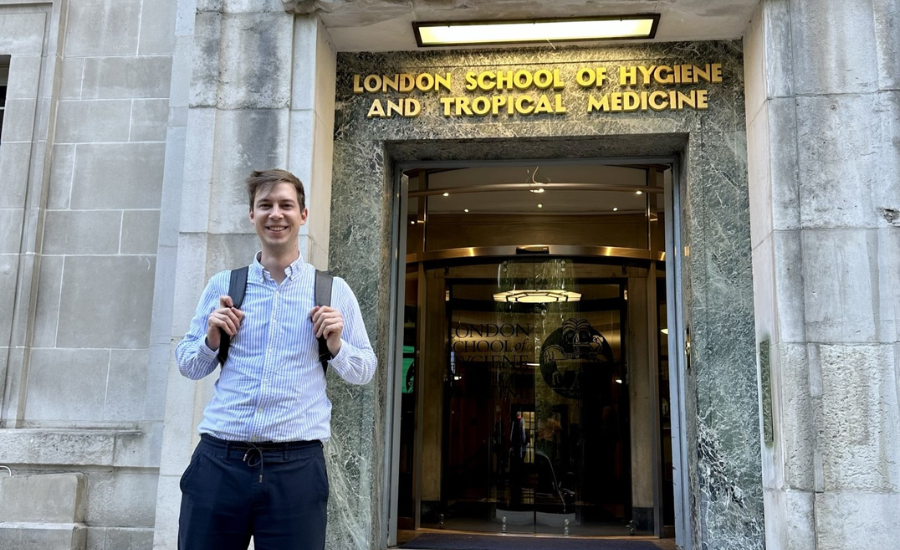
Why I chose to study now
I'm currently based in Basel, working for a pharmaceutical company. I spent several years in the company's Global Health department, which is where my passion for this field really took root, and I've since transitioned into a role in Haematology. It was my time working in global health that really sparked my desire to deepen my understanding of health in humanitarian settings. Being exposed to the challenges and complexities of global health on a professional level made me want to build a stronger academic foundation to complement my practical experience.
Finding my focus: why humanitarian health matters to me
What drew me to this programme was just how unique it is. It's specifically tailored for people who are interested in understanding how to orchestrate and deliver aid in humanitarian crises, and that's a very particular niche that I hadn't found catered to so comprehensively anywhere else. I genuinely looked at what other universities had to offer, and I couldn't find another programme quite like this one. The fact that it brings together public health and humanitarian response in such a focused and practical way really set it apart. For anyone who wants to work at the intersection of health and crisis response, this course fills a gap that very few - if any - other institutions are addressing in the same way.
Why LSHTM stood out
For me, LSHTM was the clear choice, and it really came down to the institution's reputation and expertise. LSHTM has a longstanding and well-respected legacy in tropical medicine, development and humanitarian studies, which is exactly the space I wanted to immerse myself in. That kind of heritage isn't something you find everywhere. Ultimately, LSHTM is widely regarded as one of the best universities in the world for studying global health.
"Beyond the reputation, there was a genuine sense of trust in the depth of knowledge and expertise that the institution brings to its teaching. You know that what you're learning is grounded in decades of research and real-world impact."
Making it work: fitting distance learning around a full-time job
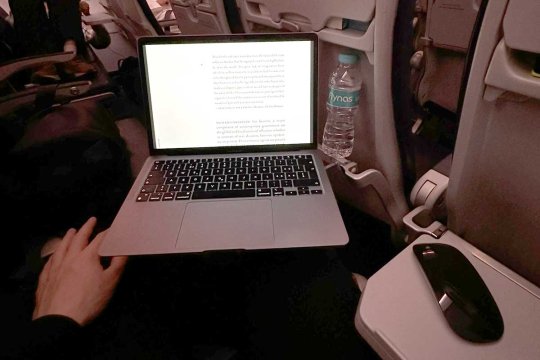
Distance learning has been the optimal format for me, especially as someone who works full-time. The flexible structure of the programme allows me to seamlessly weave my studies into my working week in a way that feels sustainable and manageable.
In practice, that usually means dedicating my days to work and then switching over to studying in the evenings or at weekends. It's a routine that works really well for me because it doesn't require me to compromise on either front. I can give my full attention to my job during the day and then carve out focused time for my studies when the workday is done. It's all about finding a rhythm that suits your lifestyle, and the programme genuinely makes that possible.
The reality of balancing work and study
It comes down to discipline and time management. Working and studying at the same time requires a level of structure that you have to be willing to commit to. For the most part, it's very manageable, but there are certain periods - especially in the lead-up to exams - where you really need to buckle down and prioritise your studies.
What I’ve enjoyed most: standout modules and insights
I have really enjoyed the modules specifically designed for Health in Humanitarian Crises: Public Health Information in Humanitarian Crises, Design and Planning of Humanitarian Health Projects and Monitoring and Evaluation of Humanitarian Health Projects. What makes these stand out is that they've been purpose-built for this course. Together, they offer comprehensive and hands-on insights that span everything from public health situation analysis to the monitoring and evaluation of humanitarian projects.
If I had to pick a highlight, it would be the ethical component covered in Design and Planning of Humanitarian Health Projects. Exploring the ethical considerations that come into play in humanitarian settings added a layer of depth that has really shaped the way I think about public health practice in crisis contexts.
The value of flexibility and global connections
The most valuable aspect is being able to seamlessly integrate my studies into my daily life. The flexibility of the programme means I can hold down a full-time job and still pursue a master's degree - something that would have felt impossible with a more traditional study format.
What I particularly appreciate is the ability to adapt my study schedule to what's happening in my professional life. If things get especially busy at work, I can pause or shift my studies to a later point when things settle down. It takes a lot of the pressure off and means I never have to choose between my career and my education - I can do both, on my own terms.
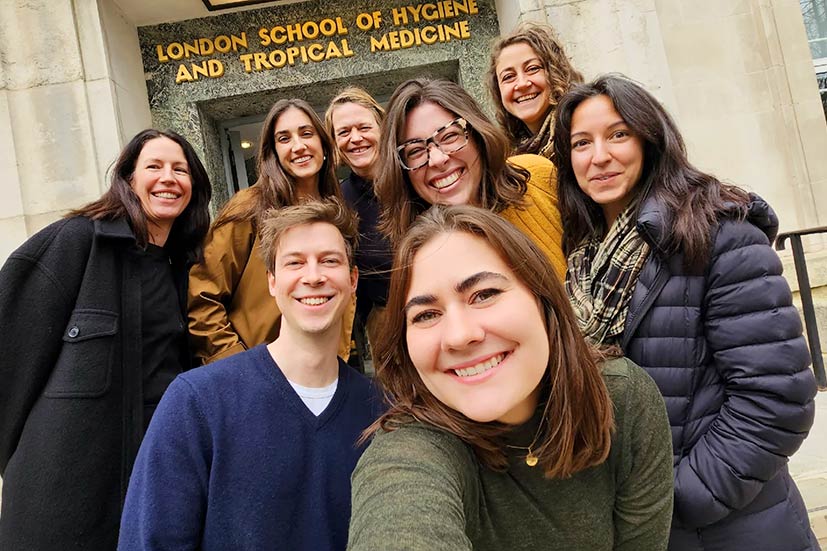
And beyond the academic side, there's the incredible sense of community. Learning from their experiences and being in constant exchange with them has been an incredibly rich and rewarding part of this journey. I've even had the pleasure of meeting some of them in person in London, which really brought those connections to life.
"Despite studying at a distance, I've had the opportunity to connect with fellow students from all over the world - many of whom are currently working in crisis settings or have done so in the past"
My advice to you
If you're on the fence about whether you can manage the workload, my advice would be just go for it. One of the best things about this programme is the flexibility it offers. Each year, you get to choose how many modules you want to take on, which means you're in full control of the intensity of your studies. This makes it so much easier to plan your year around work, life and everything in between. And even if you do find that you've taken on a little more than expected, you have the option to pause specific modules and pick them up again the following academic year. So really, there's very little risk in giving it a go.
- Contact a student ambassador via our student and alumni ambassadors page.
- Study with LSHTM from anywhere in the world. Discover our distance learning programmes (from modules, to PG Cert, PG Dip or MSc), including Health in Humanitarian Crises by distance learning.