Lior's honest review of studying MSc Health Data Science at LSHTM
24 August 2026 London School of Hygiene & Tropical Medicine London School of Hygiene & Tropical Medicine https://lshtm.ac.uk/themes/custom/lshtm/images/lshtm-logo-black.png
My background
I graduated from the University of Michigan in 2024 where I studied public health. My undergraduate experience provided me with a foundation for many different domains of public health, such as health policy, epidemiology, and social determinants of health. However, one aspect of public health that I did not have a chance to develop in undergrad was an understanding through an international lens. I knew about the CDC, the FDA, Medicare and Medicaid, and all public health systems related to the United States. As I wanted to continue developing my skill set in public health, I knew it was important that I received an education from a different country and in a reputable program.
I chose the MSc Health Data Science (HDS) for several reasons. During undergrad, I always enjoyed my statistics and programming classes. These classes were generally introductory, and I did not have advanced skills in these topics. I knew that I wanted to grow in those areas whilst continuing to pursue public health, so HDS seemed like an appropriate route. Furthermore, I knew that the skills I would gain from HDS would be highly useful in the workplace. Having a solid understanding of several programming languages, being able to analyze large health datasets using advanced statistical techniques, and having foundational knowledge of machine learning are all valuable tools. As health research and treatment outcomes become more reliant on data and technology, I was confident that health data science would provide me with the skills needed to make a meaningful impact in the field.
Expectations vs reality
As I moved to London without having ever visited, knowing no one, and starting a new degree, I had many mixed emotions and thoughts. Here are some of the expectations that I had before starting and how they turned out:
Expectation: Making friends was going to be hard.
Reality: LSHTM facilitated many activities during the first few weeks of classes to help us get to know each other.
I met many of my friends through these activities. There are also several ways to meet people outside of LSHTM, like finding groups related to your identity and interests. For example, I joined a WhatsApp group of alumni from my undergraduate university living in the UK and met people that way. It is important to remember that everyone is in the same boat and is also looking to meet people!
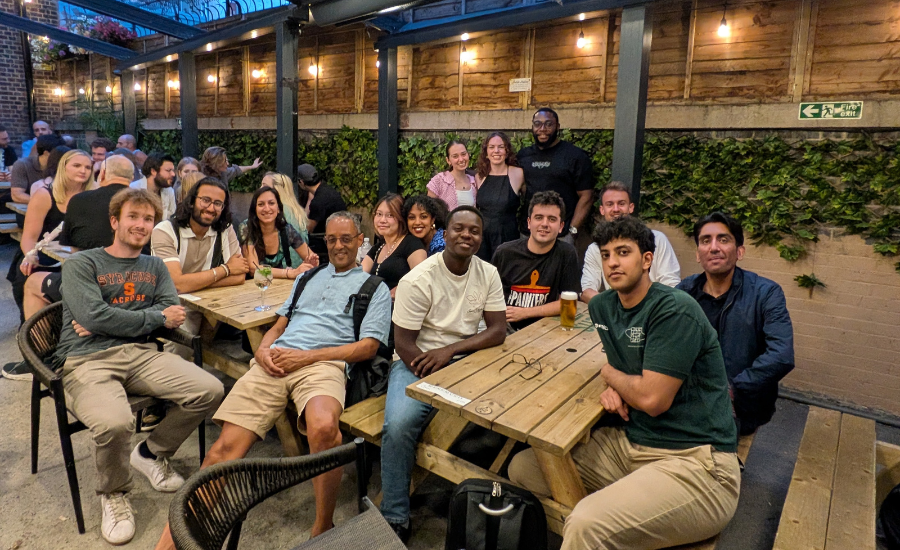
Expectation: The academic structure and schedule would be like my undergraduate experience.
Reality: The way that the classes are scheduled and graded felt very different from what I was used to in my prior education.
First, classes are all day long, usually from 9:30 am-5 pm (with a lunch break, of course!). In undergrad, I usually only had a few hours of class each day and spent the rest of my day doing work for my classes. It took some time to adjust to the full days of class, but it allowed me to fully immerse myself in the material and bond with my classmates. Many classes are also graded based on one final project, paper, or assessment. This was different from several classes I had taken during undergrad, where grades were made up of many different assignments and tests throughout the term. For me, this meant that I spent much more time studying for my assessments at the end of the term when assessments were due, rather than spread equally throughout the term.
Expectation: Health Data Science was going to be very math-heavy.
Reality: The course was taught with the assumption that we did not have any prior knowledge.
The statistics module during the first term was the most math-heavy class that I took. It was helpful that I had some previous experience with statistics, but it definitely was not necessary. Besides this class, all mathematical calculations were completed in R or a different programming language. Thus, it is more important to understand mathematical and statistical results and know how to achieve them, rather than being able to calculate advanced equations by hand.
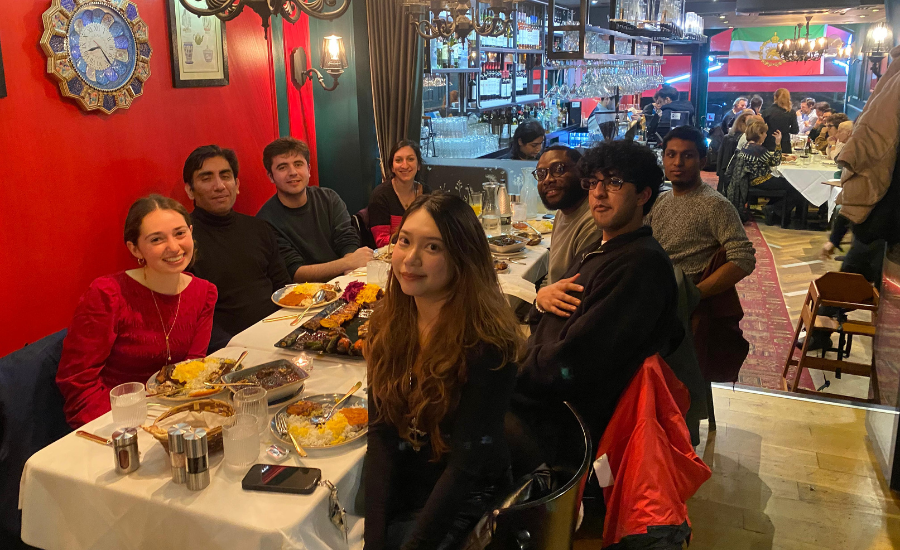
Expectation: I was going to be so busy with school that I wouldn’t be able to enjoy living in London.
Reality: The coursework is definitely time-consuming, especially around the time of exams. However, if you manage your time efficiently, there is still plenty of time to explore everything that London has to offer. I usually dedicated my Saturdays to doing something fun in London and spent my Sundays focused on my coursework. LSHTM is located in a great spot in central London, so it is super easy to access Soho, Covent Garden, Marylebone, and plenty of other neighbourhoods are just a walk away.

Expectation: Everything in London is expensive.
Reality: There’s no denying that London is expensive. Coffee, drinks, restaurants - it all adds up. But there are also so many student discounts and other hacks that can make London much more affordable.
Meal deals are great. At Tesco, you can get a main, snack, and drink for only £3.85 (in 2026), and other grocery stores have great meal deals as well. M&S also has a 25% student discount on their to-go food range through the Unidays app. Several restaurants also have student discounts. With a 16-25 National Railcard, you can connect your Oyster Card to get 1/3 off on tube off-peak. So, while London is expensive, many places are accommodating of the student budget.
My favorite module
My favorite module that I took this year was called Data Challenge. The HDS cohort was split into smaller groups, and we spent the entire term working on a group consulting project together. At the beginning of the term, we met with a real local healthcare client, and they presented us with their problem. Then we spent several weeks working together to develop a solution, and the module concluded with a final presentation to the client. This course was a great opportunity to apply what we were learning in our other modules in a real-life context. I not only enhanced my skills in programming and data management, but also gained experience in working with a team on a long-term project and presenting to technical and non-technical stakeholders.
Future plans
Studying Health Data Science at LSHTM has helped me solidify that I want to pursue a career where I can use data-driven methods to analyze electronic health record data. It has equipped me with several skills that I know will allow me to be successful in any role in this field. I would love to work for a biotech or healthcare company in the private sector, and I am confident that LSHTM has given me a solid foundation to achieve this.
- Read Shereen's experience and the transferable skills she gained from workshops and services at LSHTM.
- Discover MSc Health Data Science.
- Exploring London with a public health history lens? History of public health in London - A walking tour with Megan