I took the risk to leave biotech and get back to school, I'm glad I did it - Laura's LSHTM journey
20 April 2026 London School of Hygiene & Tropical Medicine London School of Hygiene & Tropical Medicine https://lshtm.ac.uk/themes/custom/lshtm/images/lshtm-logo-black.png
I graduated with a degree in Biomedical Science with Industrial Experience in 2019. Postgraduate study had always been part of my plan, and I’d dreamt of studying at LSHTM since I was still at school. After my BSc, I planned to work for a year before applying for a master’s.
Unfortunately, like many people, those plans were disrupted by the COVID pandemic, and pursuing an MSc in 2020 no longer made sense. Amongst the disruption, I was incredibly lucky to get a job as a Research Assistant at Microbiotica, a biotech developing gut-microbiota-based therapeutics. I was part of an amazing team and had so many opportunities to grow as a lab scientist. However, I had a long-held passion for infectious diseases that wasn’t being realised, and after five years with the company, I decided it was finally time to consider returning to education.
Choosing between courses and applying for it
I knew I wanted to study infectious diseases, but I was unsure exactly which course was best for me. I attended the Open Evening at LSHTM and spoke to student ambassadors for several MSc courses. The MSc Control of Infectious Diseases (CID) ambassador really inspired me, and after that evening I was certain it was going to be my choice. CID offered the chance to build on my existing microbiology background while also developing new skills in public health and epidemiology.
The application process felt slightly intimidating, but writing the application came more naturally than I expected, as I felt genuinely passionate about the course, and could draw on my professional experience to answer many of the questions.
I would strongly second the School’s recommendation for prospective students to apply as early as possible. I applied later than ideal, and the wait for a decision was tense, especially given the notice period I needed to give my work. It’s also important to be proactive with follow-up emails, as responses can take a long time and the School only be contacted by email for application queries. Luckily, after a period of anxious anticipation, I was accepted!
Daunting to leave a job, but LSHTM opened my eyes
Leaving my job was daunting - it had been my professional home for most of my adult life; I was attached to my team and used to the security of full-time employment. But I was determined to take the risk and pursue the course, so I accepted the offer, handed in my notice and arrived at LSHTM for Welcome Week just five weeks later.
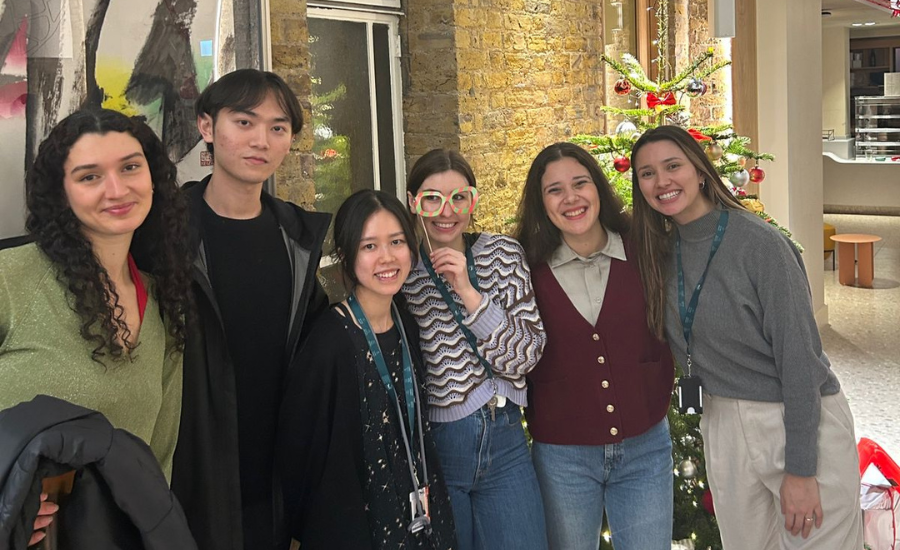
I was apprehensive about fitting in after years out of university, but the amazing fellow students I met quickly eliminated my concerns. I heard it many times during my own application journey, but the student body represents people from so many different backgrounds and career stages, and there are so many opportunities to learn new perspectives from your peers. There was a period of adjustment for me being back in academia after the private sector where dynamics and priorities are very different, but it felt amazing to be learning again in a field I was so passionate about.
I love the interdisciplinary nature of CID, with epidemiology and policy modules being completely new ground for me. These modules were challenging but allowed me to think about health and research from a much broader, population-level perspective after years of focusing on granular laboratory science. Learning directly from professionals currently working in disease control and public health is another huge benefit and helps to make the information you learn in class ‘real’.
New skills learnt, even with a lab background
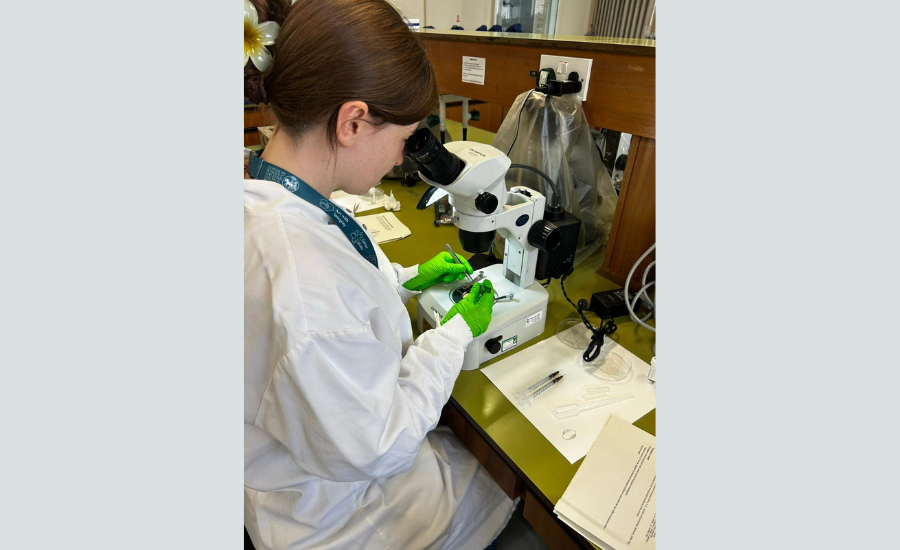
Despite coming from a lab background, I’ve learned many new skills from lab modules at LSHTM. I’ve had the opportunity to work with a wide variety of organisms relevant to global health —seeing trypanosomes under the microscope for the first time was a highlight! The bacteriology classes were a big shift from my previous work, as we learned techniques relevant to resource-constrained environments, with a strong public health focus.
Through ‘Introduction to Disease Agents and Their Control’ and ‘Designing Public Health Programmes’ modules, I discovered a passion for WASH (Water, Sanitation, Hygiene and Health), especially in connection with gastrointestinal disease and antimicrobial resistance, which allowed me to build on my knowledge of gut microbiology in a new context. I’m excited about the opportunity to apply the lab and method development skills I gained in my earlier career to a WASH-based summer project, with the goal of working in the sector after graduation.
I'm glad I took the risk
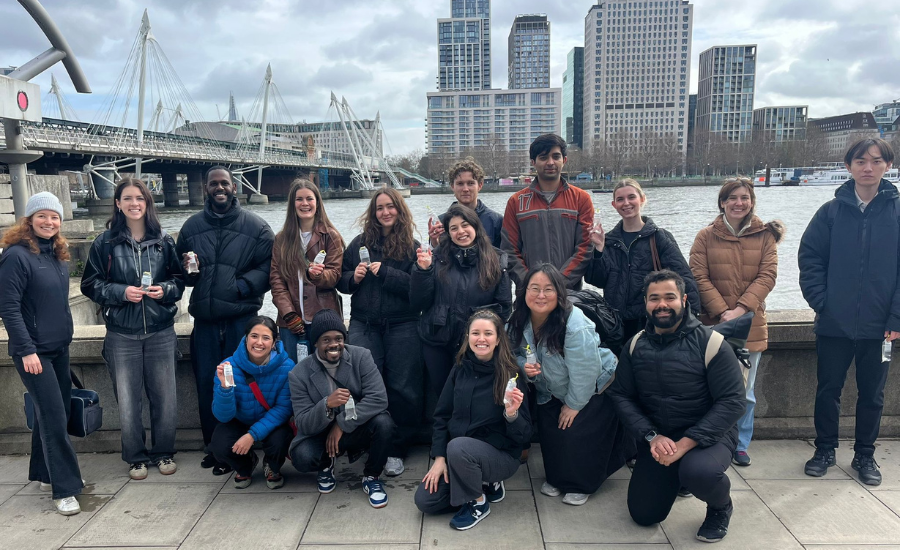
Overall, I’m so glad I took the risk and applied to LSHTM. While there have been moments of stress where I’ve questioned my decision, I still feel confident it was the right one. My time here has opened my eyes to so many exciting possibilities in the infectious disease field after being in my own professional ‘bubble’ for a while. For anyone who finds themselves considering a similar change, I would encourage you to go for it - it won’t be easy, but it will be worth it! Reach out to a student ambassador if you have any questions - many of us have also made career changes and are happy to help.
- Contact Laura and other Student Ambassadors
- Discover the MSc Control of Infectious Diseases
- Struggling with your application? Read application tips from Ella & Shereen
- What does studying at LSHTM mean? See you for yourself at our Open Evening this May, register now