What I enjoyed at LSHTM studying MSc Public Health for Eye Care - Whitney's experience
18 September 2025 London School of Hygiene & Tropical Medicine London School of Hygiene & Tropical Medicine https://lshtm.ac.uk/themes/custom/lshtm/images/lshtm-logo-black.png
I wrote about my reasons to intercalate into LSHTM from medical school when I first started here. Looking back on my year, I feel reassured that it was the right choice. Academically, this MSc gave me exactly what I had hoped for: a chance to look beyond individual clinical encounters and explore systemic approaches to improving health. Most importantly, I gained practical research skills and learned how to think critically when faced with gaps in data.
This year has also shaped me in ways I didn’t fully expect. Being part of such an international and diverse cohort pushed me outside my comfort zone and helped me grow socially as well as academically. I learned to listen and appreciate different perspectives and communicate across cultural and professional backgrounds. The friendships I built have been just as valuable as the formal teaching. On a personal level, the year gave me space to reflect on my motivations and future goals. Stepping away from the fast pace of medical school allowed me to reset, build confidence, and reconnect with why I chose medicine in the first place.
This year has been truly transformative, broadening not only my academic horizons but also my sense of self and direction. Here are my 5 highlights of the year in MSc Public Health for Eye Care and at LSHTM:
1. My favourite module
Of all the modules in the programme, 'Skills for Field Research in Eye Care' stood out as my favourite. It wasn’t just theoretical; it was very much relevant in the field, and especially helpful to those who have to do primary research in a developing country. Instead of relying heavily on pre-recorded lectures or static material, we engaged in hands-on activities, determining SMART objectives to guide research and creating mock survey tools. The lecturers brought years of experience to the classroom and often shared examples from their own work, which added depth and relevance to the sessions. The module gave me confidence in how to approach research in unfamiliar environments, especially when flexibility and cultural awareness are essential. It also helped sharpen my thinking around what makes research both effective and respectful, and it is truly eye-opening to anyone who has only ever experienced research in a high-income region.
2. Programme field trip that changed my perspective
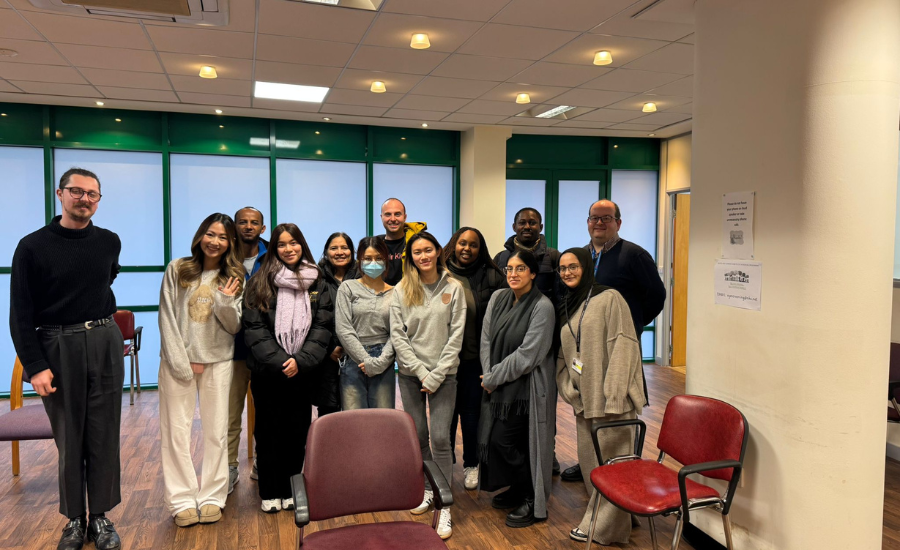
A major highlight specific to the eye care pathway was our field trip. We visited a community eye health programme site in East London to observe the real-world application of public health interventions. Watching health workers conduct screenings, navigate logistics, and connect patients to surgical services made all the abstract theories tangible. It made me compare healthcare policies that I grew up knowing, and see their benefits, as well as faults that could be improved. This really reaffirmed to me how clinical work should be coupled with proper public health policies to help the most people.
3. Exploring Europe

One of the best parts of living in London was the ease of travel - both within the city and across Europe. Weekend trips became a regular part of my year. I explored cities like Budapest, Barcelona, and Berlin, each offering a completely different culture, pace, and atmosphere. Travelling with friends or even solo gave me the space to reset and collect experiences that I’ll carry for life. At the same time, London itself is endlessly rewarding for those willing to explore beyond the obvious.
4. In London, not two weekends are the same
Some of my favourite discoveries were completely unplanned; stumbling into a jazz night in a tucked-away pub in Picadilly, finding a cool café in Covent Garden, or spending lazy afternoons in Hampstead Heath away from the city noise. I loved wandering through Columbia Road Flower Market on Sundays or exploring quirky vintage shops in Brick Lane. What made it special was how every neighbourhood had its own identity. No two weekends were the same. If you’re in London, don’t just do the guidebook version - get lost, take different buses, and follow your curiosity. You’ll find that some of your most memorable moments happen in the places you didn’t plan to go.
5. Preparing for my summer project (and tips!)
Successfully navigating the MSc requires careful planning, especially when it comes to managing time and the dissertation. With modules delivered in intensive blocks, assessments often overlap, so it’s important to maintain a steady routine. The dissertation is a major part of the programme and demands early attention. In our programme, we were fortunate enough that our director discussed with us what areas of research we would be interested in. We started to think about our topic at the beginning of the Autumn Term, and the idea gradually came about with more research and exploration.

Tight timelines for the dissertation are necessary. I would stress the need to plan for ethics early, especially if you’re hoping to do primary data collection. Delays in ethics clearance or logistical planning can derail your original idea, so speak to potential supervisors as soon as possible to assess feasibility. Use the Spring Term to refine your question, secure data sources, and draft your methodology. The earlier you submit ethics applications or contact stakeholders who can assist you in your research, the more control you’ll have. Maintain regular contact with your supervisor - they’re there to guide, but it’s your responsibility to drive the process and be directive with what you want to talk about.
- Discover MSc Public Health for Eye Care.
- More from Whitney: My reasons to intercalate into LSHTM from medical school.
- Learn more about intercalating at LSHTM.
- Contact Whitney via our contact student ambassador page.