
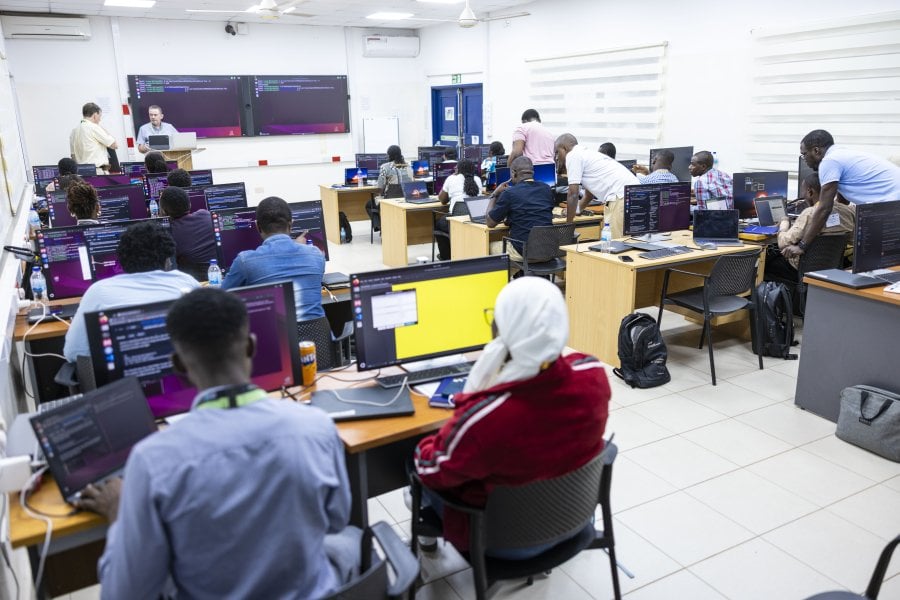
Organised in collaboration with Wellcome Connecting Science Learning and Training, the course was designed to explore how the latest advances in molecular and genomic approaches can be used in clinical microbiology to address infectious diseases. Participants explored latest research and techniques, enhancing their ability to integrate molecular and genomic methods into disease surveillance, diagnostics, and patient care.
This training forms part of a wider continental effort to strengthen scientific capacity across Africa, equipping the next generation of researchers and practitioners with the tools to respond to evolving health challenges. By investing in initiatives like this, MRCG at LSHTM and Wellcome seek to advance clinical research, improve laboratory systems, and contribute to better healthcare delivery across the region.
Speaking at the welcome ceremony, Dr. Abdul Karim Sesay, Head of the Genomics Strategic Core Platform at MRCG, highlighted the importance of capacity building on cutting-edge technology for young scientists in Africa to carry out sustainable and innovative research in the future.
“This collaboration with the Wellcome Science team strengthens the expertise of our staff and partners, positioning MRCG as a training hub and centre of excellence in clinical microbiology for the sub-region. By building capacity and sharing access to our cutting-edge platforms, we are supporting the growth of African researchers and driving the improvement of scientific research in Africa. This helps create a stronger network of scientists and clinicians across West Africa who can address present and future health challenges,” he noted.
25 scientists from 18 African countries now have a platform to exchange knowledge, build skills, and address region-specific challenges. Through a combination of lectures, practical sessions, and case studies, participants are also learning how to navigate the opportunities and challenges of implementing genomics in clinical settings in Africa.
Alice Matimba, Head of Training and Global Capacity at Wellcome Connecting Science stated that this workshop represents our commitment to developing sustainable scientific capacity across Africa. “By equipping clinical microbiologists with the latest molecular and genomic tools, we are empowering them to lead local solutions to infectious disease challenges. We are proud to collaborate with MRCG at LSHTM in strengthening communities of skilled scientists driving forward genomic innovation in health.”
Participants highlighted how the training strengthened their foundational knowledge and enhanced their clinical capabilities.
Yaa Yeboaa Asare, a Research Assistant at the West African Centre for Cell Biology of Infectious Pathogens (WACCBIP), University of Ghana, emphasised that the programme equipped her with “contemporary best practices and methodologies, advanced tools and technologies and positions me more competitively when applying for grants or advancing my studies, as it has given me an edge in developing strong research questions and protocols.”
Musana Habimana Arsene, Research Associate at King Faisal Hospital in Rwanda, noted: “The training enhanced my expertise in genomic approaches, which are critical for tackling antimicrobial resistance, improving pathogen surveillance, and responding to health priorities. These skills will enable me to contribute more effectively to research in Rwanda and across Africa, especially in molecular epidemiology and AMR surveillance, while also opening doors for advanced collaborations.”
This training underscores MRCG at LSHTM’s pivotal role in driving the future of biomedical research in Africa, fostering collaboration, strengthening technical expertise and serving as a regional hub for innovative research.
If you enjoyed this article and would like to build a career in global health, we offer a range of MSc programmes covering health and data, infectious and tropical diseases, population health, and public health and policy.
Available on campus or online, including flexible study that works around your work and home life, be part of a global community at the UK's no.1 public health university.