
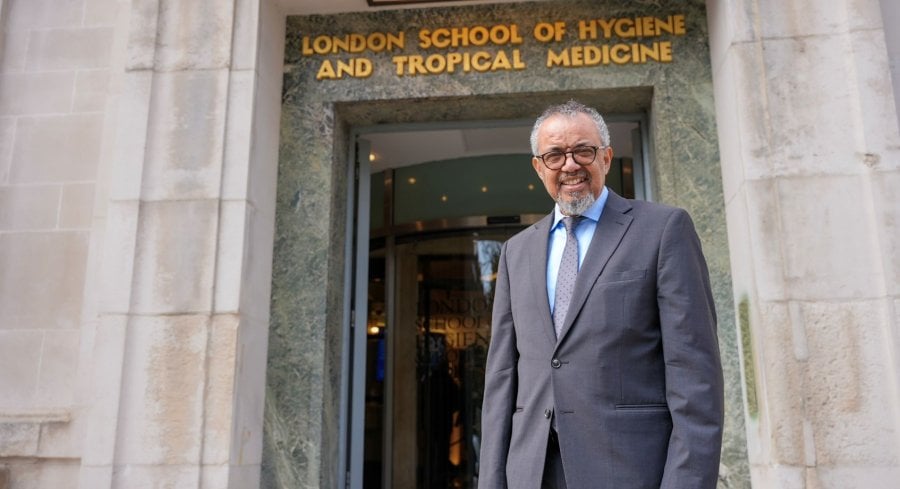
The Director-General of the WHO has visited LSHTM during a trip to the UK, meeting researchers to explore ways to strengthen collaboration between the organisation and the School.
The visit was hosted by the Centre for Global Chronic Conditions (CGCC), which welcomed Director-General Dr Tedros alongside a delegation from WHO and the Department of Health and Social Care (DHSC). The delegation included Dr Chikwe Ihekweazu, Executive Director of the WHO Emergencies Programme, Sir Jeremy Farrar, Chief Scientist at WHO, Professor Dame Susan Hopkins, CEO of the UK Health Security Agency, and Professor Sir Chris Whitty, Chief Medical Officer for England and Chief Medical Adviser to the UK Government.
Over several hours of discussion, participants explored CGCC’s work as a WHO Collaborating Centre and how LSHTM’s wider network of Collaborating Centres can work more closely with WHO to support shared global health priorities.
CGCC has been designated a WHO Collaborating Centre on Health Systems and Chronic Conditions since 2019. Its research is closely aligned with WHO’s strategic objectives, including strengthening primary health care systems, improving universal health coverage, and supporting effective responses to health emergencies.
During the visit, eight CGCC researchers presented an overview of their work on chronic conditions, highlighting projects spanning low-, middle- and high-income countries. The presentations showcased research aimed at improving the prevention, diagnosis and treatment of non-communicable diseases (NCDs), and strengthening health systems to better address the growing global burden of chronic illness.
As an alumnus and Honorary Fellow, Director-General Dr Tedros has longstanding ties to LSHTM. Dr Tedros completed a Master’s in Immunology of Infectious Diseases at LSHTM, graduating in 1992. In 2012, LSHTM awarded him an Honorary Fellowship, its most prestigious honour.
Dr Tedros said afterwards:
“Always delighted to return to the London School of Hygiene & Tropical Medicine, which, like for thousands of other health professionals, provided me with essential knowledge and training for my career in infectious disease control and public health.
“More than three decades later, the London School is still demonstrating its commitment to knowledge sharing, excellence and partnership, including through its Centre for Global Chronic Conditions, a WHO Collaborating Centre on Health Systems and Chronic Conditions.”
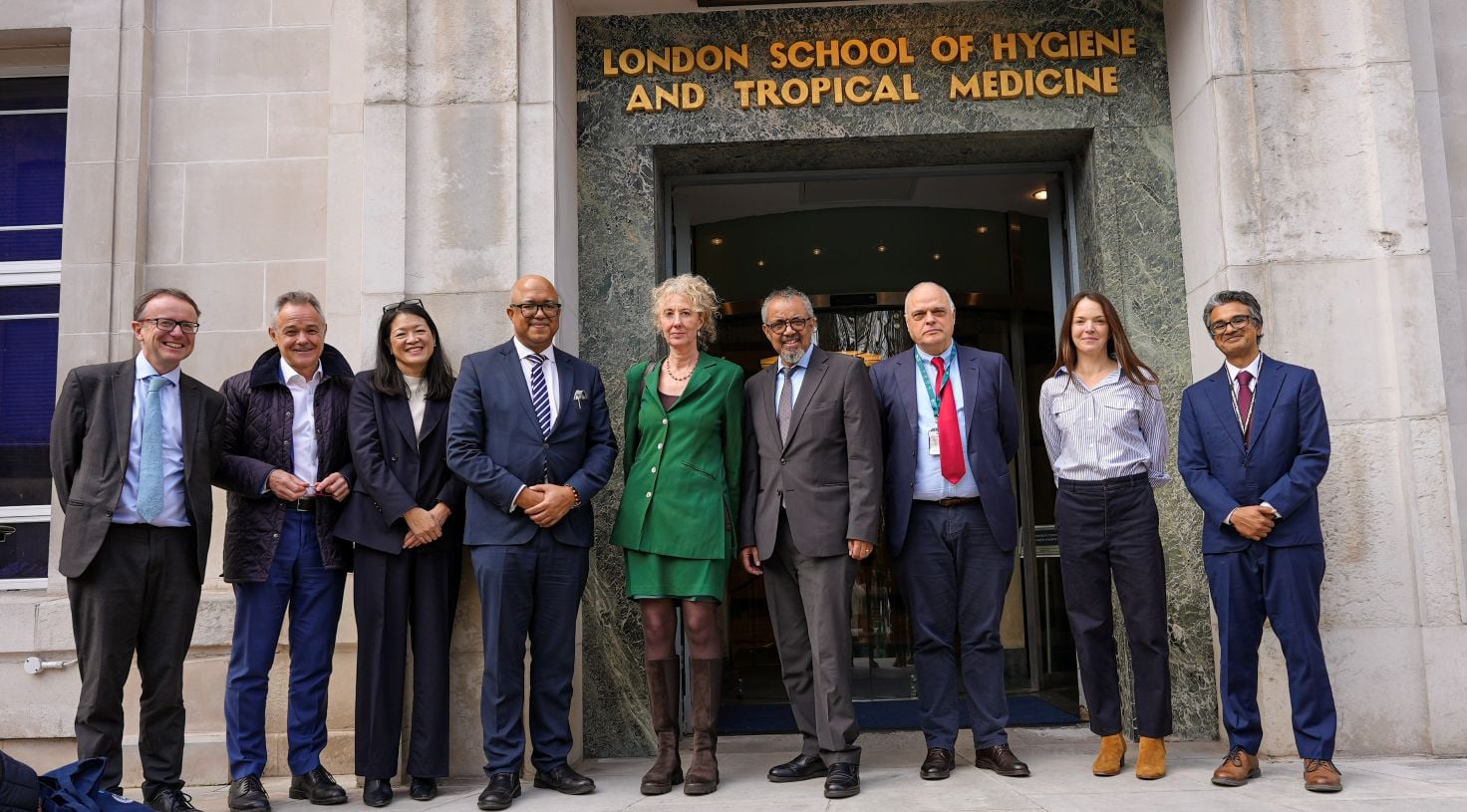
Dr Adrianna Murphy, Co-Director of CGCC, said:
“Director-General Dr Tedros’ visit was a valuable opportunity to discuss how we can collaborate more closely with the WHO to address the growing global burden of chronic conditions. As a WHO Collaborating Centre, CGCC is committed to producing policy-relevant research that supports WHO’s priorities and helps strengthen health systems around the world.”
The meeting also brought together representatives from several other WHO Collaborating Centres at LSHTM, including the Climate Change & Planetary Health Centre, the Maternal, Adolescent, Reproductive & Child Health (MARCH) Centre, the International Centre for Eye Health (ICEH), and the Sexually Transmitted Infections Research Interest Group (STIRIG).
In a discussion session with the delegation, researchers explored how WHO Collaborating Centres can add the greatest strategic value to the organisation’s work. Topics included how Centres and WHO can best support each other in the current global health and academic funding landscape, and opportunities for closer collaboration between Collaborating Centres in the UK and other countries.
Participants also discussed how Collaborating Centres can remain responsive to emerging global health priorities, including evolving approaches to NCD prevention and care, and how Centres can align research priorities to better inform WHO policy and programme activities.
Dr Tedros’ visit highlighted the importance of aligning LSHTM’s research with the WHO’s priorities to maximise its value and impact on global health policy and practice, particularly in the context of a changing global health funding landscape.
If you enjoyed this article and would like to build a career in global health, we offer a range of MSc programmes covering health and data, infectious and tropical diseases, population health, and public health and policy.
Available on campus or online, including flexible study that works around your work and home life, be part of a global community at the UK's no.1 public health university.