
Cancer remains one of the leading causes of death in the UK, accounting for around a quarter of deaths each year. Although survival has improved over recent decades, progress has slowed and outcomes for some cancers remain worse than in comparable countries. Currently, around 60% of people survive five years or more after diagnosis, and approximately 2.4 million people are living following a cancer diagnosis.
The National Cancer Plan sets out a renewed focus on earlier diagnosis, faster treatment and more personalised care. Central to the strategy is a commitment that 75% of people diagnosed from 2035 will survive at least five years, which the government estimates could translate into around 320,000 additional lives saved over the lifetime of the plan.
To support this ambition, the plan outlines major investment in diagnostic capacity, including £2.3 billion to deliver 9.5 million additional tests by 2029, alongside extended opening hours for community diagnostic centres operating up to 12 hours a day, seven days a week.
It also proposes substantial expansion in robot-assisted surgery, rising from around 70,000 procedures to 500,000 annually by 2035, as well as wider access to genomic testing and specialist cancer centres to improve treatment precision and outcomes.
The strategy further commits the NHS to meeting all cancer waiting-time standards by March 2029, after more than a decade in which the key target of starting treatment within 62 days of referral has not been achieved.
Reducing delays in diagnosis and treatment is widely recognised as one of the most effective ways to lower cancer mortality and narrow survival gaps with other high-income countries.
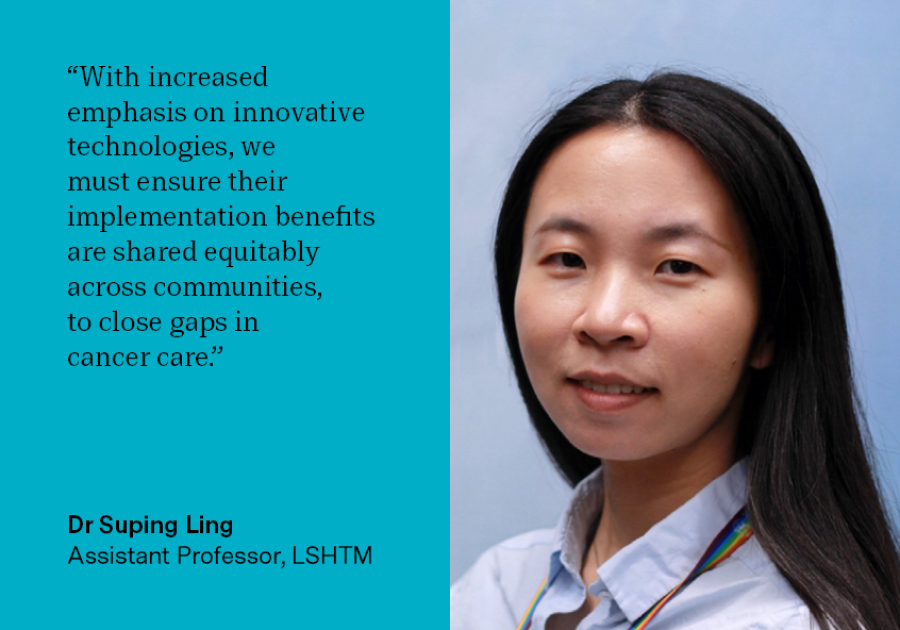
Commenting on the report, Dr Suping Ling, Associate Professor at LSHTM highlights the adoption of innovative technologies and their impact on inequalities.
Dr Ling said: “We welcome the strong focus on reducing inequalities, which is embedded across several targets in this plan. As innovative technologies - including digital tools, advanced AI diagnostics and personalised approaches - are strongly emphasised, it will be important to carefully assess their real-world impact. Their implementation must ensure benefits are shared equitably across communities, closing gaps in cancer care access and cancer outcomes rather than unintentionally widening existing inequalities.”
Professor Bernard Rachet, Principal Investigator of Inequalities in Cancer Outcomes Network at LSHTM said: “One positive development is that the Plan acknowledges the crucial role of the healthcare system and services in England’s comparatively poor cancer outcomes and in the inequalities in cancer care and outcomes within the country. Patients are no longer implicitly blamed.
“Several of the Plan’s key targets appear overly ambitious. For example, the proposed increase in diagnostic capacity does not seem credible. Many of the Plan’s ambitions rely on performance levels from technological innovations that have not yet been achieved in practical healthcare settings. This is concerning.”
While the ambition of a 75% five-year survival rate represents a significant policy signal, the impact of the National Cancer Plan will ultimately depend on sustained workforce investment, equitable access to services across regions, and transparent monitoring of progress. Translating targets into measurable reductions in mortality and meaningful improvements in quality of life for patients will be the central test of success.
If you enjoyed this article and would like to build a career in global health, we offer a range of MSc programmes covering health and data, infectious and tropical diseases, population health, and public health and policy.
Available on campus or online, including flexible study that works around your work and home life, be part of a global community at the UK's no.1 public health university.