
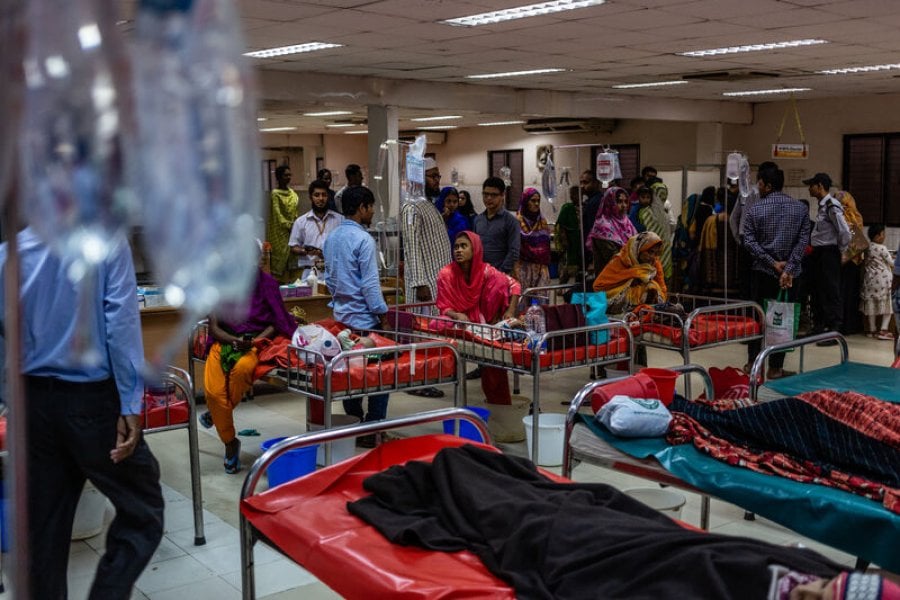
In this blog, Student Ambassador Nadya discusses an often-overlooked aspect of antimicrobial resistance, exploring what current evidence tells us about disinfectant use in healthcare settings and why it deserves further research
Hospitals are designed to minimise the spread of infection. Hand sanitiser dispensers, routine surface cleaning and the use of disinfectants are all essential parts of infection prevention and control. Together, these measures help to protect patients and healthcare workers from healthcare-associated infections.
At the same time, antimicrobial resistance (AMR) is recognised as one of the greatest threats to global health. Discussions around AMR typically focus on well-established drivers, including the overuse and misuse of antibiotics in human and animal health. However, researchers are increasingly asking whether another aspect of the healthcare environment also deserves closer attention: the widespread use of disinfectants and other antimicrobial products.
This is not a suggestion that hospitals should be cleaned less. Rather, it raises an important scientific question about whether repeated exposure of bacteria to disinfectants could influence the development or persistence of antimicrobial resistance under certain conditions.
What does the evidence show?
Disinfectants and biocides are critical tools for preventing infection. They reduce microbial contamination on surfaces, equipment and hands, limiting opportunities for pathogens to spread between patients.
Recent research, however, suggests the relationship between disinfectant use and bacterial adaptation may be more complex than previously thought.
A 2024 systematic review by Fernandes and colleagues found evidence that prolonged exposure to disinfectants can increase bacterial tolerance to some biocides and, in certain laboratory studies, may also reduce susceptibility to some antibiotics. Although the underlying mechanisms vary between bacterial species, repeated exposure to sub-lethal concentrations of disinfectants can trigger stress-response pathways and activate efflux pumps that are also associated with antibiotic resistance.
Importantly, much of this evidence comes from laboratory experiments rather than real-world hospital settings. There is currently no consensus that routine disinfection practices directly cause clinically significant antimicrobial resistance. Nevertheless, these findings highlight an area that warrants further investigation, particularly as healthcare systems continue to rely on antimicrobial products to maintain safe clinical environments.
Thinking about hospitals as microbial ecosystems
Another emerging perspective considers hospitals not simply as sterile environments but as complex microbial ecosystems.
Healthcare environments contain diverse communities of microorganisms. While some are capable of causing disease, many are harmless, and some may even compete with or suppress more harmful organisms. Broad-spectrum antimicrobial interventions inevitably alter microbial communities as well as reducing pathogens.
Recent reviews have suggested that disinfectants may reshape microbial populations, influence biofilm formation and affect the exchange of resistance genes between bacteria. From an ecological perspective, reducing microbial diversity could potentially favour organisms that are better able to tolerate environmental stress, including repeated exposure to antimicrobial agents.
These ecological processes are well recognised in environmental science, but their importance in healthcare settings remains an active area of research. More evidence is needed to determine how changes in hospital microbial communities might influence the emergence or spread of antimicrobial resistance in practice.
Balancing infection prevention with antimicrobial stewardship
Hospitals operate under understandable pressure to prevent infections, protect vulnerable patients and comply with strict infection prevention standards. In this context, routine cleaning and disinfection remain indispensable.
The challenge is not whether hospitals should maintain high standards of hygiene. They should. Instead, the question is whether antimicrobial interventions can be applied as effectively and precisely as possible.
This may include identifying where targeted disinfection is most beneficial, evaluating the long-term effects of different disinfectants, and understanding how cleaning practices influence microbial communities over time. It also reinforces the importance of considering environmental factors alongside antibiotic stewardship as part of a broader strategy to address AMR.
Looking ahead
Preventing healthcare-associated infections and tackling antimicrobial resistance are complementary public health priorities. Both require evidence-based approaches that maximise patient safety while minimising unintended consequences.
Although current evidence does not suggest that hospitals should reduce cleaning or disinfection, it does point towards important research questions. Better understanding how bacteria and microbial communities respond to repeated disinfectant exposure could help optimise infection prevention strategies while supporting efforts to limit the development and spread of antimicrobial resistance.
As AMR continues to pose a growing global challenge, exploring every potential contributor, including those within healthcare environments themselves, will be an important part of developing more sustainable approaches to infection prevention.
References
Fernandes, Â. R., Rodrigues, A. G., & Cobrado, L. (2024). Effect of prolonged exposure to disinfectants in the antimicrobial resistance profile of relevant micro-organisms: a systematic review. Journal of Hospital Infection, 151, 45–59.
O'Reilly, P., Loiselle, G., Darragh, R., et al. (2025). Reviewing the complexities of bacterial biocide susceptibility and in vitro biocide adaptation methodologies. npj Antimicrobial Resistance, 3, 39.
Sousa, M., Machado, I., Simões, L. C., & Simões, M. (2025). Biocides as drivers of antibiotic resistance: A critical review of environmental implications and public health risks. Environmental Science and Ecotechnology, 25, 100557.
If you enjoyed this article and would like to build a career in global health, we offer a range of MSc programmes covering health and data, infectious and tropical diseases, population health, and public health and policy.
Available on campus or online, including flexible study that works around your work and home life, be part of a global community at the UK's no.1 public health university.