




Our overall aim is to develop and extend a strong research partnership to conduct policy-relevant research to enhance mobile adolescents and young people resilience to navigate access to sexual and reproductive health services thereby contributing to their improved health and wellbeing.
Our partnership is led by the London School and Hygiene and Tropical Medicine (LSHTM) and Zambart, and involves Africa Health Research Institute (AHRI) and African centre for migration and society (ACMS) from University of the Witwatersrand (WITS).
Migration limits mobile adolescent and young people’s (mAYP) access to health services including access to sexual and reproductive health information, rights and quality services. We will address the sexual and reproductive health rights (SRHR) of mAYP by building skills in the co-production of research and creating lasting interventions with young people which improve their access to SRHR, responding to a demand from key stakeholders and drawing on our past work.
Our overall aim is to develop and extend a strong research partnership to conduct policy-relevant research to enhance mAYP resilience to navigate access to SRHR services thereby contributing to their improved health and wellbeing. We also aim to strengthen capacities in the applicant South African, Zambian and UK institutions and the young people we work with, to co-develop and lead an ambitious programme of youth-led work which builds resilient mAYP social networks that enhance visibility and solidarity, as well as informs policy and practice on building responsive SRHR services for mAYP.
Our specific objectives are to:
a) Synthesise evidence that examines causation in youth-led health research to identify effective approaches and emergent processes that enhance health systems responsiveness and improve access to SRHR services for mAYP in southern Africa.
b) Anchored by youth-led social mobilisation, to co-develop and implement interventions with young people that support mAYP to recognise their candidacy and access SRHR services, working with health-care stakeholders to identify ways to make care more responsive to mAYP requirements.
c) Co-produce and use a participatory monitoring and evaluation process in the piloting of the co-developed interventions, assessing their feasibility (including resource needs), acceptability, and equitable reach.
d) Continuously engage and involve communities and other stakeholders to encourage and facilitate youth-led mobilisation to nurture their resilience and support facility/provider responsiveness to the health and well-being needs of mAYP.
e) Consolidate and strengthen South African and Zambian researcher’s skills and agency to navigate the inequitable power dynamics in health research, promoting their visibility and shared intellectual leadership across Zambia, South Africa, and in the UK, to influence practice and policy in relation to the health and wellbeing needs of mAYP.

Janet
Seeley
Professor of Anthropology and Health
Janet Seeley is a social anthropologist by training, with a PhD in that subject from the University of Cambridge. Before joining the London School of Hygiene and Tropical Medicine in April 2014 she was Professor of International Development at the University of East Anglia. Janet worked for the Department for International Development for 13 years, prior to moving to the University of East Anglia in 2000. She is interested in the social aspects of health, with particular interest in HIV, tuberculosis and non-communicable conditions. Janet has been actively engaged in research on HIV since the late 1980s, including four years with Medical Research Council in Uganda 1989-1993 when she was responsible for setting up social science research in the Unit, which she returned to head in 2008 up until March 2022. Since 2014, Janet has been supporting social science and ethics research and researchers at the Africa Health Research Institute (formerly Africa Centre) in KwaZulu-Natal, South Africa. She is currently the head of the Department of Global Health and Development at LSHTM.

Tolib
Mirzoev
Professor in Global Health Policy
Tolib is a Professor of Global Health Policy in the Department of Global Health and Development. His expertise covers three inter-connected areas: health policies, health systems and capacity strengthening, primarily in South Asia and sub-Saharan Africa. Before joining the LSHTM in April 2021, Tolib was based at the University of Leeds where he holds a Visiting Professorship. He also worked with government and non-government organisations, provided consultancy services to international agencies (e.g. WHO, World Bank) and continuously advises key research funders (UKRI, NIHR, EC) through funding committees.

Ginny
Bond
Professor of Anthropology Public Health
Virginia (Ginny) Bond is a social anthropologist with over 35 years of working experience in Zambia and the sub-Saharan African region, and based overseas for LSHTM at Zambart where she has had different institutional and investigator roles. Her areas of expertise include health-related stigma research and interventions, a rapid qualitative assessment methodology called ‘Broad Brush Surveys’ embedded in urban systems theory and applied to urgent public health issues, and, social science within randomized and population based clinical trials. Her role in NURTURE is to lead the training committee for research capacity strengthening, enhance equitable partnership commitments within the study, and to provide social science support across the work packages.

Cora Dee
Programme Manager
Cora Dee is a Programme Manager at LSHTM based in the Faculty of Public Health and Policy, working on two large NIHR-funded anthropological global health projects, TIYENI Dx and Nurture4Youth. She provides strategic guidance across research teams for successful management of project deliverables and research staff, ensuring research activities are on track and auditable. She facilitates, monitors, and manages sub-contracted partner contracts and spending, and supports project communications activities. She also holds an MSc in Global Health and Development from UCL.

Musonda Simwinga is a Community Engagement Lead and Senior Social Scientist at Zambart. He has over 15 years’ experience conducting research in TB and HIV in high burden settings as a social scientist as well as a community engagement expert. Musonda has vast experience in conducting qualitative research for interdisciplinary and implementation research, working collaboratively with different stakeholders to generate evidence that inform intervention adaptations and community experience of research. His other academic interests include ethics and politics of community engagement, developing public engagement approaches for trials and complex health interventions for engaging subpopulations such as men and adolescents and young people.

Melvin Simuyaba
Melvin Simuyaba is a social scientist based at Zambart, in Zambia. He is a work package 2 co-lead on the Nurture4Youth project and supports work on work package 1. He is pursuing a PhD in Migration and Displacement at the University of Witwatersrand in South Africa. His PhD study is nested within the Nurture4Youth project.

Mowa Zambwe
Data Manager
Mowa Zambwe is a Data Manager with a Master’s in Biostatistics and Epidemiology, and experience in data collection, data cleaning, data analysis and public health research. His work focuses on youth-centered studies, including migration and health outcomes, using statistical methods such as logistic regression. He is passionate about evidence-based decision-making and strengthening data systems. Mowa has a strong interest in adolescent/youth health and policy-oriented research.

Steve Belemu
Community Engagement Coordinator
Steve Belemu is a Community Engagement Coordinator with over 10 years experience working alongside communities in HIV and TB research in Zambia. His work focuses on stakeholder engagement, formation and coordination of Community Advisory structures, participatory training, and addressing HIV and TB stigma. Steve works closely with community stakeholders to build trust and collaboration.

Drosin Mwanamuchende
Senior Social Scientist
Drosin Mwanamuchende is a Senior Social Scientist and a qualitative researcher based in Zambia with a focus on adolescent and youth health, particularly sexual and reproductive health (SRH). Her work explores the experiences of vulnerable and mobile young people, with an emphasis on improving access to responsive health services. She is actively involved in community-based research and youth engagement initiatives under the Nurture4Youth project.

Bruce Himakanta – SSRA
Junior Social Scientist
Bruce Himakanta is a dedicated and community-oriented Junior Social Scientist with experience in field-based research and youth-focused interventions. He is currently working under the Nurture4Youth project with Zambart in Kanyama.

Patience Chibesa
Community Engagement Intern
Patience Chibesa is a community engagement intern with a background in Health Promotion and Sexual and Reproductive Health (SRH) peer navigation. With experience in engaging adolescents and young people, her work focuses on strengthening community engagement to improve access to SRH services among young people.

Innector Mwiinga
Junior Social Scientist
Innector Mwiinga is a dedicated Junior Social Scientist with experience in field-based research and youth-focused programming, promoting inclusive participation of young people from diverse backgrounds and nationalities. Currently working on the Nurture4Youth project at Zambart, at the Maramba field office in Livingstone, Zambia.

Langelihle Mlotshwa is a public health researcher whose interdisciplinary work focuses on the intersections of migration and health. Her current research examines how mobility, social, and structural factors influence young people’s access to health services and overall well-being. She has led and contributed to different studies across Southern Africa, working with diverse partners, and is committed to generating evidence that advances equity and informs responsive, policy-relevant health systems.

Nompumelelo Nderere
PhD doctoral candidate
Nompumelelo is a PhD doctoral candidate on the Nurture4Youth Project, where her research focuses on the intersection of migration policies and access to healthcare for young migrants in South Africa. Her research is centered in Diepsloot, with a specific emphasis on Sexual and Reproductive Health and Rights (SRHR). Nompumelelo explores how policy frameworks shape healthcare access and outcomes for migrant youth, with the aim of contributing to more inclusive and equitable health systems. Beyond her academic work, she has a strong interest in policy development and hopes to contribute to evidence-based policymaking in the future. She is passionate about bridging the gap between research and policy to improve the lived realities of vulnerable populations.

Blessing Mukuruva
Blessing Mukuruva is a PhD candidate in Migration and Displacement Studies at the African Centre for Migration & Society (ACMS), University of the Witwatersrand. His research sits at the intersection of mobility governance, pandemic preparedness, and health security in Southern Africa, with a focus on mobile populations at borderscapes. Blessing's work contributes to migration-aware policy frameworks and mobility-competent health systems across the SADC region, drawing on extensive fieldwork and cross-border mobility research.

Amukelani Nyathi
Research Assistant
Amukelani holds a PGDip in Public Health with experience in HIV prevention studies, including qualitative research on PrEP among young women. Skilled in data collection, participant engagement, and study implementation, with a strong interest in sexual and reproductive health and addressing barriers to service uptake.

Lucy Khofi
Postdoctoral Researcher
Lucy Khofi (Joint. PhD) is a Public Health Specialist and Medical Anthropologist whose research centres on migration, gender, and reproductive justice in Southern Africa. She examines how structural and social inequalities shape access to health and essential resources, contributing to research and policy efforts aimed at improving outcomes for marginalized populations.

Nothando Ngwenya
Associate Professor
Nothando Ngwenya is a Faculty Member at the Africa Health Research Institute and Associate Professor of Global Health at University College London. Her work focuses on adolescent mental health and resilience among young people, with a particular emphasis on the intersections of adversity, chronic illness, migration and wellbeing. Grounded in social–ecological and complexity-informed approaches, her research integrates indigenous knowledge and local understandings of health to develop culturally relevant mental health and stigma reduction interventions. As a Wellcome Trust Fellow, she leads initiatives to train non-specialist providers to deliver evidence-informed psychological support for young people in resource-limited settings. She is committed to strengthening research capacity across Africa and mentoring early-career researchers, while advancing ethical, community-engaged approaches to global health research.


Nondumiso Dlamini


Makhosazane Ntombela
Makhosazane Promise Ntombela is a Public Engagement Officer at the Africa Health Research Institute, where she has worked since 2015 to strengthen relationships between the organisation and the communities it serves. She holds an Honours degree in Social Work from the University of South Africa and a Master’s degree in HIV and AIDS Management from Stellenbosch University. Her work focuses on public engagement, community mobilisation, youth engagement, and health awareness.

Sinethemba Mabuyakhulu
Sinethemba Mabuyakhulu is a dedicated Communications and Public Relations professional with experience in stakeholder engagement, community development, and programme coordination. Sinethemba’s work focuses on strengthening community–research partnerships, particularly among young people, to improve health outcomes. He is passionate about youth empowerment, advancing awareness of key public health challenges, and creating inclusive platforms for meaningful participation in health initiatives.

Simóne Plüg
Simóne Plüg is a research associate in AHRI’s Social Science unit and an adjunct Senior Lecturer at the International Centre of Nonviolence at Durban University of Technology. She holds a master’s degree in psychology from UKZN and a PhD in cultural and media studies from Rhodes University. Her research interests include violence, trauma and neglect; health, gendered identities, and inequality; and transformative pedagogies and participatory methodologies.

Darshini Govindasamy
Dr Darshini Govindasamy is Director of the SAMRC/Wits Centre for Health Economics and Decision Science (PRICELESS‑SA). She is a health economist with extensive experience in economic evaluations of youth‑focused interventions in southern Africa. Within Nurture4Youth, she supports the economic evaluation of co‑developed interventions, generating policy‑relevant evidence to inform equitable, youth‑responsive sexual and reproductive health services.
Siphumelele Ndlovu
Coordinator

Mpilo Nzuza
Youth Engagement Officer
Mpilo holds a Bachelor’s in Development Studies, Post Graduate Diploma in Public Health, and Project Management Certificate. He is currently pursuing a Master’s in Medical Sciences. Mpilo has over seven years of research experience and currently serves as a Youth Engagement Officer on the Nurture for Youth study.
Zinhle Ngubo
Senior Social Scientist

Bongimpilo Zulu
Social Science Research Assistant
Bongimpilo Zulu holds a Masters of Population Studies and her research topic was Contraceptive Use Amongst White University Students. She wrote a paper titled: A qualitative study on contraceptive use among young female university students: What still matters? (https://doi.org/10.59147/mNXkP8xX).
Work package 1 – Evidence synthesis
Consolidate existing knowledge drawn from research in each country to identify common themes, lessons, and components of an intervention, for discussion with the YPA and service provider stakeholders. Conduct an evidence synthesis (qualitative synthesis or scoping review) on recent research with and on the lives of mAYP in southern Africa, with a particular focus on SRHR and youth-led health research.
Work package 2 – Co-development and implementation of pilot interventions
Building on the evidence base (WP1) and working closely with young people to promote their candidacy, co-develop programme theories and case studies of supportive interventions for SRHR for mAYP and implement those interventions while engaging with health care stakeholders, including non-governmental organisations, identify modifications to practice for SRH to be more responsive to mAYP rights and needs.
Work package 3 – Process and participatory monitoring and evaluation
Co-produce, with mAYP and health care stakeholders, monitoring and evaluation (M&E) indicators and processes, and establish a framework for participatory process monitoring and evaluation across the pilot intervention sites, and evaluate the feasibility (including resources needed), acceptability and equitable reach of those interventions.
Work package 4 – Community engagement and involvement
Engage and involve mAYP in the project. Engage and involve healthcare providers and other stakeholders to work with young people to adapt and develop existing models of peer-led social mobilisation in South Africa and Zambia mobilising existing social resources for mAYP, to establish safe (virtual or physical) spaces and mAYP groups to support sexual health promotion, SRHR for health navigation, and advocacy.
Work package 5 – Consolidation and strengthening of partner’ skills and agency
Plan and deliver research and management capacity development and training for partners, paying particular attention to addressing inequitable power dynamics in health research globally. Build young people’s skills in communications/networking and research engagement and development while delivering skills development for partners and stakeholders in community engagement and involvement with mAYP.
Work package 6 – Consolidate and disseminate findings
Consolidate and disseminate findings locally and engage with researchers, policy and programme implementers nationally and internationally to share what we and the young people learn, and encourage policy change for the adoption of approaches that improve mAYP sexual health and engagement.
Mlotshwa, L., Plüg, S., Simuyaba, M., Chimbindi, N., Govindasamy, D., Simwinga, M., Mirzoev, T., Seeley, J. & Nurture4Youth project team. Sexual and reproductive health interventions for mobile adolescents and young people in sub-Saharan Africa: a scoping review. BMC Public Health 25, 3903 (2025). https://doi.org/10.1186/s12889-025-25119-4
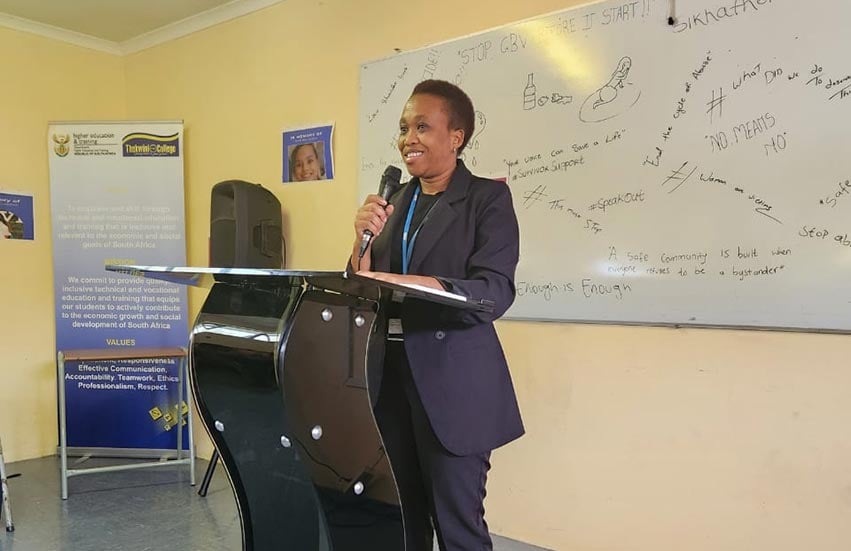
AHRI was invited to participate in eThekwini TVET College’s Wellness Day following a stakeholder interview with Higher Health. Our role was to provide talks on AHRI as a research Institute, the Nurture4Youth study, HIV prevention, treatment, and care. Students found our HIV prevention information useful, especially around PrEP and they requested more time and deeper content in future sessions. It was a wonderful opportunity to connect directly with young people, many of whom had moved for education, to understand their SRHR needs, knowledge gaps, and interests, and to build awareness about AHRI and the Nurture4Youth project, in particular.
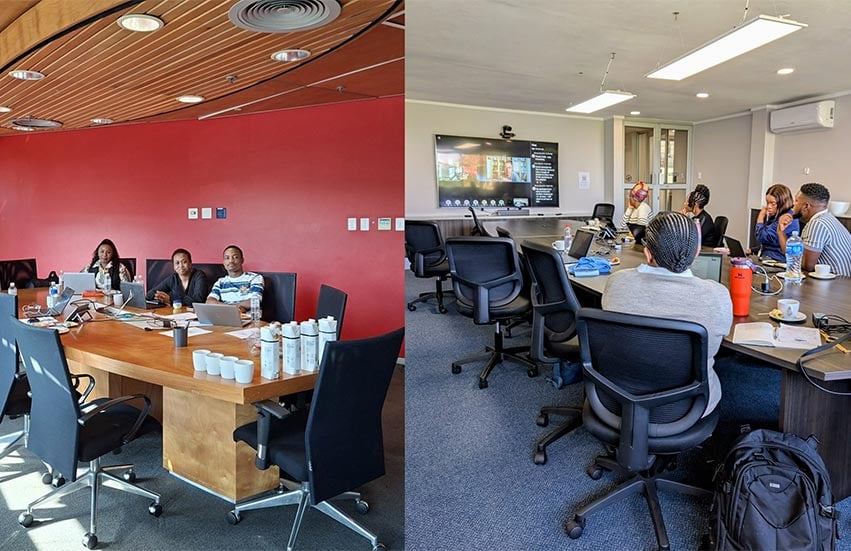
The focus of the analysis workshop was to consolidate findings from the Rapid Ethnographic Assessments (WP2) and data already collected in order to identify priorities for manuscript development and intervention design. Ahead of the workshop, all partners were asked to submit concept notes that began to show the analytic process and thinking from the data collected. A second objective was to also do some cross-site comparison, thematic synthesis and develop a shared understanding of the mechanisms shaping SRH experiences and outcomes among mobile adolescents and young people across diverse contexts. The workshop identified several cross-cutting themes that were consistently evident across sites. The workshop also identified opportunities to strengthen theoretical contributions by linking empirical findings to concepts such as negotiated access, medical pluralism, masculinity, and social constructions of migrancy.
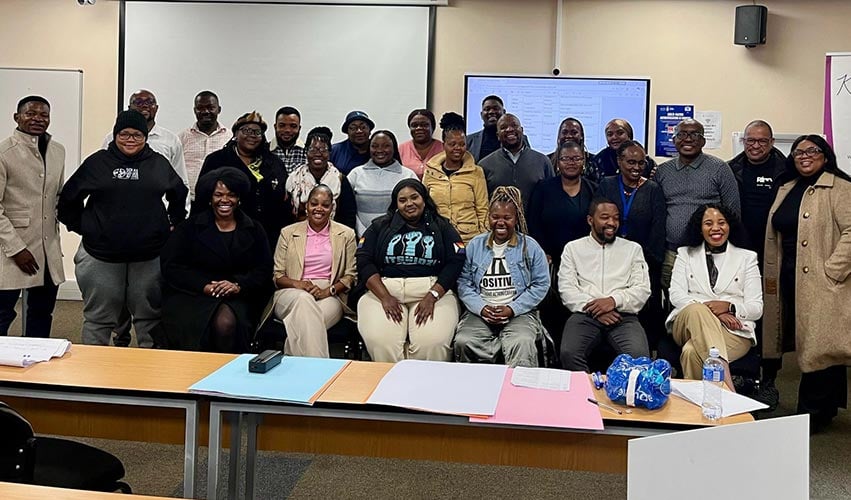
On 30 April 2026, the Nurture4Youth African Centre for Migration & Society (ACMS) team convened a meaningful stakeholder engagement session focused on strengthening collective responses to the sexual and reproductive health and rights needs of mobile adolescents and young people.
The session brought together stakeholders across health, social development, education, community-based organisations, youth structures, and civil society to reflect on emerging findings from our rapid ethnographic assessment in Johannesburg and Soweto. Together, we explored how young people navigate care, information, mobility, safety, and everyday structural barriers in rapidly changing urban contexts.
A key part of the discussion centred on stakeholder mapping, identifying the actors, relationships, referral pathways, and community resources that shape young people’s access to support. These conversations are an important step towards co-designing responsive, youth-centred, and contextually grounded interventions.
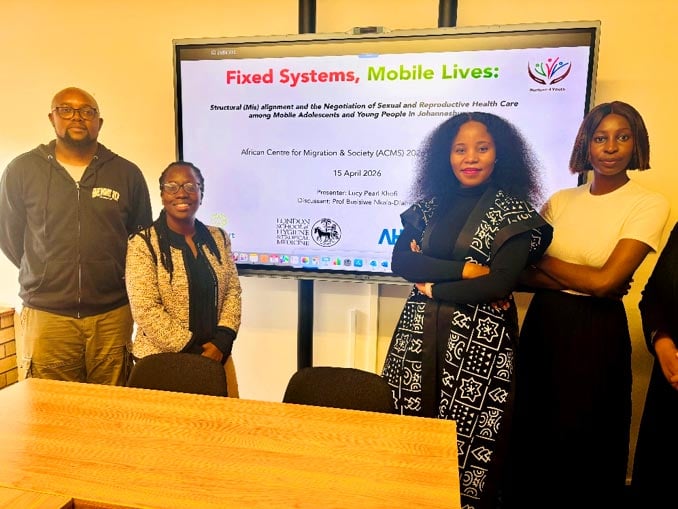
Dr Lucy Pearl Khofi of the African Centre for Migration and Society (part of WITS) recently presented a paper drawing on rapid ethnographic assessments conducted in Johannesburg, including inner-city and Soweto township sites, to examine how mobile adolescent and young people (mAYP) experience and navigate access to sexual and reproductive health services. The rapid ethnographic assessment approach included participatory methods such as transect walks, structured observations of key spaces, community engagements, and in-depth interviews and discussions with mAYP, healthcare providers, and community stakeholders. Read Dr Khofi’s work in her presentation.
On 10th April 2026, the Nurture4Youth project team presented the rapid ethnographic assessment (REA) component conducted between 19th September and 31st October 2025 in the two study communities in Zambia. The purpose of the presentation was to get initial feedback from colleagues at Zambart as we prepare for community dissemination of the REA findings. The presentation focused on the background for the Nurture4Youth project, the purpose of the REA, the methodology and actual activities carried out and key preliminary findings. The findings highlighted key community meta indicators, thus, physical features, social organization and networks and community narratives. The team also highlighted some of the reasons for migration among young people, the sexual reproductive health (SRH) risks and access to services among young people migrants and the lessons learnt.
Discussions following the presentation included the consenting process for migrants who were unable to speak the local languages and experiences or plans of how to link migrants to SRH services (if any). Further discussions were around carefully phrasing conversations around self-stigma and to consider combining the young people’s voices with those of the healthcare providers and stakeholders to balance the community perceptions and experiences. The feedback from Zambart colleagues has helped the project team to shape how to present our findings during the community dissemination meetings and we will continue to engage with colleagues with different expertise within the organization and the wider Nurture4Youth team.
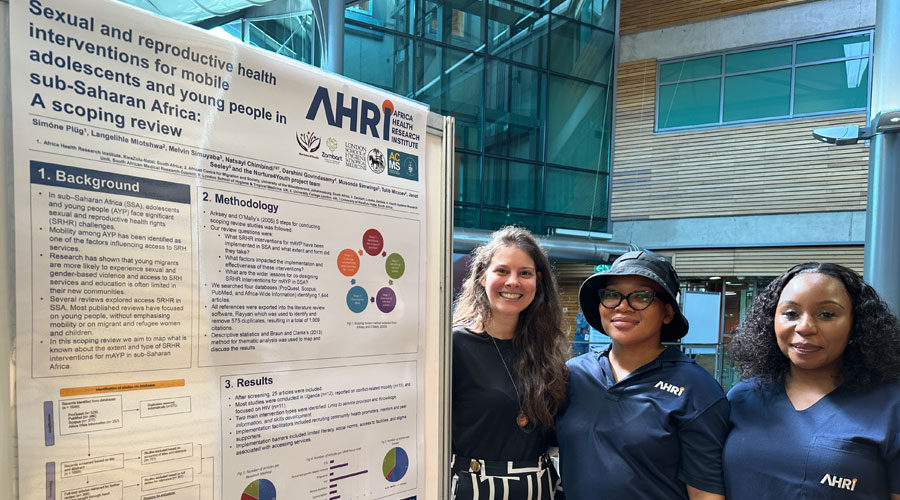
The evidence synthesis team presented a poster at the recent AHRI Wellcome Trust Board of Governors meeting highlighting the key findings from the scoping review, ‘Sexual and reproductive health interventions for mobile adolescents and young people in sub-Saharan Africa’.
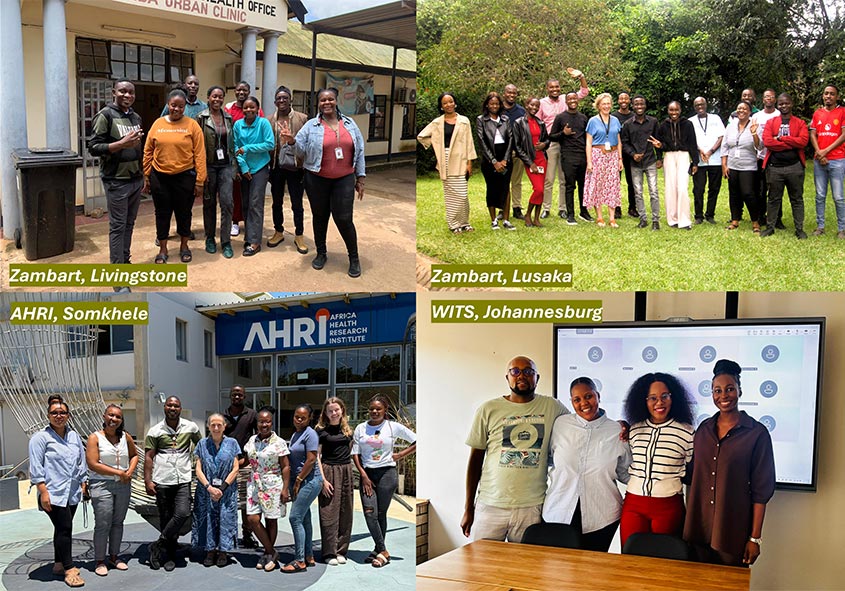
The Nurture4Youth Annual Project Meeting (21st-22nd January 2026) was an exciting opportunity for Nurture4Youth teams from Zambia and South Africa to get together, update on project activities, and discuss plans for 2026 and beyond. Work package teams presented updates on progress to date across all study sites, including an update from Work Package 1 on key findings from the recently published scoping review titled ‘Sexual and reproductive health interventions for mobile adolescents and young people in sub-Saharan Africa: a scoping review’. Work Package 2 - 3 teams highlighted progress made on the rapid ethnographic assessments and theory of change workshops respectively. Work Package 4 updated on community and stakeholder engagement activities, and Work Package 5 on capacity assessments and training needs. We also heard insightful presentations from the three PhD students, and concluded the two days of meetings with a discussion around learnings for future research and next steps for the coming months.
The Work Package 1 team conducted a scoping review which aimed to map what is known about the extent and type of interventions focused on SRHR for mobile adolescents and young people (mAYP) in sub-Saharan Africa. Mobility among adolescents and young people (AYP) is a key factor influencing their access to sexual and reproductive health rights (SRHR) services. Young migrants are more likely to experience gender-based violence and their access to SRHR services and education is often limited in their new communities. The scoping review found that future research and interventions should be underpinned by an understanding of young people’s health and wellbeing more broadly, and foreground the social, cultural, religious and economic factors shaping mAYP’s SRH needs.
Link to publication: https://link.springer.com/article/10.1186/s12889-025-25119-4