
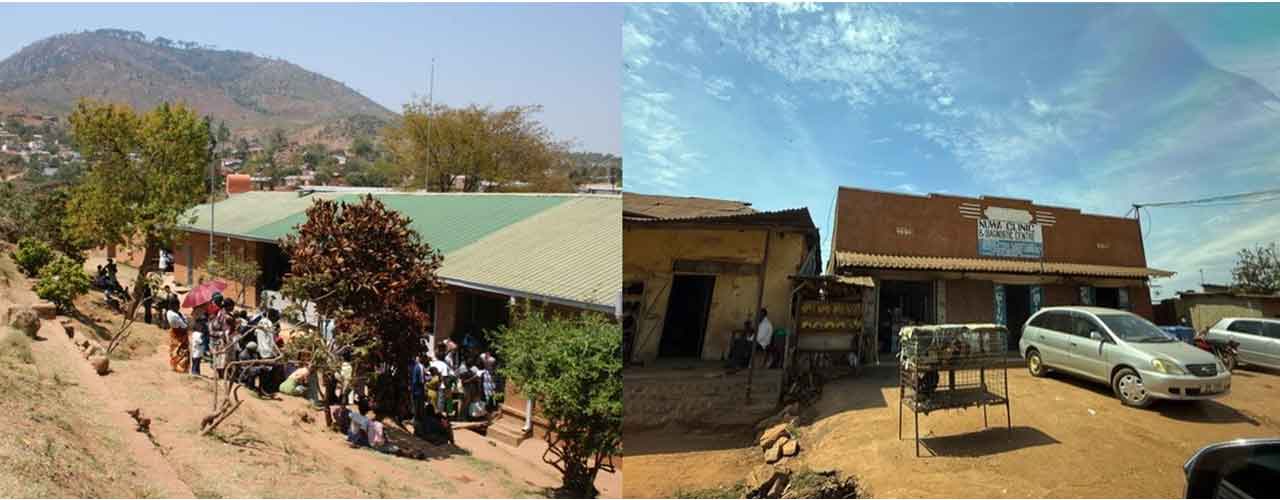





Frontline diagnostics play a critical role in the management of infectious and non-communicable diseases, particularly in resource-limited settings. The ‘TIYENI Dx’ project is designed to strengthen equitable access to community-based diagnostics across three disease contexts: HIV and Type I and Type II Diabetes in Malawi, and HIV and Ebola in Uganda. The work will inform national health strategies for scale-up of diagnostics and address inequalities in access to health empowerment through self-testing at a critical time as countries respond to the global call to address diagnostic gaps.
Our partnership is co-led by the London School of Hygiene and Tropical Medicine, Makerere University and the Malawi-Liverpool Wellcome Research Programme.
Summary
Frontline diagnostics play a critical role in the management of infectious and non-communicable diseases, particularly in resource-limited settings. TIYENI Dx is a five-year research programme investigating how self-testing and self-monitoring diagnostics are reshaping health engagement in sub-Saharan Africa. The project focuses on three conditions (HIV, Type 1 and Type 2 diabetes, and Ebola) in two countries: Malawi and Uganda. The work will inform national health strategies for scale-up of diagnostics and address inequalities in access to health empowerment through self-testing at a critical time as countries respond to the global call to address diagnostic gaps.
Project details
TIYENI Dx will focus on understanding ‘rational use’ of community diagnostics through the perspectives and lived experiences of individuals, families, communities and frontline health workers and the impact on management of health and well-being at home and through interactions with the health system.
Decentralised access to diagnostics through self-testing has substantial potential to address global diagnostic gaps, democratise health and contribute to Universal Health Coverage. The focus is on three conditions for which frontline diagnostics are available within the primary health system or the community: HIV, diabetes and Ebola, which represent three distinct, connected scenarios for investigation: 1) community self-testing for diagnosis of stigmatised conditions (HIV), 2) including in primary facilities during public health emergencies (Ebola) and 3) self-testing for monitoring of chronic conditions (blood glucose for diabetes).
Key research aims
- Define and document social and structural drivers of ‘rational use’ under conditions of stigma, emergency disease outbreaks and lifestyle and risk management
- Unpack the dynamic between empowerment through self-testing and engagement with public and private health services
- Explore uncertainty, trust and risk influencing decisions, embedded within complex socioecological environments and impact on intended and unintended, beneficial and potentially harmful health and social consequences
- Co-produce toolkits for ‘rational use’ of frontline diagnostics
- Promote health equity across mainstream and marginalised groups through ‘rational use’ of self-testing and monitoring that reflects direct to consumer markets.
Impact
The work will contribute community perspectives to advancing policy and regulatory frameworks for the advancement of self- and near-person diagnostics as sub-Saharan Africa moves to meet the World Health Assembly call to develop national diagnostic strategies.
The work will inform national health strategies for scale-up of diagnostics and address inequalities in access to health empowerment through self-testing at a critical time as countries respond to the global call to address diagnostic gaps.
TIYENI translates to ‘Let’s Make Progress!’ in Malawi and Uganda and reflects the aim to drive forward equitable and people-centred strategies to improve health outcomes.
Outputs
- Policy and practice
- Country-specific recommendations on rational use of self-testing for HIV, diabetes and Ebola
- A framework for rational use of frontline diagnostics, co-developed and evaluated across two countries
- Policy briefs for national health authorities
- Engagement with international bodies including FIND (Foundation for Innovative New Diagnostics)
- Community and capacity
- Co-produced toolkits on self-testing and frontline diagnostics use, grounded in community priorities
- Review and update of the existing ‘Let's Test Toolkit’ 1 for each disease and country context
- Two PhD researchers trained in Malawi and Uganda
- Strengthened South-South research collaboration between MLW and USHS, Makerere University
This is an anthropological research project using qualitative methods and situated at the interface of technology and society. The project will be delivered through four work packages:
- Work Package 1
Theme: HIV and Diabetes Self-Testing. Malawi (urban and rural)
Understanding HIV self-testing and diabetes self-monitoring individually and in contexts of co-morbidity, exploring the experiences of users, communities and frontline health workers.
- Work Package 2
Theme: HIV and Ebola Diagnostics. Uganda (urban and rural)
Examining HIV self-testing alongside the potential for frontline Ebola rapid diagnostic tests, including critical incident narratives with outbreak survivors and community leaders.
- Work Package 3
Theme: Co-Production of Toolkits. Malawi and Uganda
Working with communities to co-develop practical guidance on rational use of self-testing, drawing on research findings and participatory methods.
- Work Package 4
Theme: Evidence to Policy. Malawi and Uganda
Translating evidence into policy-relevant recommendations and a theoretical framework for rational use, engaging national stakeholders and international diagnostics experts.
Tiyeni-Dx is an anthropological research programme that will use qualitative methods. We work directly with communities of users and others to understand the social, structural and contextual drivers of how and why people use self-testing tools and what this means for their health and wellbeing.
Our methods include ethnographic observation, serial in-depth interviews, treatment journey modelling, critical incident narratives with Ebola survivors, group discussions with local health teams, and participatory co-production of guidance materials. We use an intersectional lens, attending to the multiple dimensions of marginalisation experienced by individuals, communities and frontline health workers as they navigate public and private health systems in urban and rural settings.
Responsiveness to technological innovation is informed structurally by the wider policy context and behaviourally by community and individual perceptions of risk. Access, engagement and response are additionally influenced by local and national, social and economic contexts, including modernisation through urbanisation and exclusion through social marginalisation and structural inequalities. Given this, the work will be undertaken comparatively across urban and rural settings in one low-income (Malawi) and one lower middle-income (Uganda) country. The project will be co-led by partners at Makerere University and Malawi-Liverpool-Wellcome Trust.
Community and policy engagement are central to how this project is designed and delivered. TIYENI Dx will establish two key engagement structures:
Community Engagement and Involvement Groups (CEIGs)
Established in both Malawi and Uganda from Year 1 (2026). CEIGs will include people with lived experience of HIV, diabetes and/or Ebola, community leaders, advocacy champions, and frontline health staff. They will guide the research, monitor responsiveness to community needs, and co-develop toolkits for rational use of diagnostics.
National Stakeholder Advisory Groups (NSAGs)
Established in both countries to ensure the research is responsive to national health priorities. NSAGs will include regional and national policy stakeholders working on diagnostics scaleup and national health strategies and provide a forum for uptake of community voices in policy.

Nicola
Desmond
Professor
Nicola is an anthropologist who has spent over 20 years living and working in sub-Saharan Africa, most recently with the Malawi-Liverpool-Wellcome Programme where she established and led the Behaviour and Health Group, and the social science programme, building a strong team of qualitative and mixed methods researchers in social science. She moved to LSHTM from the Liverpool School of Tropical Medicine in November 2024 and is currently establishing a research group on the social and ethical dimensions, including intended and unintended harms and benefits, of health technologies for diagnostics, therapeutics and prevention. She is particularly interested in the interactions between society and technology and how health technologies are transformed, transforming and (re)imagined as they move across transnational and transcultural boundaries within global health.

Wezzie
Lora
Assistant Professor
Wezzie Lora is an anthropologist and Assistant Professor at the London School of Hygiene & Tropical Medicine with over 12 years' experience conducting qualitative research in Sub-Saharan Africa. Her expertise centres on self-testing technologies, including HIV self-testing amongst marginalised and vulnerable populations. Formerly involved as qualitative researcher in the STAR HIV Self-Testing Consortium, she has extensive experience examining the social dimensions of diagnostic technology adoption and implementation in resource-limited settings across multiple African countries.

Mark
Marchant
Research Fellow
Mark Marchant is a Research Fellow at the London School of Hygiene & Tropical Medicine and a qualitative social scientist working at the intersections of anthropology, political theory, and public health. His research focuses on community engagement, health technologies, and trust in health systems, with experience leading qualitative and ethnographic research in East Africa on infectious disease, gender-based violence, and health policy.

Cora
Dee
Project Coordinator
Cora Dee is a Programme Manager at LSHTM based in the Faculty of Public Health and Policy, working on two large NIHR-funded anthropological global health projects, TIYENI-Dx and Nurture4Youth. She also holds an MSc in Global Health and Development from UCL.

Yasmin Dunkley
Researcher
Yasmin Dunkley is a health systems researcher based in Botswana, working at the interface of global health programming and research. Her work examines decentralised health technologies as socio-technical interventions, focusing on how bringing services closer to people reshapes health systems and the social worlds they are embedded in. She is completing her PhD, which included developing an infectious disease model examining conditions under which self-testing can support epidemic preparedness, including Ebola.

Augustine Choko
Senior Lecturer in Public Health Epidemiology (Liverpool School of Tropical Medicine)
Augustine Choko is a Senior Lecturer at LSTM with over 14 years of research experience. Augustine, along with Liz Corbett are the pioneers of population-based HIV self-testing (HIVST) in Malawi. He showed through a complex adaptive trial that HIV testing by male partners can be increased by providing HIVST kits via a pregnant partner. Augustine’s work in HIVST focusing on underserved populations has informed national and international policies.

Henry Sambakunsi
PhD Student (LSHTM/MLW)
Henry Sambakunsi is a PhD student at LSHTM based at the Malawi-Liverpool-Wellcome Programme. With over seven years' experience in qualitative health research in Malawi, his work spans HIV self-testing, antimicrobial resistance, pandemic preparedness and gender-based violence among female sex workers. Formerly a qualitative researcher on the STAR HIV Self-Testing Consortium, he holds an MSc in Global Health from LSTM.

Henry Mwasikakata
Public Health Researcher
Henry Mwasikakata is a Public Health researcher based at the Malawi-Liverpool-Wellcome Programme (MLW), where he works on the TIYENI Dx study. His research interests centre on understanding people’s experiences of health and healthcare and how communities interact with health systems. He holds a Bachelor of Social Science in Social Work. For over six years, he has contributed to qualitative health research in Malawi, including research on antimicrobial resistance, antibiotic use, quality of care and health service delivery.

Bright Lipenga
Research Student – MSc-Regulatory Sciences (MLW)
Bright Lipenga is medicine regulation enthusiast based at MLW where he works in clinical research governance and trial implementation as the Pharmacist of Record. His work is in investigating the role of medicine regulatory agencies in promoting equitable access to medical devices and diagnostics. He is an MSc in Regulatory Sciences student, focusing on clinical research regulation and translational research in Drug/Medical Device Discovery and Development.

David Kaawa-Mafigiri
Associate Professor of Medical Anthropology (Makerere University)
David Kaawa-Mafigiri is an Associate Professor in the School of Social Sciences, Makerere University, medical anthropologist with public health expertise in integrating socio-behavioural and community perspectives to infectious and non-infectious disease control in East and Central Africa. Utilizes anthropological techniques including ethnography for HIV, Ebola, and COVID-19 response to amplify community engagement in epidemic preparedness. Commitment to biosocial research is illustrated through his research and publications (https://orcid.org/0000-0002-2699-4248).

Robert Okello
PhD Student (LSHTM/Makerere)
Robert (Bob) Okello is a Ugandan researcher based in Kampala. Before commencing the TIYENI Dx PhD studentship, Bob worked as a researcher and consultant with the Centre for Public Authority and International Development at the London School of Economics. He also served as a researcher on the Wellcome Trust-funded project, Pandemic Preparedness. Bob holds an MSc in Control of Infectious Diseases from the London School of Hygiene & Tropical Medicine.

Isabella Judith Achokotho Akol
Program Manager (USHS)
Mrs. Isabella Judith Achokotho Akol holds a honours Bachelor of Arts degree in Social Sciences from Makerere University, a Postgraduate diploma in General Management (Uganda Management Institute) and a Masters of Arts degree in Public Administration and Management (Makerere University) possesses over 20 years’ experience in human resource management, grants management, project administration, financial management, conference organizational skills, procurement and monitoring and evaluation.
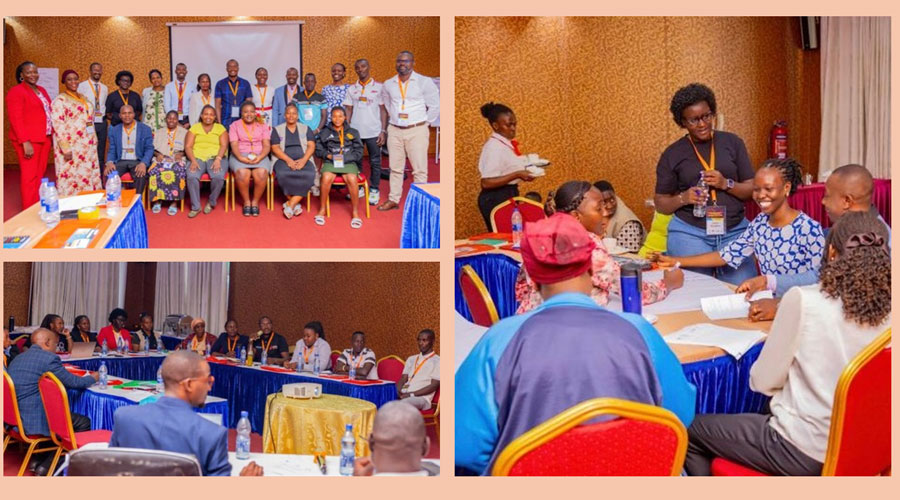
The inaugural Uganda Community Engagement and Involvement Group (CEIG) brought together community representatives from across Kampala and Mubende, including people with lived experience i.e. Ebola survivors, health and community-based service providers, civil society organizations and members of the TIYENI Dx research team. The objectives of the meeting were to formally establish the CEIG, develop a shared understanding of the TIYENI Dx study and the role of community representatives in research governance, and identify community priorities to inform the study's Year 1 research activities. Community voices and lived experiences are central to TIYENI Dx research, providing critical insights that will guide the design, implementation, and governance of the study to ensure it remains relevant, responsive, and grounded in community priorities and realities.
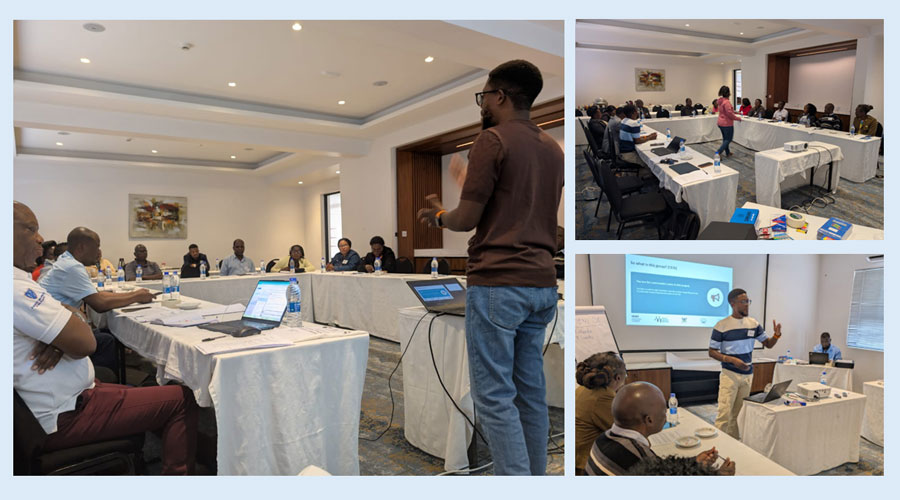
This inaugural meeting formally established the Malawi Community Engagement and Involvement Group (CEIG) as the project's community advisory platform in the country, ensuring that community perspectives are embedded throughout the TIYENI Dx study.
The workshop brought together 15 CEIG members; people with lived experience of HIV and diabetes, healthcare professionals, representatives from the Ministry of Health, Queen Elizabeth Central Hospital, Blantyre District Health Office, civil society organisations, and the TIYENI Dx research team.
Feedback from participants was overwhelmingly positive, with members reporting an improved understanding of the study, appreciating the highly participatory nature of the workshop, and expressing confidence that TIYENI Dx has the potential to improve the appropriate use of HIV and diabetes diagnostic services in Malawi.
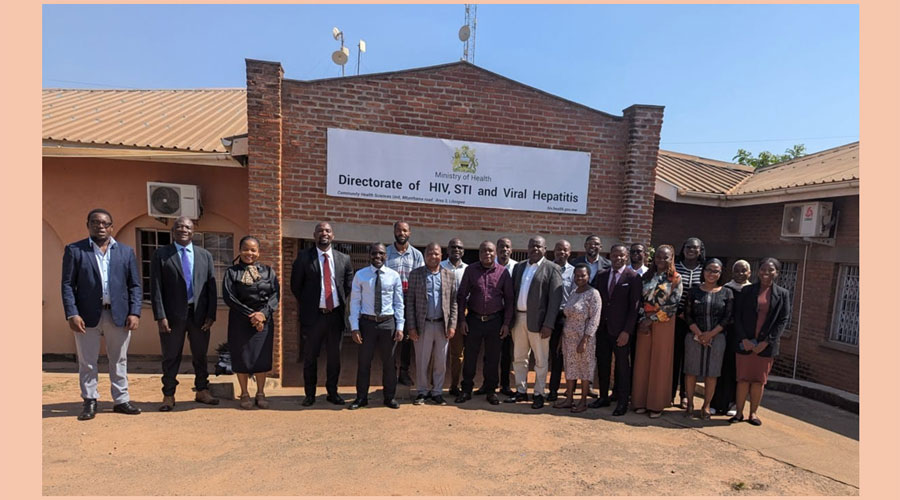
The purpose of the introductory MOH meeting was to introduce the TIYENI Dx study to Ministry of Health stakeholders, to align the work with national diagnostic policy and to begin forming the National Stakeholder Advisory Group (NSAG) which will guide the study. The main points of discussion related to diagnostics challenges (including widespread use of unregulated diagnostic tools), alignment with national priorities (particularly Malawi's Health Sector Strategic Plan III (HSSP III)), self-testing implementation, and next steps for forming the NSAG.