
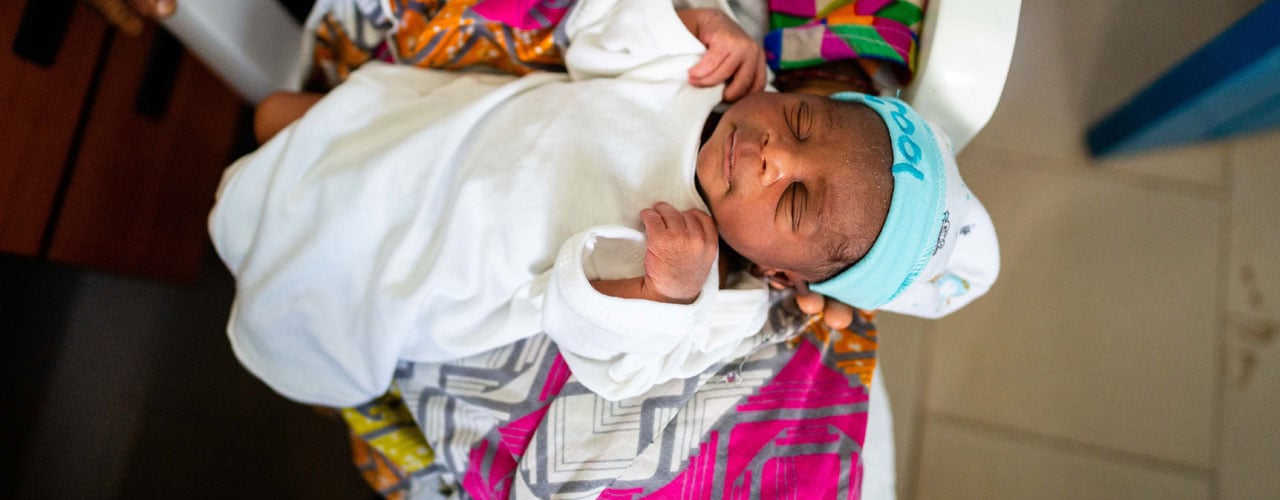






Every year, hundreds of thousands of newborns die from healthcare-associated infections that are never diagnosed in time. NeoShield is transforming how these infections are detected, prevented, and treated in high-burden neonatal units across Malawi and Zambia.
We are strengthening laboratory diagnostic capacity, developing an AI-driven Clinical Decision Support Algorithm to guide safer, more targeted antibiotic use, and establishing real-time outbreak detection systems that alert clinical teams before infections spread. Working in partnership with local healthcare teams and Ministries of Health, we are co-designing infection prevention bundles and using whole-genome sequencing to track transmission patterns and high-risk resistant strains.
Through these integrated activities, NeoShield is generating evidence and practical tools to improve infection outcomes, reduce inappropriate antibiotic use, and help mitigate antimicrobial resistance - building sustainable solutions for neonatal care across Africa.
NeoShield is a multi-country, multi-disciplinary partnership between neonatal hospital units, national Ministries of Health, and research institutions including the London School of Hygiene & Tropical Medicine (LSHTM), the Malawi-Liverpool-Wellcome Trust (MLW), and the Zambia National Public Health Institute (ZNPHI).The project is co-led by Prof. Eric Ohuma and Dr. James H. Cross, with national leadership from Dr. Patrick Musicha (Malawi) and Prof. Roma Chilengi (Zambia). Our broader team includes industry partners bioMérieux and SEDRI-LIMS, alongside a network of neonatal clinicians, microbiologists, data and behavioural scientists, and implementation experts from across Africa and globally.
Our focus
Every year, hundreds of thousands of newborns die from hospital-acquired infections, many of which are never diagnosed in time. In sub-Saharan Africa, healthcare-associated infection rates in neonatal units are nearly nine times higher than in high-income settings, with many facilities reporting that more than half of neonatal deaths are infection-related.
NeoShield is working with hospitals in Malawi and Zambia to fundamentally redesign how infections in hospitalised newborns are detected, prevented, and treated. The challenge extends beyond the bacteria themselves to encompass the systems that surround them: limited diagnostic capacity, fragmented data, and the absence of mechanisms for early detection and coordinated response.
We are building a connected framework that strengthens laboratory diagnostics, harnesses artificial intelligence and real-time data, and equips clinical teams with practical tools to act faster, smarter, and more safely.
Through partnership with the Malawi-Liverpool-Wellcome Trust (MLW), Zambia National Public Health Institute (ZNPHI), and national Ministries of Health, NeoShield is creating solutions that are locally led, evidence-based, and designed for sustainability.
Our approach is structured around five interlinked research workstreams, each addressing a critical gap in neonatal infection care.
Research workstreams
- Workstream 1: Strengthening Microbiology Systems
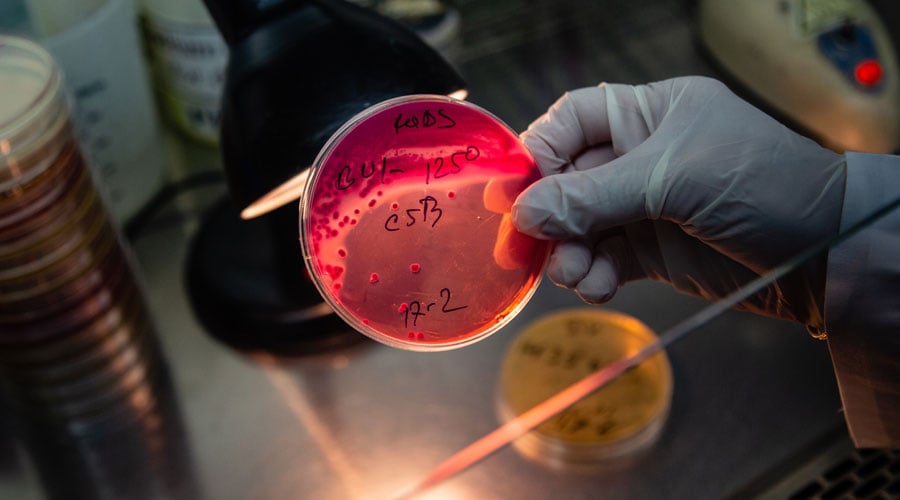
Accurate diagnosis often centres on good-quality laboratory services. Yet across many neonatal units in high-burden settings, blood culture (the gold standard for diagnosing sepsis) is rarely performed, whilst antibiotic use is widespread.
NeoShield is transforming this reality by investing in modern microbiological capacity. We are equipping neonatal units with automated blood culture and antimicrobial susceptibility testing platforms via partnering with bioMérieux, developing standardised laboratory protocols, and providing comprehensive training and mentorship to laboratory scientists.
Crucially, we are embedding digital laboratory information systems (SEDRI-LIMS) that connect diagnostic results directly to clinicians in real time and feed into national and global antimicrobial resistance surveillance networks.
This creates a self-sustaining diagnostic ecosystem where every sample contributes not only to individual patient care but also to the country's wider understanding of AMR patterns and emerging threats.
- Workstream 2: Ward-Level Outbreak Detection and Early Warning Systems
Neonatal units are complex environments where infections can spread rapidly and silently. NeoShield is developing a real-time outbreak detection system that monitors infection rates to identify emerging threats early. When unusual patterns appear, automated alerts prompt investigation by infection control teams.
By moving surveillance from reactive to proactive, hospitals can intervene sooner to prevent escalation, saving lives and reducing the spread of resistant organisms.
- Workstream 3: Infection Control and Antibiotic Stewardship Bundle
Once an alert is triggered, rapid and coordinated action is essential. NeoShield’s infection control and stewardship bundle will provide a structured, evidence-based response that hospital teams can deploy immediately.
Developed in partnership with hospital staff and Ministries of Health, this approach promotes local ownership and long-term improvements in infection prevention practices.
- Workstream 4: Clinical Decision Support Tool (CDST) Development
At the bedside, clinicians often must make treatment decisions before laboratory results are available, sometimes leading to defensive prescribing or delayed escalation when resistance is present.
NeoShield's new Clinical Decision Support Tool (CDST) will use machine learning to bridge this gap. The CDST will integrate real-time clinical observations, point-of-care diagnostic results, and microbiological trends to generate treatment recommendations for each neonate with suspected late-onset sepsis.
Co-designed with neonatal teams and aligned with national clinical guidelines, the CDST is built to be intuitive, interpretable, and supportive of confident, evidence-based decision-making.
- Workstream 5: Pathogen Whole-Genome Sequencing
To stay ahead of resistant bacteria, we must understand them at the genetic level. NeoShield is conducting bacterial whole-genome sequencing, enabling scientists in Malawi and Zambia to track how pathogens and resistance genes spread within and between hospitals. These genomic insights will help reveal hidden transmission pathways, guide infection control actions, and refine the algorithms that underpin our clinical and surveillance tools.
What we aim to achieve
By integrating these five workstreams, NeoShield is creating a new model for neonatal infection prevention that is data-driven, machine-learning-enabled, locally led, and globally relevant.
The project aims to deliver:
- Faster, more accurate diagnosis
- Earlier outbreak detection and response
- Safer, more rational antibiotic use
- Stronger national AMR surveillance
NeoShield is led by a collaborative, interdisciplinary team with expertise spanning neonatal care, microbiology, epidemiology, genomics, data science, and implementation research. The programme is structured to centre African leadership and ensure close engagement with Ministries of Health in Malawi and Zambia.
The NeoShield Team
London School of Hygiene & Tropical Medicine (LSHTM)
- Dr James H. Cross

Assistant Professor of Infectious Disease Epidemiology & Co-Principal Investigator of NeoShield
Dr James H. Cross is an Assistant Professor of Infectious Disease Epidemiology at LSHTM and Co-Principal Investigator for NeoShield. His research focuses on reducing neonatal infections in high-burden settings through strengthened microbiology systems, antibiotic stewardship, outbreak detection, and digital surveillance. He holds a PhD in Epidemiology & Population Health from LSHTM and previously served as Infection Workstream Lead for the NEST360 Alliance. James co-leads LSHTM's Healthcare-Associated Infection Interest Group, has contributed to WHO's Target Product Profile for neonatal sepsis diagnostics, and serves on the Management Committee of LSHTM's Antimicrobial Resistance Centre.
- Prof Eric Ohuma

Professor of Medical Statistics and Epidemiology & Co-Principal Investigator of NeoShield
Prof Eric Ohuma is a Professor of Medical Statistics and Epidemiology specialising in maternal, fetal, newborn, and child health. As Co-Principal Investigator for NeoShield, he oversees the study's scientific direction and coordination. At LSHTM, he leads data-system design and evaluation for the NEST360 Alliance and MEBCI 2.0, supporting neonatal data infrastructure across Africa. He holds a DPhil from the University of Oxford and previously served as Senior Research Fellow at SickKids, Canada, and Lead Statistician for Oxford's INTERGROWTH-21st Project, which produced the global fetal and newborn growth standards now used worldwide.
- Dr María José Sánchez Alva

Research Assistant in Neonatal Clinical Care for NeoShield
Dr María J Sánchez A is a paediatrician with clinical experience in high-burden settings, including neonatal and paediatric care in low-resource and conflict-affected contexts. She has contributed to implementation research through the MAMI-GRIPPS Trial at LSHTM, supporting the translation of evidence into practice for small and nutritionally at-risk infants. She currently works on NeoShield, supporting the clinical implementation of neonatal sepsis tools, outbreak detection, and strengthening of routine clinical and microbiology systems in Zambia and Malawi.
- Claudia Da Silva

Senior Project Manager
Claudia Da Silva is a Senior Project Manager with over 15 years of experience in research and grant management at LSHTM. She has led large, multi-partner programmes funded by the Bill & Melinda Gates Foundation, CIFF, UKRI, Wellcome, GAVI, and NIHR. In NeoShield, she oversees project governance, budgeting, contracting, reporting, and partnership management to ensure transparent and equitable collaboration across all participating institutions.
- Dr Parna Mandal

Research Fellow in Health Data Science
Dr Parna Mandal is a Research Fellow in Health Data Science at LSHTM, specialising in the application of quantitative and data-driven methods to infectious disease and public health research. She currently works on NeoShield, developing and evaluating approaches for real-time neonatal infection surveillance, ward-level outbreak detection and clinical decision support using routinely collected clinical and microbiological data to support earlier and better-informed action. Her previous research involved applying computational methods to cholera transmission and intervention strategies, implant-associated infections and malaria epidemiology.
Malawi-Liverpool-Wellcome Research Programme (MLW)
- Dr Patrick Musicha

Lecturer in Clinical Sciences, Liverpool School of Tropical Medicine & National Lead Investigator for Malawi
Dr Patrick Musicha is a Lecturer in Clinical Sciences at the Liverpool School of Tropical Medicine, Senior Research Associate at the Malawi-Liverpool-Wellcome Programme, and National Lead Investigator for NeoShield in Malawi. A genomic epidemiologist with a PhD in Bacterial Genomics and Epidemiology from the University of Liverpool, his research combines bacterial genomics, bioinformatics, and statistical modelling to track pathogen evolution and antimicrobial resistance across Africa. His work has informed Malawi's National AMR Action Plan and contributed to global AMR surveillance through GRAM, KlebNET, and other international consortia. He leads the Pathogen Dynamics and AMR Group at MLW and serves as an Academic Editor for PLOS Global Public Health.
Zambia National Public Health Institute (ZNPHI)
- Prof Roma Chilengi

Director General, ZNPHI & National Lead Investigator for Zambia
Prof Roma Chilengi is Director General of the Zambia National Public Health Institute, Professor of Vaccinology at the University of Lusaka, Health Advisor to the President of Zambia, and National Lead Investigator for NeoShield. A medical doctor and public health scientist with over 25 years of experience in infectious disease control and clinical research, he has been instrumental in strengthening Zambia's health-security systems and national responses to antimicrobial resistance. He chairs Zambia's National AMR Coordinating Committee and the Genomic Sequencing Consortium, driving implementation of the National AMR Action Plan and expansion of genomic-surveillance capacity.
- Dr Joseph Chizimu

Antimicrobial Resistance National Coordinator and Focal Point, ZNPHI & Co-Investigator for Zambia
Medical doctor, public health and infectious diseases specialist serving as the National Antimicrobial Resistance (AMR) Coordinator at the Zambia National Public Health Institute (ZNPHI). He leads the national coordination of AMR surveillance, antimicrobial stewardship, and One Health governance through the Antimicrobial Resistance Coordinating Committee (AMRCC). With expertise in molecular epidemiology and AMR research, his work focuses on strengthening surveillance systems, laboratory capacity, and stewardship implementation to support evidence-based clinical practice and policy decision-making. His professional interests centre on integrating surveillance data into routine health systems and policy processes to ensure sustainable, data-driven control of antimicrobial resistance in low- and middle-income settings.
- Precious Simushi

Precious Simushi is a PhD Fellow and a Laboratory Scientist at the Zambia National Public Health Institute (ZNPHI) based in the National Public Health Reference Laboratory. With over 11 years of experience as a laboratory scientist across clinical and public health settings, her expertise spans molecular biology, genomics, and bioinformatics. Her current research focuses on the genomic landscape of neonatal infections and the role of gut microbiota disruption in clinical outcomes, contributing to Zambia's national capacity for genomic surveillance and antimicrobial resistance monitoring.
Partners
Zambia Ministry of Health
The Zambian Ministry of Health is a core partner in NeoShield, providing strategic oversight and ensuring alignment with national health priorities and antimicrobial resistance action plans. Working through the Zambia National Public Health Institute, the Ministry supports the integration of NeoShield's innovations into routine neonatal care and national health-system structures, positioning outputs for sustainable scale-up.
Malawi Ministry of Health
The Malawian Ministry of Health is an essential partner in NeoShield, providing guidance to ensure the study aligns with national clinical guidelines, AMR surveillance strategies, and neonatal care priorities. Working with the Malawi-Liverpool-Wellcome Research Programme, the Ministry facilitates implementation across participating neonatal units and ensures outputs are designed for sustainability and integration into national health infrastructure.
Funders
The NeoShield Study is supported by the Wellcome Trust and the Gates Foundation, with the primary grant awarded to the London School of Hygiene & Tropical Medicine (LSHTM) as the main grant holder, and subawards to the Zambia National Public Health Institute (ZNPHI) and the Malawi-Liverpool-Wellcome Research Programme (MLW). These awards enable an integrated research and implementation programme focused on neonatal infection prevention, detection, and control across Africa.