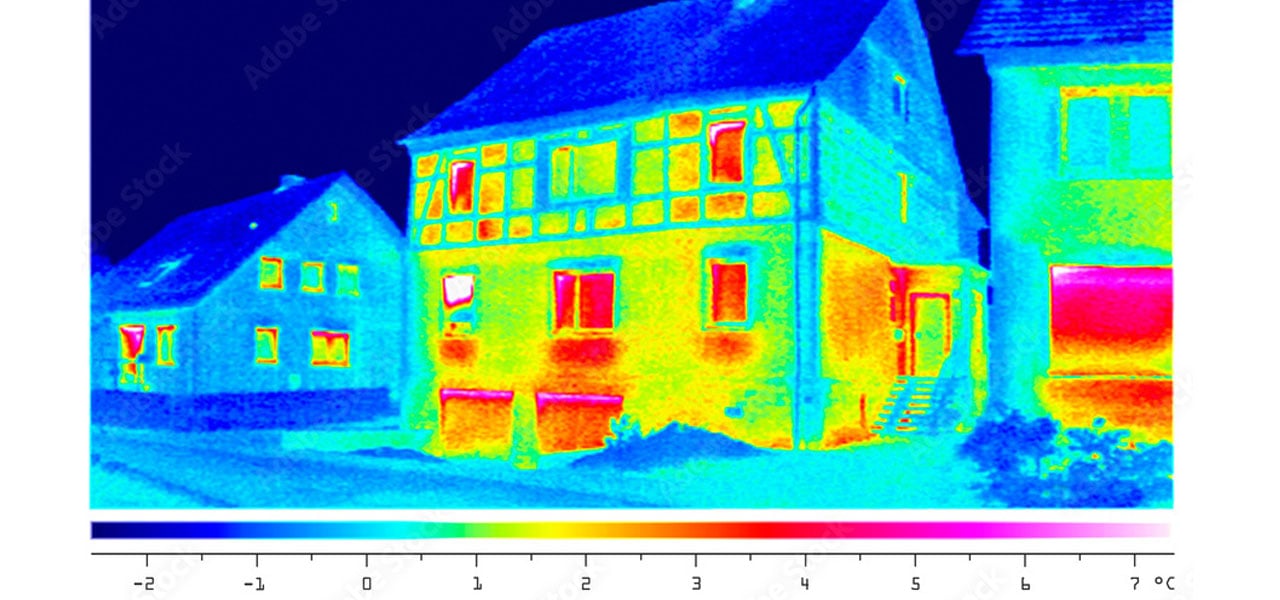




CoSine evaluates health outcomes for low-income households receiving energy efficiency upgrades. It is a case study linking administrative data on housing and healthcare in London, UK.

Project rationale
Nearly 10M households in the UK – or 1 in 3 – cannot afford to heat or improve the energy efficiency of their homes. Energy Company Obligation (ECO) is the largest Government-mandated intervention and hence important for fuel poor households. The project involves public partners and key stakeholders locally and nationally. The study will offer new insights into the performance of ECO in terms of health outcomes using real-world data. We will study how the intervention works, for whom, and if not, offer views on improvements. The study will capitalise on new linkage opportunities at household-level and measure health co-benefits for housing-related conditions. Opening this area of research could lead to benefits for patients. The new insights would be of interest for tenants, homeowners, and landlords as well as policy makers and decision-takers when investing in the green transition towards Net Zero. The findings will also be of interest to the general public who fund ECO through green levies on their energy bills. Finally, the experiences with administrative data from the project can – when written up as a handbook – help local authorities and others who evaluate public health and housing interventions.
Why CoSine?
CoSine stands for Co-benefits in health from Sustainable housing. It is a project to square the circle on the additional benefits in health when doing something for the climate.
Secure data linkage
The linkage between housing and health data is not routinely available and we will use London as a case study combining data from Department of Energy Security and Net Zero (DESNZ) and NHS London Secure Data Environment (SDE) in a secure way.
Which scheme?
As of 2026, ECO is being replaced by new schemes under the Warm Homes Plan. The new schemes are funded by UK taxpayers. The research with historic data concerns ECO. The public involvement may consider both ECO and the new schemes.
Which type of housing?
The ECO scheme applies to the private rental sector and owner occupiers. While important the social rental sector is covered by other schemes out of scope for this particular study.
Research questions
What are the health co-benefits of Energy Company Obligation (ECO) retrofits in London? How do the results compare to national studies in terms of energy efficiency and health status? What new insights can be gained about the use of administrative data for evaluating housing interventions?
Work packages
- Public Involvement / Setting up public involvement and stakeholder groups to inform the research plan.
- Literature Review / Carry out a systematic literature review about energy efficiency retrofits and health co-benefits.
- Theories of Change / Develop and refine Theories of Change, which is a framework for what needs to happen to bring about change, why we think this, when we know it has worked and, if not, why that might be.
- Data linkage / Combine government-owned retrofit data with NHS patient data in a secure and anonymous way for the research
- Generalisability / Compare results to studies elsewhere.
- Knowledge Mobilisation / Discuss findings with stakeholders and share the results where it can have most impact.
- Produce a technical handbook.

Why your voice matters?
We are talking to residents about their lived experience at different types of events. This is to hear your views about the issues that matter most, how well energy efficiency retrofits deliver in terms of health outcomes, interpretation of results from the study, and views on how the schemes could be improved. We will also invite views from a wide range of stakeholders for further insights.
Use of NHS data for research
More information on the secondary use of anonymised data for research.
For more information about the CoSine study
Contact: Jakob Petersen, [email protected].

Jakob Petersen
CoSine lead / Research Fellow
Jakob is researching new ways to measure health impacts of energy efficiency retrofits. He is funded by NIHR’s Advanced Fellowship programme. He worked for different national public health agencies and a national survey before taking up a career as researcher.

Samina Begum
Public Involvement Partner
I became a PPI collaborator because both as a carer and as a user of health services, I saw good and bad healthcare. This is also the reason why I am passionate to ensure the seldom heard voices are heard. The most rewarding aspect of my role is to be able to contribute in helping researchers to improve things from a patient’s perspectives.

Matt
Egan
Professor
Matt is Professor of public health. His research focuses on generating evidence to inform policy and practice in areas such as housing, urban regeneration, community empowerment, food and alcohol availability, and local government. Matt currently co-leads the National Institute for Health and Care Research (NIHR) School for Public Health Research (SPHR) Healthy Places Healthy Planet Programme.

Hameed Khan
Public Involvement Partner
Hameed Khan is an ex-service user of mental health services and carer for his mother who has long term physical and mental health conditions. He has worked in the voluntary and community sector and health and social care field for over 20 years in various roles from frontline support work to middle management. Prior to becoming a full-time carer, he was teaching 16 to 19 years old Level 3 Business Management in further education college.

Megan Leach
Public Involvement Partner
I am a Public and Patient Involvement (PPI) advisor with lived experience as both a patient and a long‑term carer. My perspective is shaped by supporting a family member with complex health needs while navigating the realities of poor‑quality housing, fuel poverty, and the wider pressures that come with long‑term conditions. These experiences have given me a deep understanding of how housing, health, and social inequalities intersect in everyday life, and why research in this area must stay grounded in the voices of the people most affected.

James
Milner
Associate Professor in Climate Change - Environment and Health
James is Associate Professor with expertise in modelling health impacts of environmental interventions including climate change mitigation and adaptation questions with a particular research focus on the health effects of improving home energy efficiency. James led on the evaluation of the Irish Government’s ‘Warmth & Wellbeing’ pilot home energy efficiency scheme. The study involved 1,650 retrofitted homes in Dublin and measured health impacts for people with chronic respiratory conditions.

Luisa
Pettigrew MBChB MRCGP MSc DFFP DRCOG DCH BEM AFHEA
Clinical Research Fellow
Luisa is a GP, NIHR Doctoral Research Fellow at LSHTM, and Senior Policy Advisor at The Health Foundation. Her research and policy projects concern health systems financing, organisational models of general practice, and health care professional behaviour change with organisations including the World Health Organisation, Johns Hopkins Bloomberg School of Public Health and Nuffield Trust.

Debs Smith
Public Involvement Partner
I am Debs Smith. I live in social housing in the west Midlands and have experienced lack of money. I have been doing Patient and Public Involvement work with researchers using my lived experience of multiple long term health conditions. I have done and still do a lot of volunteering in my community.

Frank de Vocht
Epidemiology / University of Bristol
Frank is Professor in epidemiology and public health with expertise in environmental epidemiology, evaluation of complex interventions, statistics, and natural experiments. Frank co-leads the Applied Data Science Team at National Institute for Health and Care Research (NIHR) Applied Research Collaboration (ARC) West and is co-lead of the NIHR School for Public Health Research (SPHR) Healthy Places Healthy Planet Programme. He also convenes the NIHR SPHR Network for the use of Natural Experiments in Public Health.
Presentations
Petersen, J. (2024) CoSine – Co-benefits in health from Sustainable housing: Evaluating energy efficiency retrofits and health outcomes in Northeast London. Our Health, Our Planet, Our Future: Climate Change and Planetary Health Conference, London School of Hygiene & Tropical Medicine, London, UK, 8 Nov 2024 [Oral]
Other
Open Science Framework site for protocols and other materials.
Petersen, J., Milner, J., Pettigrew, L.M., de Vocht, F., Egan, M. (2026) Housing improvement and healthcare utilisation: Protocol for a systematic review (Version 1.0), International Prospective Register of Systematic Reviews (PROSPERO). Registration 1365455. Submitted 08 May 2026. https://www.crd.york.ac.uk/prospero
Begum, S., Khan, H., Leach, M., Smith, D., Petersen, J. (2026) Housing and health in the green transition: what London residents told us. Energy Poverty Research Network (EPRN), July 2026
Petersen, J. (2026) Energy efficiency retrofits in Plain English – A glossary. CoSine participant materials. London School of Hygiene and Tropical Medicine (LSHTM)
Khan, H, Begum, S., Smith, D., Leach, M., and Petersen, J. (2026) Housing Renovation & Health: Listening to Lived Experience. CoSine - Co-benefits in health from Sustainable housing Website [Blog]
We seek a quantitative researcher with experience in policy evaluation, statistical analysis, healthcare data, and information governance. Apply by 30 Oct 2026. Find out more about the role.
CoSine project’s second workshop with lived experience accounts.
Take part in a focus group about energy efficiency upgrades and impacts on health/wellbeing. Join if you have experiences with the ECO schemes and long-term health conditions (patient or carer). Venue near King’s Cross Station, London, 1 Oct 2026, 10-12noon. £55 shopping voucher for giving up your time.
Read all about our first workshop on the Energy Poverty Research Network blog
Help shape a healthier, warmer, and greener future for London homes – Share your lived experience! Take part in a focus group in Whitechapel, 9 June, 11am-1pm. Shopping voucher worth £55 for giving up your time.
Find out more information.
Free advice on cutting energy bills
- Better Housing Better Health (BHBH). Free helpline for those needing advice on energy, Weekdays 9am-5pm, Telephone: 0800 107 0044
- Citizens Advice on energy questions
- Groundworks Green Doctors. Free energy advice for low-income households, people with long-term health conditions, or households with young children or elderly. Telephone:0300 365 3005
- HEET. Free energy and retrofit advice for residents on benefits and low incomes, or who have long-term health conditions, across Waltham Forest and Enfield. Telephone: 020 8520 1900
- National Energy Action. Helpline for free energy advice: 0800 304 7159
- Priority Services Register. Free advance notice of outages (gas, electricity, water) and support for vulnerable households incl. people with disabilities, long-term health conditions, those who rely on medical equipment and refrigerated medicines, or families with children under 5
- Seasonal Health Intervention Network (SHINE). Free energy advice for households receiving benefits, people with long-term health conditions, or with children or elderly. Telephone: 0800 953 1221
- South East London Community Energy (SELCE). Free energy advice for those struggling with bills across South East London. Telephone: 020 4566 5764
General housing advice
- Your local authority must provide housing support
- Shelter housing charity. Free housing advice
- Mould – What is and how to control it
Energy Performance Certificates (EPC)
- Find out if your home has an EPC
- London EPC maps (incl. estimated ratings)
Hot and cold weather
- Warm places open to the public during cold weather
- Government advice around staying safe in hot weather
- Places for the public to cool down during hot weather in London
- Energy-conscious ways to cool your home