Vaccinating children key to protection against chikungunya
12 December 2025 London School of Hygiene & Tropical Medicine London School of Hygiene & Tropical Medicine https://lshtm.ac.uk/themes/custom/lshtm/images/lshtm-logo-black.png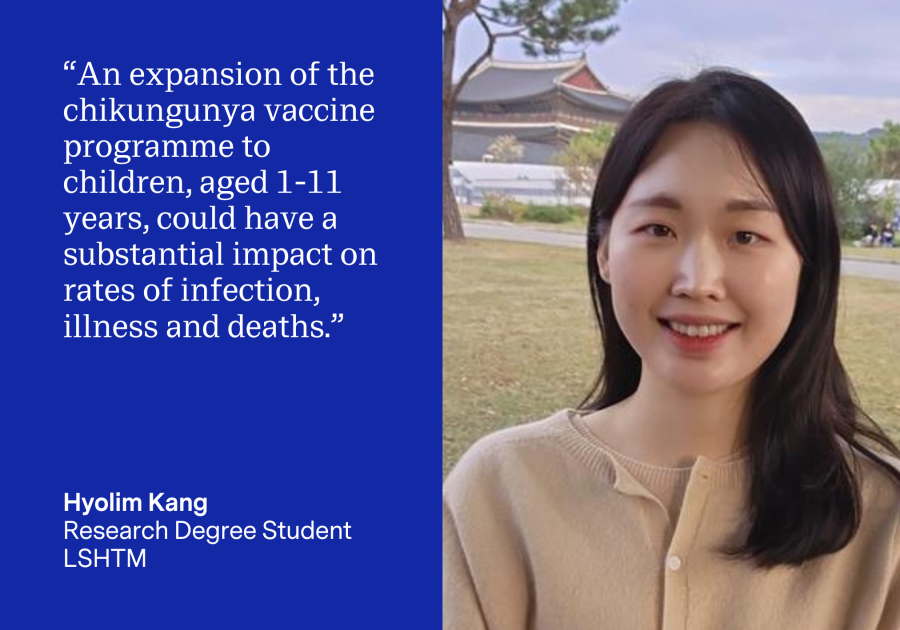
A new modelling study indicates that chikungunya outbreaks could be most effectively prevented by vaccinating children aged 1-11 years old.
Using outbreak data from Brazil, researchers at the London School of Hygiene & Tropical Medicine and partners found that 1-11 year old children would likely require the least number of vaccines to achieve population-wide protection.
Published in eClinicalMedicine, these findings plug an important gap for healthcare policymakers, due to a lack of sufficient evidence for aged-targeted vaccination programmes to protect against chikungunya.
Since its discovery in 1952, outbreaks of chikungunya have historically been reported in Sub-Saharan Africa, South Asia and Southeast Asian countries. The spread of the virus was limited by the range of mosquitoes who carry and transmit the virus. Climate change and increasing travel as well as adaptation of the virus have allowed it to spread beyond these countries further into South(east) Asia and Europe.
Two vaccines – Ixchiq and Vimkunya – have been shown via clinical trials to provide effective protection against chikungunya. Sushant Sahastrabuddhe, Associate Director General of the Innovation, Initiatives, and Enterprise Development unit at the International Vaccine Institute said: “Both vaccines currently licensed show similar levels of impact when rolled out through age-targeted vaccination programmes.” Concerns have however been raised about the use of Ixchiq in adults above the age of 60. The UK currently does not recommend the use of Ixchiq for travellers above the age of 60. Further research is needed to understand how the vaccine affects different age groups.
Results from the modelling study suggest that vaccinating 1-11 year olds would require the least number of vaccines for population level protection against chikungunya, compared to older age groups. This was followed by adolescents (aged 12-17) and then vaccinations for the adult age groups at 18-59 and 60+ years.
Hyolim Kang, first author and a research degree student at LSHTM said: “An expansion of the chikungunya vaccine programme to children, aged 1-11 years, could have a substantial impact on rates of infection, illness and deaths.”
These results suggest that, under current regulations, vaccinating adolescents aged 12-17 years first followed by adults would be the most effective strategy for protecting everyone against chikungunya. But if children aged 1-11 years were to become eligible for vaccines, this group should be the first one to receive vaccination.
The study provides important evidence for potential age-specific vaccination strategies. Timothy Endy, Program Lead at the Coalition for Epidemic Preparedness Innovations explains: “Modelling the impact of age-targeted vaccination roll-out to protect against chikungunya provides vital data for policy- and decision-making.” The authors hope that the findings can be used to advise health policy in countries at risk of outbreaks such as Brazil, as well as advise policy for travellers to such countries across the world.
If you enjoyed this article and would like to build a career in global health, we offer a range of MSc programmes covering health and data, infectious and tropical diseases, population health, and public health and policy.
Available on campus or online, including flexible study that works around your work and home life, be part of a global community at the UK's no.1 public health university.