Tackling anaemia could be the key to cutting global maternal deaths
22 April 2026 London School of Hygiene & Tropical Medicine London School of Hygiene & Tropical Medicine https://lshtm.ac.uk/themes/custom/lshtm/images/lshtm-logo-black.png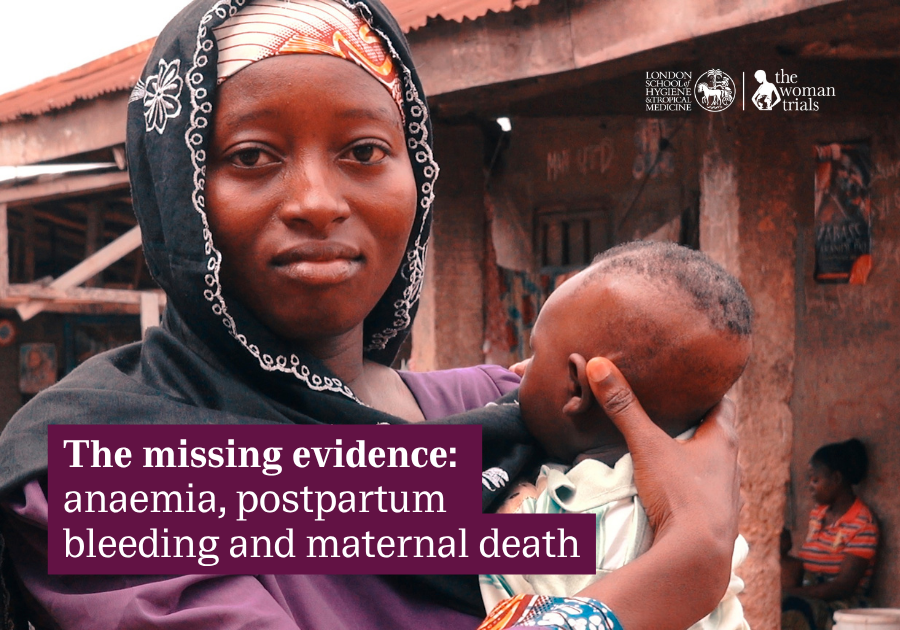
Anaemia may be the hidden factor driving global maternal deaths, according to a new report published by the WOMAN-2 Trial team today, titled “The missing evidence: anaemia, postpartum bleeding and maternal death”.
Maternal mortality remains one of the most pressing challenges in global health. Although efforts over the past decades have reduced death rates, progress has slowed – particularly in sub-Saharan Africa and South Asia, where most maternal deaths occur.
Based on data from the WOMAN-2 study – a large international trial involving more than 15,000 women – the report findings point to anaemia as a critical but overlooked contributor to severe postpartum haemorrhage (PPH), which is generally reported as the leading cause of maternal death globally.
The trial focused on women with moderate or severe anaemia giving birth in four countries: Nigeria, Tanzania, Zambia and Pakistan. The corresponding report presents data and analysis from several papers published in The Lancet Global Health over the last few months.
The research was conducted by an international team of obstetricians, midwives, academics, and scientists, and coordinated by the Clinical Trials Unit at the London School of Hygiene & Tropical Medicine.
The report reveals that anaemia could be responsible for half of severe postpartum haemorrhage cases in sub-Saharan Africa and South Asia – regions where up to half of all pregnant women are anaemic. Despite this, anaemia receives relatively little attention in guidelines or public health programmes aimed at preventing or treating postpartum bleeding and maternal death.
Researchers now call for urgent changes in both policy and practice to cut the prevalence and severity of anaemia in women and girls to reduce maternal deaths, setting out a series of practical recommendations in the report.
If you enjoyed this article and would like to build a career in global health, we offer a range of MSc programmes covering health and data, infectious and tropical diseases, population health, and public health and policy.
Available on campus or online, including flexible study that works around your work and home life, be part of a global community at the UK's no.1 public health university.