New trial to test whether shea butter-based repellent can prevent malaria
20 October 2026 London School of Hygiene & Tropical Medicine London School of Hygiene & Tropical Medicine https://lshtm.ac.uk/themes/custom/lshtm/images/lshtm-logo-black.png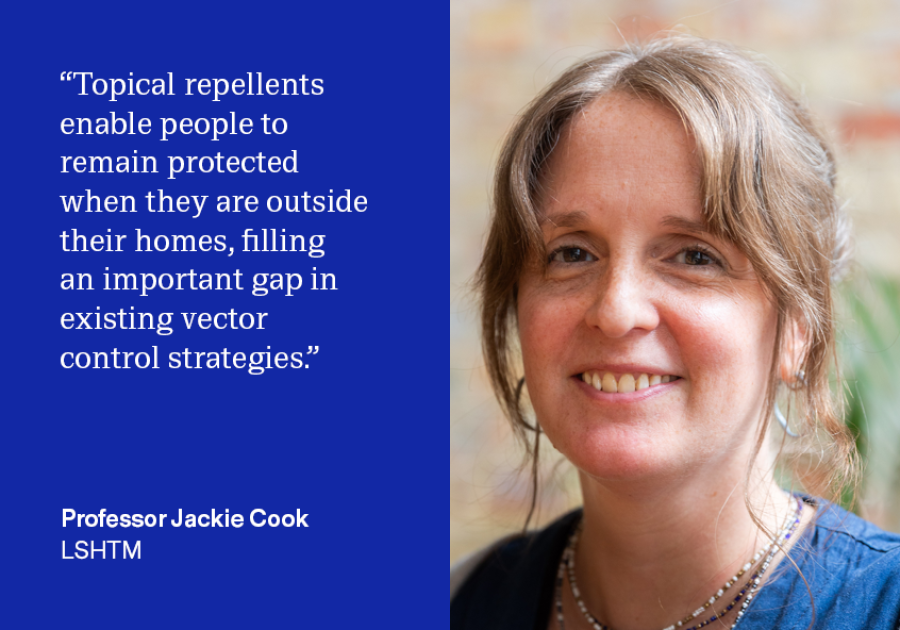
Researchers at the London School of Hygiene & Tropical Medicine (LSHTM), in collaboration with Institut Pierre Richet in Côte d’Ivoire, will evaluate whether a new shea butter-based mosquito repellent developed by MAÏA Africa SAS can help reduce malaria infections among children..
Despite widespread use of insecticide-treated nets, malaria remains a major public health challenge in the country. Additional prevention tools are needed, particularly to protect people from mosquito bites in the early evening and morning when they may not be sleeping under their nets.
Previous trials of topical repellents have faced challenges with regular use, partly due to how the products feel or smell. To address this, MAÏA was developed through research involving mothers in Burkina Faso, building on the familiar practice of applying moisturising ointments to children after their evening baths.
The ointment combines locally sourced, unrefined shea butter as a lipid matrix for DEET, an active ingredient that repels mosquitoes. As shea butter is widely used as a moisturiser across West Africa, researchers hope the familiar formulation will encourage more consistent use.
The trial will follow 2,352 children aged six months to 10 years over a malaria transmission season, comparing malaria infections among those using MAÏA with those using a placebo product containing shea butter without DEET.
Researchers will also assess how effectively the product repels mosquitoes, explore community perceptions of repellents and other malaria prevention tools, and evaluate its cost-effectiveness.
Jackie Cook, Professor of Infectious Disease Epidemiology and the study co-lead at LSHTM, said:
“Together with our long-term collaborators at IPR, we will generate key evidence for this promising product, in the hope that it will prove to be a valuable addition to the malaria control toolbox. Topical repellents enable people to remain protected when they are outside their homes, filling an important gap in existing vector control strategies.”
Dr Raphael NGuessan, study co-leader overseeing the trial in Côte d’Ivoire, said:
“Côte d’Ivoire continues to face a substantial malaria burden, while the mosquitoes responsible for transmission are becoming increasingly resistant to the insecticides used in many existing vector-control tools.
“Our entomological studies, including experimental hut evaluations, will help us understand how well and for how long MAÏA protects against mosquito bites under local conditions, particularly in areas with high insecticide resistance.”
Funded by the Fund for Innovation in Development (FID), the two-year project could help inform future malaria prevention strategies in Côte d’Ivoire.
If you enjoyed this article and would like to build a career in global health, we offer a range of MSc programmes covering health and data, infectious and tropical diseases, population health, and public health and policy.
Available on campus or online, including flexible study that works around your work and home life, be part of a global community at the UK's no.1 public health university.