MRCG at LSHTM Hosts Prof. Patrick Chinnery, MRC Executive Chair
12 February 2026 London School of Hygiene & Tropical Medicine London School of Hygiene & Tropical Medicine https://lshtm.ac.uk/themes/custom/lshtm/images/lshtm-logo-black.png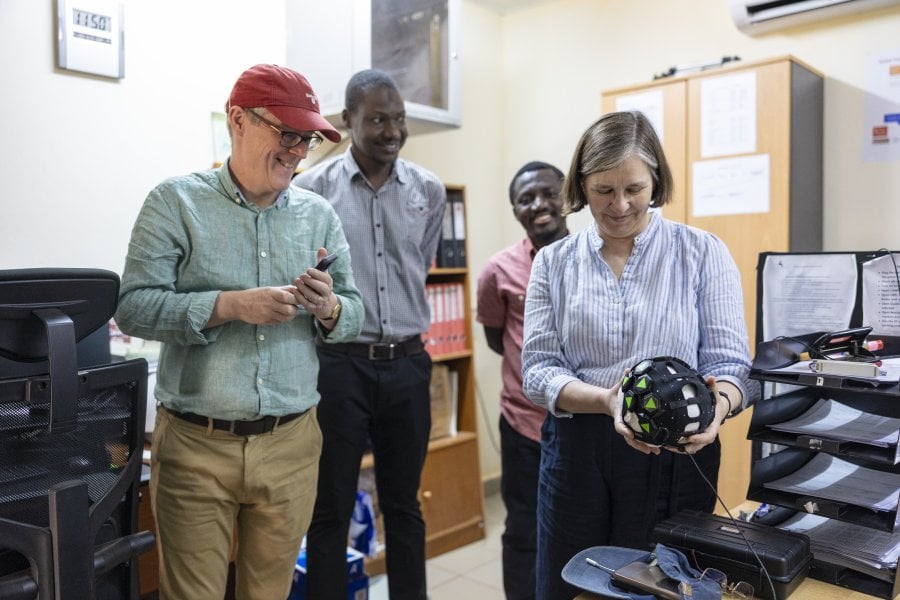
The visit provided an opportunity to strengthen collaboration and to showcase the impact of MRC supported research in The Gambia and the Sub region. It highlighted the Unit’s role in advancing research, supporting early- and mid-career scientists, and contributing evidence to national health priorities and global health initiatives.
During engagements with the Unit’s Leadership Board, discussions focused on MRCG’s strategic direction, operational model, and core research programmes across Disease Control and Elimination, Nutrition and Planetary Health, Vaccines and Immunity, and the West Africa Research Platform. Particular emphasis was placed on the Unit’s long-standing commitment to capacity strengthening, equitable partnerships, and translating research into policy and practice.
“MRCG remains committed to advancing scientific knowledge by integrating academic excellence with practical applications that respond to The Gambia’s health priorities,” noted Professor Umberto D'Alessandro, Unit Director of MRCG.
Professor Chinnery and Professor Chappell toured the Fajara campus, engaging with scientists and professional support staff across laboratories and the Clinical Services Department. These offered insights into how research is translated into practice and how multidisciplinary teams collaborate to address priority health challenges. Short elevator presentations from PhD students demonstrated the breadth of ongoing research and the Unit’s robust training environment.
Visits to the Keneba and Basse Field Stations further highlighted how research is implemented in close collaboration with communities and regional health facilities. Through presentations and site tours, they engaged with field teams and students and were introduced to ongoing projects.
Postdoctoral fellows and PhD students showcased their work establishing relevance to national policy and regional impact. From antimalarial drug resistance and the fitness of malaria parasites by Haddijatou Mbye, a PhD student, to modelling studies of measles and rubella generating evidence that supports the national immunisation system in The Gambia led by Dr Oghenebrume Wariri, Assistant Professor at LSHTM, these early career scientists are demonstrating how locally generated data and analytical expertise are contributing to stronger health systems and informed decision-making.
Engagements with regional health and frontline partners reinforced the value of our long-term collaboration. At Basse District Hospital and the MRCG Brikama site, partners highlighted the alignment with national health priorities, particularly in improving health outcomes.
Mr Dodou Sanyang, Regional Director of Health Services for the Upper River Region (URR), acknowledged the significance of MRC’s contribution to healthcare delivery noting the consistent support provided by MRCG in addressing operational challenges and strengthening service delivery.
Similarly, Dr Edrisa Jawo, Officer-in-Charge at Basse District Hospital, spoke about the positive impact of MRC-supported initiatives. He cited programmes such as the Kangaroo Mother Care which improved care for newborns in their community.
The visit concluded with a seminar delivered by Professor Chinnery on “MRC UKRI – Past and the Future,” bringing together staff to discuss the evolution of the MRC, strategic priorities, and emerging opportunities.
Overall, the visit provided valuable insights to inform future research initiatives, capacity strengthening, and collaboration ahead of the next five-year programme to advance health outcomes in The Gambia and across the region.
If you enjoyed this article and would like to build a career in global health, we offer a range of MSc programmes covering health and data, infectious and tropical diseases, population health, and public health and policy.
Available on campus or online, including flexible study that works around your work and home life, be part of a global community at the UK's no.1 public health university.