Internal migrants at greater risk of extreme heat deaths in Brazil
13 November 2026 London School of Hygiene & Tropical Medicine London School of Hygiene & Tropical Medicine https://lshtm.ac.uk/themes/custom/lshtm/images/lshtm-logo-black.png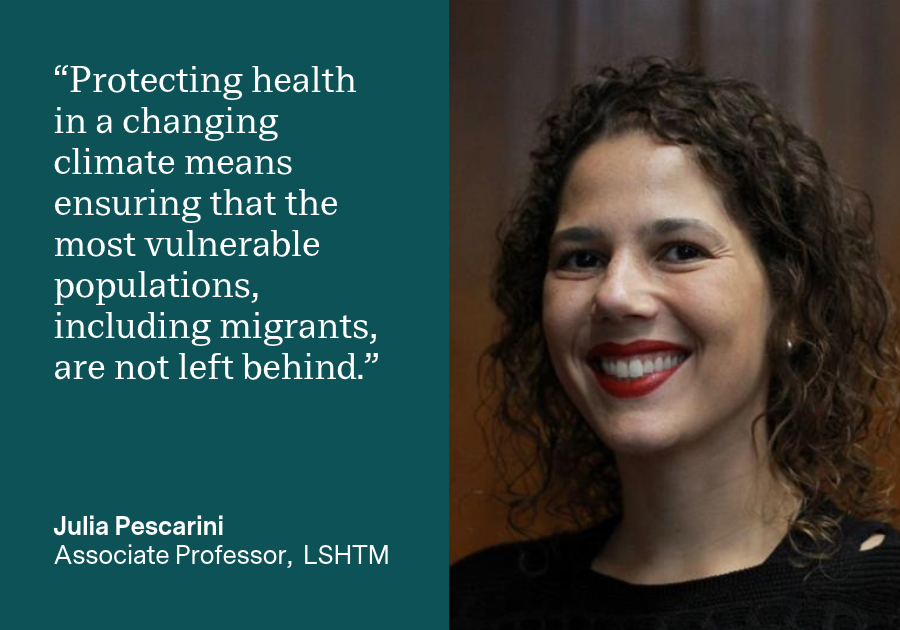
Internal migrants were at a greater risk of extreme heat-related deaths, according to new research from the London School of Hygiene & Tropical Medicine (LSHTM).
After an extreme heat event, defined as by temperatures above the top 1% of the average in Brazil, internal migrants were at a 4% overall greater risk of death and a 26% greater risk of death from respiratory diseases. The risk from the latter increased to 84% for migrants considered illiterate, showing the need for targeted public health programmes in Brazil.
Internal migrants were defined as people in Brazil who live outside their state of birth. The paper is one the first ones in this area of research to compare the experiences of internal migrants to non-migrants.
Published in the Lancet Regional Health - Americas, the study looked at health and temperature data in Brazil from 2000 to 2020. This was linked to the 100 Million Brazilian Cohort, which is a national open dataset that collects health data over 131 million people in Brazil that can be used to evaluate the impact of social and public health policy.
The findings show how internal migrants are systemically more vulnerable to death from extreme heat, even when comparing people in similar social and economic conditions. This was most problematic for respiratory diseases, which can arise because extreme heat can damages airways and reduce function. Among internal migrants, the level of education was the most significant factor to increase the risk of temperature-related death for various reasons.
This was linked to a lower literacy in health topics on average, meaning people are less like to protect themselves from heatwaves, or seek healthcare when they have health problems. As many internal migrants work in unstable work, or outside of the formal economy, they will likely have limited access to key services and have worse work conditions. Many internal migrants also live in housing that has limited ventilation for cooling, and exposes them to other health hazards like pollution.
The authors argue for a range of policies to reduce extreme heat deaths, and address the inequities experienced by migrants in Brazil. Policies could improve ventilation in housing, improving access to cool and shaded public spaces, and regulations to protect workers during heatwaves or cold spells. Creating targeted outreach communications, with health advice tailored to people with lower literacy rates, would be another important way reduce inequities.
Julia Pescarini, Associate Professor at LSHTM, said: “Climate change does not affect everyone equally. Our findings highlight how internal migrants, particularly those experiencing educational and socioeconomic disadvantage, may face greater health risks from extreme temperature events.
“Protecting health in a changing climate means ensuring that the most socially vulnerable populations, including migrants, are not left behind.”
Climate change has led to an increase in deaths from extreme heat across the world, and has received more attention from public health officials. However, its impact on populations of displaced peoples and migrants is often overlooked, leading to calls from the United Nations (UN) and the World Health Organization (WHO) for work focusing specifically on migrants health.
The authors hope their research can help to plug this gap of knowledge, alongside supporting public health policy in Brazil where an estimated 14% of its people are internal migrants. Brazil is characterised by regional inequalities, which drives internal migration to big urban centres like São Paulo and Rio de Janeiro for work, often under poor living and working conditions.
These results should also be developed with future studies focusing on qualitative approaches, such as interviews and surveys. where people can directly discuss their experiences with work and living conditions, and explain their needs.
Publication
Neda Firouraghi et al. Differential mortality risks associated with ambient temperature among migrants and non-migrants: a space-time-stratified case-crossover study of the 100 Million Brazilian Cohort (2000–2020). Lancet Regional Health – America, 2026. DOI: 10.1016/j.lana.2026.101687
If you enjoyed this article and would like to build a career in global health, we offer a range of MSc programmes covering health and data, infectious and tropical diseases, population health, and public health and policy.
Available on campus or online, including flexible study that works around your work and home life, be part of a global community at the UK's no.1 public health university.