Genomes, big data and emerging technologies: insights from Wellcome Genome Campus 2026
23 April 2026 London School of Hygiene & Tropical Medicine London School of Hygiene & Tropical Medicine https://lshtm.ac.uk/themes/custom/lshtm/images/lshtm-logo-black.png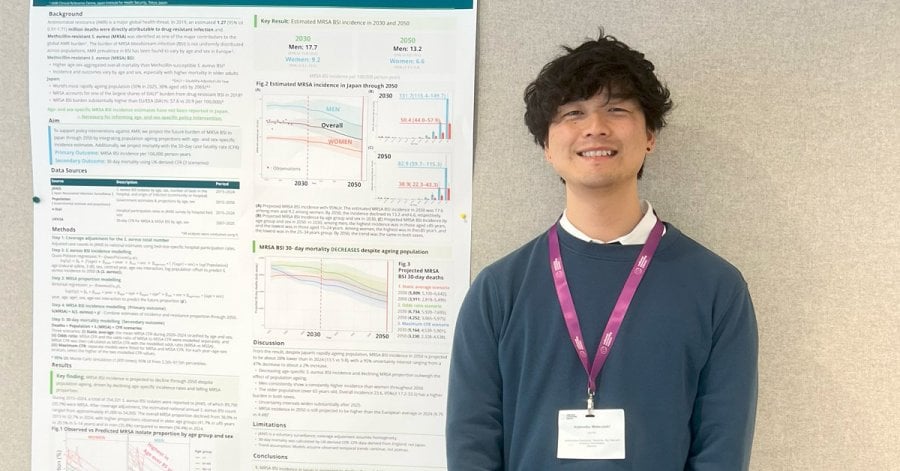
Researchers from across the world gathered at the Wellcome Genome Campus in Hinxton, Cambridge, from 23–25 March 2026 for the fifth Antimicrobial Resistance – Genomes, Big Data and Emerging Technologies conference.
The hybrid meeting brought together scientists, clinicians, data scientists and policymakers to explore how genomics, big data and emerging technologies are shaping the response to antimicrobial resistance (AMR).
The programme highlighted the growing complexity of the AMR field, with sessions spanning pathogen genomics, epidemiology and surveillance, machine learning, diagnostics and novel therapeutics. A strong emphasis was placed on the role of large-scale genomic and epidemiological data in understanding resistance patterns and informing public health responses.
LSHTM was well represented throughout the programme. Professor Kat Holt and Dr Lanre Edun delivered compelling presentations that showcased the depth of AMR research being conducted at the School, contributing to discussions across multiple sessions.
Dr Hidenobu Matsuzaki, whom the AMR Centre supported to attend, presented his research as a poster alongside a one-minute pitch. His work focuses on projecting the future burden of methicillin-resistant Staphylococcus aureus (MRSA) bloodstream infections in Japan, particularly in the context of an ageing population. Presenting at an international conference provided an opportunity to share this work with a diverse audience and to receive valuable feedback on modelling approaches and data challenges.
Discussions with other researchers highlighted shared challenges across settings, including the need for improved surveillance systems and better integration of genomic and clinical data. The interdisciplinary nature of the meeting also emphasised how tackling AMR requires collaboration across fields, from microbiology and epidemiology to data science and policy.
For Hidenobu Matsuzaki, a Student ambassador and a joint-degree PhD student in the Department of Infectious Disease Epidemiology at LSHTM, jointly enrolled at Nagasaki University, the conference reinforced the importance of global collaboration in addressing AMR. While the scale of the challenge remains significant, the breadth of expertise and innovation on display offered optimism for future progress.
Dr Matsuzaki said: “Leaving Hinxton, I felt both challenged and motivated. The scale of antimicrobial resistance is daunting, but the people working on it and the increasingly sophisticated tools available give real cause for optimism. I returned to London with new ideas, new connections and a renewed sense of purpose.
I am very grateful to my supervisors, particularly Professor Gwen Knight, for their continued support, and to the LSHTM AMR Centre for making this experience possible.”
If you enjoyed this article and would like to build a career in global health, we offer a range of MSc programmes covering health and data, infectious and tropical diseases, population health, and public health and policy.
Available on campus or online, including flexible study that works around your work and home life, be part of a global community at the UK's no.1 public health university.