Fewer insects, fewer nutritious crops: pollinator decline puts our health at risk
7 May 2026 London School of Hygiene & Tropical Medicine London School of Hygiene & Tropical Medicine https://lshtm.ac.uk/themes/custom/lshtm/images/lshtm-logo-black.png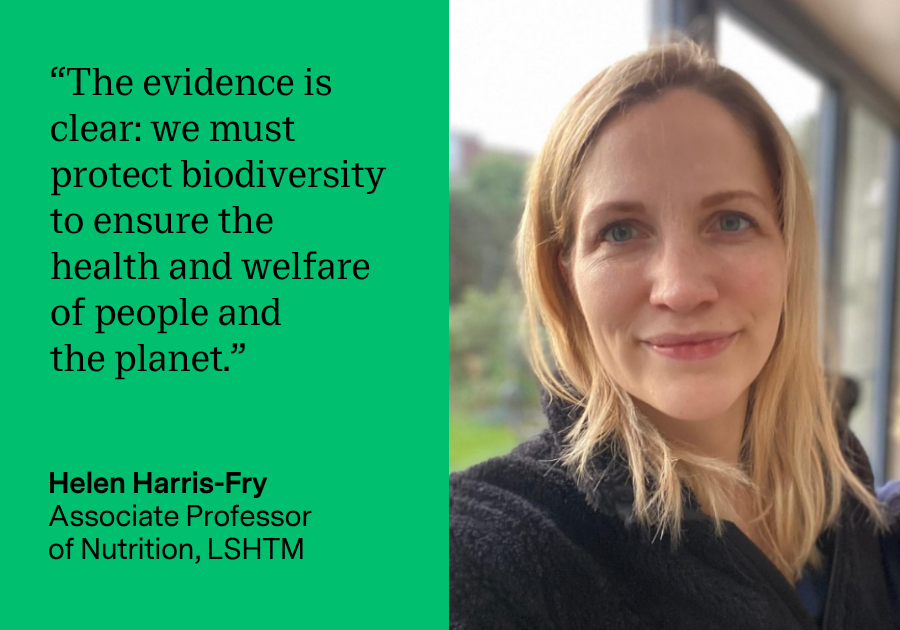
Biodiversity loss is directly threatening human health and welfare, according to new research from the London School of Hygiene & Tropical Medicine and the University of Bristol.
The study, published in Nature reveals, for the first time, how the decline of insect pollinators undermines essential ecosystem services that support human nutrition and livelihoods. Their results underscore how biodiversity plays a vital role in supporting people’s everyday health and resilience.
It’s been long known that insect pollinators are vital for producing many of the fruits, vegetables and pulses that supply essential vitamins and minerals in our diets, yet clear evidence of how their decline affects people has been limited.
Working in ten smallholder farming villages and their surrounding landscapes in Nepal, the study traced the full chain of connections between wild pollinators, crop yields and the nutrients families rely on. By tracking diets, crop nutrients and the insects visiting those crops over a year, the research team showed how pollinators directly support both nutrition and livelihoods.
The study found insect pollinators are crucial for both the nutrition and income of farming families, and pollinators were responsible for 44% of people’s farming income and more than 20% of their intake of vitamin A, folate and vitamin E. When pollinators decline, families risk poorer nutrition leading to higher vulnerability to illness and infections, and deeper cycles of poverty and poor health. One quarter of the global population currently suffer from this ‘hidden hunger’.
The research showed there is real potential for improvements when communities support pollinators. Simple steps like planting wildflowers, using fewer pesticides or keeping native bees can help boost pollinator numbers, strengthening both nature and people’s nutrition and income.
Around 2 billion people rely on smallholder farming, with many vulnerable to biodiversity loss and facing vitamin deficiencies. By applying this approach these practical local actions could enhance their food security and economic resilience. The findings could also help improve the health and livelihoods of millions of smallholder farmers around the world.
Dr Helen Harris-Fry, Associate Professor at LSHTM and co-author, said: “The evidence from our study provides a clear message: we must protect biodiversity to ensure the health and welfare of people and the planet.”
Dr Thomas Timberlake, Post-Doctoral Research Associate and lead author, who carried out the study while at the University of Bristol and is now at the University of York, said: “By revealing how species like pollinators support the food we eat, we highlight both the risks of biodiversity loss for human health, but also the powerful opportunities to improve human lives by working with nature.”
Dr Naomi Saville, co-author from the University College London Institute for Global Health, said: “Over half of the children in our study were too short for their age, which is largely driven by poor diets that depend upon insect pollinated vegetables, legumes and fruits. As pollinator biodiversity declines, loss of vitamin A, folate and protein from the diet can further damage these children’s health and development, so efforts to restore pollinators are crucial.”
The research has shown that human health is deeply tied to the health of nature. By tracking how pollinators support food production and diets, the study has revealed that biodiversity loss isn’t just an environmental problem, it threatens public health and economic stability – as highlighted in the recent UK government national security assessment on global biodiversity loss.
The study’s findings offer a practical framework to help policymakers and farmers design more nature‑positive farming systems, and will inform a new National Pollinator Strategy for Nepal. This programme will help make pollinator‑friendly farming part of everyday agriculture in Nepal. Although the research is focused on Nepal, the same connections shape food systems everywhere, which still depend on the pollinators and ecosystems that sustain global agriculture.
The research team – spanning universities and non-governmental organisation (NGOs) across Nepal, UK, US and Finland - is now putting their findings into action across Nepal to tackle pollinator declines and repair the pollination systems that support food production. Researchers are already seeing farmers adopt changes that boost crop yields, nutrition and income.
Publication
Timberlake J et al. Pollinators support the nutrition and income of vulnerable communities. Nature, 2026. DOI: https://doi.org/10.1038/s41586-026-10421-x
If you enjoyed this article and would like to build a career in global health, we offer a range of MSc programmes covering health and data, infectious and tropical diseases, population health, and public health and policy.
Available on campus or online, including flexible study that works around your work and home life, be part of a global community at the UK's no.1 public health university.