Differences between NHS trusts may be driving inequalities in leukaemia treatment, study finds
20 July 2026 London School of Hygiene & Tropical Medicine London School of Hygiene & Tropical Medicine https://lshtm.ac.uk/themes/custom/lshtm/images/lshtm-logo-black.png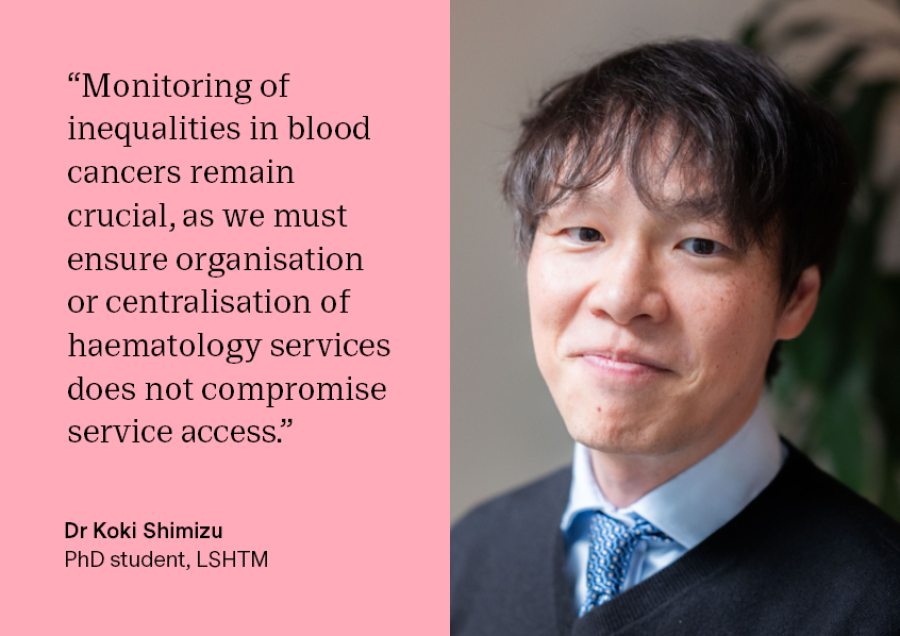
A new study led by the Inequality in Cancer Network Outcomes (ICON) researchers at the London School of Hygiene & Tropical Medicine (LSHTM) suggests that people living in more deprived areas of England are less likely to receive intensive treatment for acute myeloid leukaemia (AML), despite care being provided through the NHS.
Researchers analysed data from 10,495 adults aged 25–80 who were diagnosed with acute myeloid leukaemia (AML) in England between 2015 and 2022. By linking national cancer registry records with treatment data, they examined whether a patient's socioeconomic background influenced whether they received intensive chemotherapy (ICT), the standard treatment offered to patients who are considered fit enough to tolerate it.
Published in the British Journal of Haematology, the study found that almost half (49%) of patients received intensive chemotherapy. However, after accounting for differences in age, sex and other health conditions, patients living in the most deprived areas were 6.1% less likely to receive intensive chemotherapy than those living in the least deprived areas.
The disparity was greatest among patients aged 60–70 years, where treatment decisions are often more finely balanced because clinicians must consider both the potential benefits of treatment and toxicity of treatment.
The researchers found that the inequality was not explained by poorer access to specialist services. Patients from more and less deprived areas were similarly likely to begin their care at NHS trusts that provide intensive chemotherapy, suggesting that differences in treatment decisions occur after patients enter the healthcare system.
Instead, the study found substantial variations between NHS trusts in the use of intensive chemotherapy. The largest inequalities were seen in medium-sized specialist centres, while larger specialist centres showed smaller differences between socioeconomic groups.
The researchers estimate that if treatment were delivered equitably, in proportions seen for patients living in the least deprived areas, around 247 additional patients in the study could have received intensive chemotherapy. Their analysis suggests that approximately 94% of the observed inequality was linked to differences between NHS trusts, rather than deprivation itself.
The findings also remained consistent throughout the COVID-19 pandemic, indicating that these inequalities reflect long-standing differences in how care is delivered rather than temporary pressures on health services.
Dr Koki Shimizu, PhD student at LSHTM and first author of the study, said: “Monitoring inequalities in blood cancers remains crucial. As haematology services become increasingly organised and centralised, we must ensure these changes do not compromise equitable access to care.”
The authors suggest that factors such as institutional culture, workforce capacity and available resources may influence treatment decisions across different NHS trusts. They say further research is needed to better understand how these factors affect access to intensive treatment and how unwarranted variation can be reduced.
The findings highlight an opportunity for the NHS to improve equity in cancer care by understanding why treatment decisions vary between hospitals and ensuring that patients have the same opportunity to receive intensive treatment regardless of where they live or their socioeconomic background.
Publication
Shimizu K, et al. Socioeconomic inequality in treatment of acute myeloid leukaemia (AML) in England, 2015–2022: A population-based study. British Journal of Haematology. 2026. DOI: https://doi.org/10.1111/bjh.70695
If you enjoyed this article and would like to build a career in global health, we offer a range of MSc programmes covering health and data, infectious and tropical diseases, population health, and public health and policy.
Available on campus or online, including flexible study that works around your work and home life, be part of a global community at the UK's no.1 public health university.