Morgon Banks awarded prestigious UKRI Future Leaders Fellowship
18 September 2025 London School of Hygiene & Tropical Medicine London School of Hygiene & Tropical Medicine https://lshtm.ac.uk/themes/custom/lshtm/images/lshtm-logo-black.png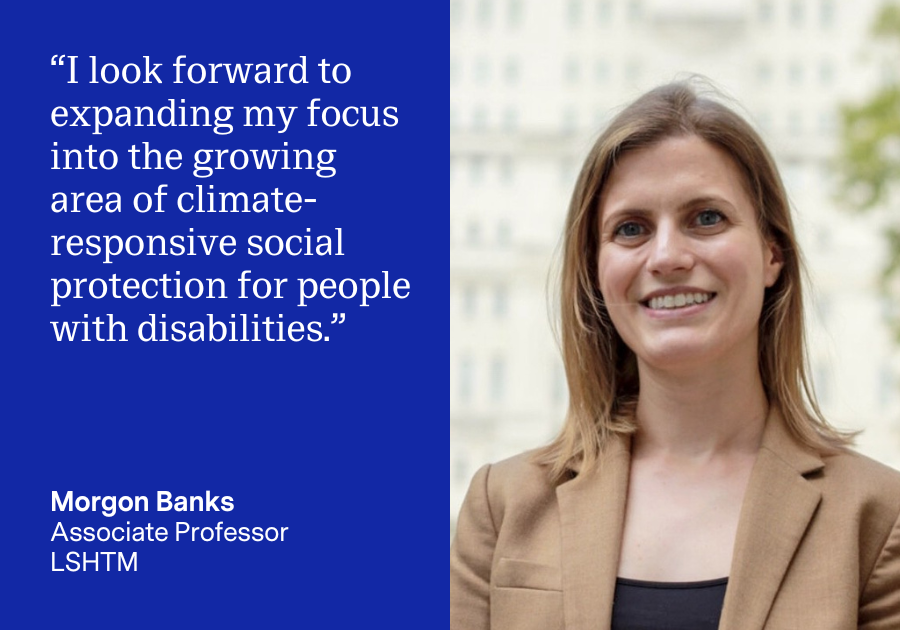
Dr Morgon Banks, an Associate Professor in Disability Research at the International Centre for Evidence in Disability (ICED) at the London School of Hygiene & Tropical Medicine (LSHTM), has been awarded £1.8 million to lead a global study on the effects of extreme weather on people with disabilities and strategies to improve their resilience.
Funded by the UK Research and Innovation’s (UKRI) Future Leaders Fellowship, the award supports researchers tackling complex challenges with global impact.
As part of the fellowship, Dr Banks will lead a four-year research project along with collaborators at the BRAC Institute of Governance and Development (BIGD). This will investigate how extreme weather events affect the livelihoods, health, and wellbeing of people with disabilities globally, with a particular focus on Bangladesh – a country considered to be particularly at risk from climate change.
Over a billion people worldwide are estimated to be living with a disability. As extreme weather events become more frequent, there is growing evidence that people with disabilities are more exposed to risks. Exclusion from education, employment, and community life further limits their options to adapt and respond to a changing climate.
Social protection programmes – which include interventions such as cash transfers, forms of insurance, targeted support, and employment programmes – can reduce poverty, strengthen livelihoods, and improve health, including for people with disabilities. They can also provide a safety net in times of crisis; among the general population, research has found that social protection can help people to withstand and prepare for extreme weather events. However, there is little evidence on whether social protection’s benefits can be maintained in the face of extreme weather events for people with disabilities and their households.
The research will assess the impact of the Ultra-Poor Graduation (UPG) social protection programme, which has reached over 2 million households in Bangladesh and more than 20 countries globally. Previous work by ICED and BIGD as part of the Programme for Evidence to Inform Disability Action (PENDA) found that the UPG model improved financial security and well-being for people with disabilities and their households. This fellowship will build on that evidence, exploring how inclusive social protection could also respond to the growing challenge of climate change.
Dr Banks said: “I’m delighted to have been awarded a UKRI Future Leaders Fellowship, which will allow me to explore an exciting new area of research.
“I have been working in the field of disability-inclusive social protection since I began my PhD at LSHTM. With this fellowship, I look forward to expanding my focus into the growing area of climate-responsive social protection, while also having critical opportunities for further training and mentorship.
“I’m excited to continue working at LSHTM, which has been a great institutional home, and to continue close collaborations with BIGD.”
If you enjoyed this article and would like to build a career in global health, we offer a range of MSc programmes covering health and data, infectious and tropical diseases, population health, and public health and policy.
Available on campus or online, including flexible study that works around your work and home life, be part of a global community at the UK's no.1 public health university.