LSHTM research to evaluate AMR National Action Plan
5 November 2025 London School of Hygiene & Tropical Medicine London School of Hygiene & Tropical Medicine https://lshtm.ac.uk/themes/custom/lshtm/images/lshtm-logo-black.png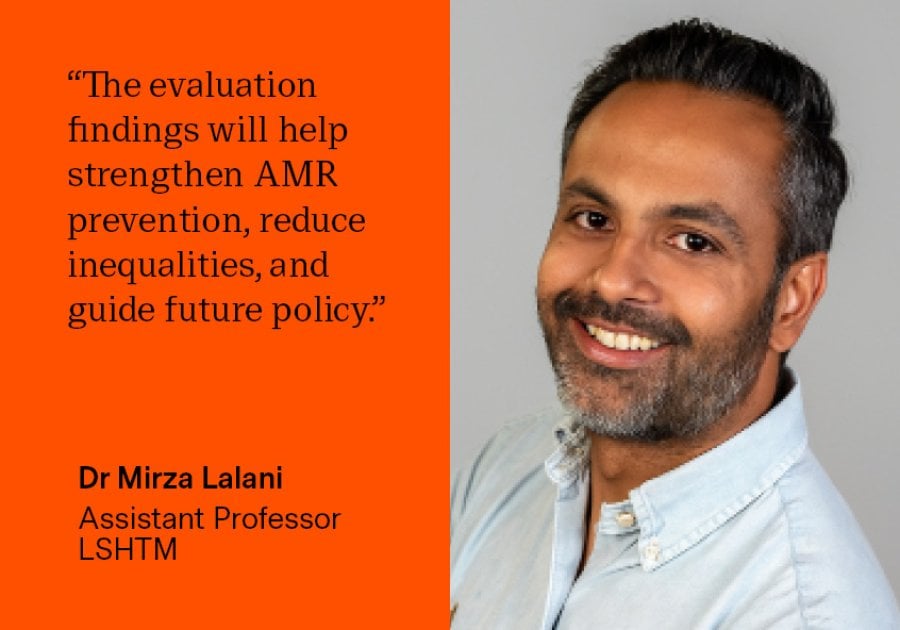
Researchers at the London School of Hygiene & Tropical Medicine (LSHTM), Royal Veterinary College, and the University of Exeter will evaluate the implementation of the UK National Antimicrobial Resistance (AMR) National Action Plan 2024-2029. This work draws on £700,000 funding previously awarded by the Department of Health and Social Care (DHSC) through the NIHR Policy Research Programme. TI is co-led by the Public Health Policy Research Unit (PRU) and the PRU in Policy Innovation and Evaluation.
The project was jointly commissioned through two Policy Research Units based at LSHTM: the Public Health Policy Research Unit and the Policy Innovation and Evaluation Research Unit.
Dr Rebecca Glover and Dr Mirza Lalani will co-lead a research team with animal and environmental health experts from the Royal Veterinary College and the University of Exeter. The evaluation will begin in January 2026 and run for 2.5 years.
AMR Centre's Deputy Director Rebecca Glover said, “ I am delighted to be co-leading the next AMR National Action Plan implementation evaluation. In our research, we will place a strong emphasis on health disparities, and we are attuned to the importance of both public health and health services research in evaluating complex policies, such as AMR.
"Implementing a high-level national policy with dozens of commitments across multiple sectors is complex. It is critical, if we are going to tackle AMR, to understand how such policies and targets best can be taken forward, championed, and embedded into daily practice. To do this, we examine areas of excellence, but also where the policy could work better."
Assistant Professor Mirza Lalani said: “I am excited to be co-leading the evaluation of the 2024–2029 AMR National Action Plan, which takes a One Health perspective to understand antimicrobial resistance across human, animal, and environmental systems. The project will explore what helps or hinders progress in implementing AMR policy, paying particular attention to problems such as poverty, access to healthcare, and differences across regions and health care sectors. The evaluation findings will help identify opportunities to strengthen AMR prevention, reduce inequalities, and inform future national AMR policy.”
If you enjoyed this article and would like to build a career in global health, we offer a range of MSc programmes covering health and data, infectious and tropical diseases, population health, and public health and policy.
Available on campus or online, including flexible study that works around your work and home life, be part of a global community at the UK's no.1 public health university.