Why cities matter in the fight to protect our shared health from climate change

Our world is in a dire state. All around us, we see the impact of climate change on people’s physical and mental health, lives and livelihoods. More deaths are linked to heat and extreme weather, air pollution, waterborne diseases and the expanded range of vector-borne infectious diseases. Growing evidence of how heat can harm pregnant women, their unborn babies, and children’s development. Pressure on water and food supplies. And the list goes on.
This can feel overwhelming, especially in vulnerable regions already facing socio-economic challenges such as rising poverty, unemployment and inequality. But there are huge opportunities. Governments and businesses are undoubtedly key, but community action can galvanise public support to influence governments to fulfil their obligations to prevent significant harm from climate change for their citizens.
Cities, where most people live and interact directly with climate change through heat, pollution, and loss of green space, have the power to make a difference. For example, planners must protect and encourage green spaces to improve mental health and reduce heat islands, and incorporate decarbonisation by encouraging the use of public and electric transport to reduce air pollution. Housing solutions to enable people to live and work safely will become increasingly important as more people around the world experience rising temperatures for longer periods – including in cities in the UK and Europe.
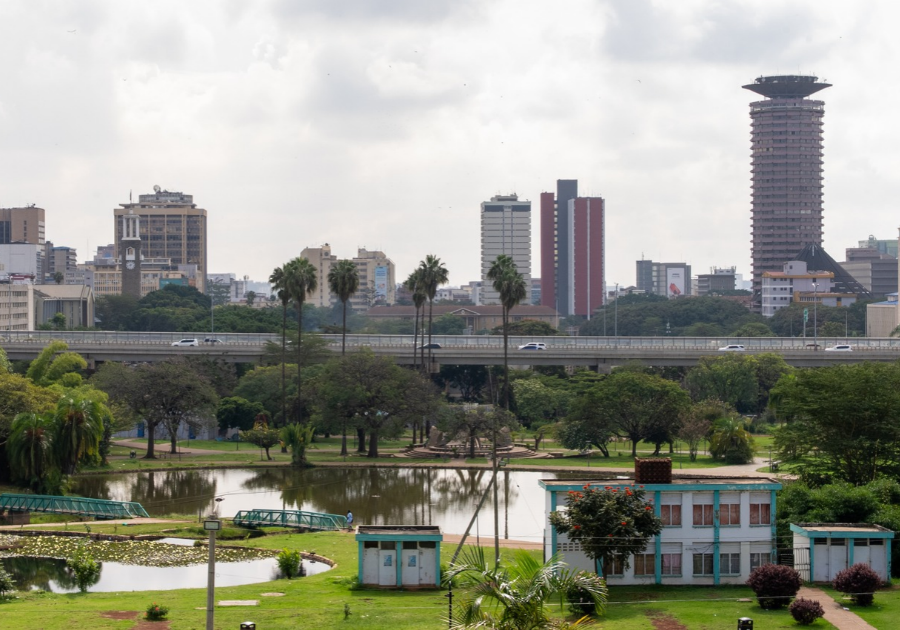
For Africa, which is still urbanising, there are exciting opportunities to build its new and growing cities in ways that more sustainably integrate nature and people. From Kigali’s restored Nyandungu wetlands to Johannesburg’s community-led river restoration and Dire Dawa’s flood-buffering green corridors, African cities are showing that nature can be treated as core urban infrastructure: reducing flood risk, cooling neighbourhoods, improving health and mobility, restoring biodiversity, and creating jobs. The task now is to find credible pathways to scale these pilots across Africa’s rapidly urbanising cities.
It’s encouraging, therefore, that COP31 in Türkiye, which starts on 9 November, has a specific ‘Action Agenda on Climate-Resilient Cities’. This is significant because it places climate-resilient urban development at the centre of implementation. For the Global South, the hope is that it moves beyond declarations to financeable action that places cities at the centre of climate action: direct access to climate finance for municipalities, investment in upgrading informal settlements, water, sanitation and hygiene, strengthening health systems, and recognition of wetlands, green corridors, and heat-resilient public spaces as essential ecological and public health infrastructure.
Crucially, the scientific community needs to generate more evidence to track the impacts of climate change on health, and translate that science so people can engage and act within their different localities. This is why we’re getting armed with examples of what works, and how it can be scaled. We need global finance to drive and scale solutions, but it starts with us.
This era of public health must continue to have planetary health at its heart. We can all play our part in this interconnected world. It’s why we focus on world-leading climate and health research and education for the next generation at LSHTM.
Our MSc in Climate Change and Planetary Health marks a significant milestone in training a new generation of professionals to help ensure a healthy planet and healthy people in the future. As our first few cohorts of students complete the course, we are reminded of the importance of understanding the interrelationship between planetary health and human health, ensuring that we leave behind a planet on which future generations can live and thrive.
If you enjoyed this article and would like to build a career in global health, we offer a range of MSc programmes covering health and data, infectious and tropical diseases, population health, and public health and policy.
Available on campus or online, including flexible study that works around your work and home life, be part of a global community at the UK's no.1 public health university.