Obituary: Fred Newton Binka
25 November 2026 London School of Hygiene & Tropical Medicine London School of Hygiene & Tropical Medicine https://lshtm.ac.uk/themes/custom/lshtm/images/lshtm-logo-black.png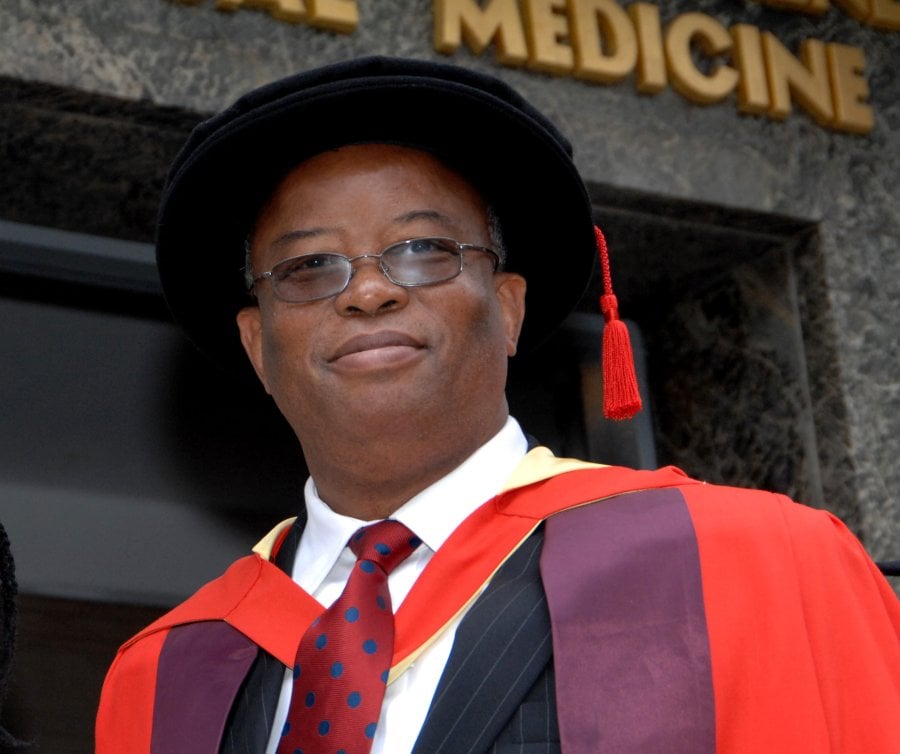
Fred collaborated with LSHTM colleagues throughout his illustrious career, starting in 1989, when he was seconded to the LSHTM/Kwame Nkrumah University of Science and Technology Ghana Vitamin A Supplementation Trials (VAST) in northern Ghana, to assess the impact on morbidity and mortality of regular supplementation of vitamin A to young children.
Born in 1953 in the small town of Hoehoe in Ghana's Volta Region, Fred grew up in many different parts of Ghana because of his father’s postings as a civil servant. He studied medicine at the University of Ghana and public health in Israel, before working for the Ghana Ministry of Health. In the Ghana VAST Survival study, he was the epidemiologist overseeing the fieldwork, including 4-monthly visits to more than 9,000 households scattered over more than 1,250 km2. These trials showed that periodic vitamin A supplements reduced child mortality by 19% and appeared to achieve this by reducing the severity, rather than the incidence, of common childhood infections. Fred’s drive, leadership skills and attention to detail were critical to the Survival trial’s success, and it was clear that Fred would go on to make a major contribution to health research.
In 1992, building on the infrastructure and expertise created by the Ghana VAST trials, the Ministry of Health founded the Navrongo Health Research Centre, with Fred as Director. During his six years as Director, he set up a full health and demographic surveillance system (HDSS), still in operation more than three decades later. He conducted studies that strongly influenced health policies and programmes in Ghana and globally. The first was a field trial showing a 20% reduction in child mortality through the use of insecticide-treated bednets. An early example of his personal commitment to research on improving African health was that he took out a personal bank loan to purchase the first bednets for the trial, and bought himself a flight to Geneva to meet with Tore Godal, the then Director of the WHO Tropical Diseases Research Programme (TDR), to persuade them to invest in the bednet mortality trials.
Later studies in Navrongo included the Community Health and Family Planning Project, showing that decentralising primary health care, moving community health nurses from heath centres to villages, reduced childhood mortality by over one third and improved equitable access to health services; and a trial showing that local treatment with rectal artesunate of comatose children with suspected malaria, prior to being transported to the nearest health centre, reduced mortality and permanent disability. Following these landmark studies, Fred and colleagues worked tirelessly to ensure the interventions were incorporated throughout Ghana. They have also been introduced in many other countries and feature in WHO guidelines.
After leaving Navrongo, Fred was part of the Roll Back Malaria (RBM) special cabinet project of WHO when it was launched, and instrumental in all strategic decisions. He returned to Ghana in 1999 as the founding Executive Director of INDEPTH, an international network of health and demographic surveillance sites and one of the first Southern-led major international collaborative initiatives in global health, bringing together 48 HDSS field sites across 19 countries in Africa, Asia and Latin America and producing evidence that informs and shapes global health policies and practices.
In 2007, Fred was appointed the Dean of the University of Ghana School of Public Health and greatly strengthened the School, establishing a PhD programme in Public Health and an MSc in Clinical Trials, using teaching materials developed at LSHTM. In 2012, he became the Founding Vice-Chancellor of the University of Health and Allied Sciences in the Volta Region of Ghana, a major new initiative in public health training in Ghana, where, in his honour, the Fred Newton Binka School of Public Health now bears his name. More recently, Fred chaired the Governing Council of the Ghana Health Service, where he led planning for healthcare reform, disease prevention, and research financing.
Fred was also influential globally: he established the Malaria Clinical Trials Alliance, was one of the main African scientists who liaised with the European Commission to create the European and Developing Countries Clinical Trials Partnership (EDCTP) and was the first Chair of their Scientific Advisory Board. He served on numerous WHO expert committees, and in 2016 coordinated the Emergency Response for Artemisinin Resistance in the Greater Mekong Sub-region in Cambodia, working to transition the emergency containment effort to a malaria elimination programme. He was a member of WHO's malaria elimination certification committee, chair of the GAVI Independent Review Committee, and the first President of the Association of Schools of Public Health in Africa.
He received many awards for his contributions, including the Ronald Ross Medal for his work on malaria; the Rudolf Geigy Award for outstanding work on global health; the Pascoal Mocumbi Prize from the EDCTP; and the prestigious Al-Sumait Prize for African Development in the field of health. He was an Honorary Fellow of the American Society of Tropical Medicine and Hygiene and received the Order of the Volta in Ghana from the President for outstanding service to the country.
With Fred Binka’s death, a giant of global public health has left the stage, but his legacy will live on in the many colleagues he has trained and inspired in Africa and beyond, the institutions he has founded and led, and the interventions and programmes that have grown out of his pioneering research. He understood that it is important to continue to have advocates for global health in high-income countries as well as strongly advocating - and demonstrating - African leadership.
Fred will be greatly missed by his many friends within LSHTM. We offer our deepest condolences to his family, friends, and colleagues in Ghana and throughout the global health research, education and policy community.