From PhD Student to Women's PhD Coach & Consultant: Dr Stefanie Dringus
17 March 2026 London School of Hygiene & Tropical Medicine London School of Hygiene & Tropical Medicine https://lshtm.ac.uk/themes/custom/lshtm/images/lshtm-logo-black.png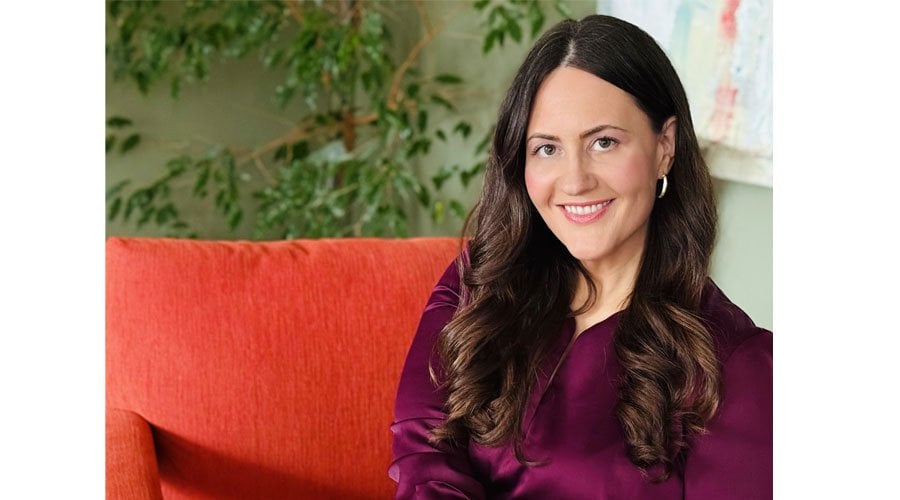
I was privileged to have spent more than a decade at LSHTM - first as an MSc student, then as a Research Assistant, Doctoral Candidate, and Research Fellow. I arrived from Canada in 2008 to study the MSc in Sexually Transmitted Infections and HIV, a joint programme with UCL. After graduating, I worked across a range of roles, including UNICEF research, sexual health outreach screening in London, and managing a trial site for a cluster-randomised controlled trial in South Africa. In 2012, I returned to LSHTM on a Bloomsbury Studentship to pursue my doctorate. Although I was initially drawn to the School’s global reputation in public health, it was the extraordinary community of researchers and students that made it the place I eventually wanted to pursue my PhD.
My research career focused on the design and evaluation of adolescent sexual and reproductive health interventions, mainly in sub-Saharan Africa. I was especially interested in how public health programme’s function when they meet the complexity of the real world. I also co-led the module Evaluation of Public Health Interventions and particularly enjoyed supporting MSc students.
But after years of excelling academically, I began to struggle during my PhD, despite supportive supervision. Eventually, I submitted an incomplete thesis and did not pass my viva - not because I lacked ability or commitment, but because I was silently feeling like an imposter, and caught in cycles of avoidance, overwhelm, perfectionism, and people-pleasing.
It became one of the most challenging and lonely seasons of my career - a period when I felt deeply frustrated, ashamed, and defeated, even though I believed I had what it took to finish the PhD.
During this time, I was introduced to a life coach, and it changed everything. With the support of her work, I began to shift the patterns of thinking that had kept me stuck. I finished my thesis, resubmitted, and was ultimately awarded my PhD in 2020.
That experience revealed something rarely discussed openly in academia: you can be capable, hardworking, and deeply committed to your research and still struggle. Many of the qualities academia rewards - confidence, decisiveness, leadership, and intellectual risk-taking - are precisely the ones women have often been socialised to downplay, and the structures surrounding doctoral training do not always provide the support needed to bridge that gap.
After completing my PhD, I spent several years working as an independent global health consultant before training and certifying as a professional coach. I wanted to be for others what I had needed during my own PhD journey.
Today, I run a full-time coaching practice supporting women PhD candidates and academics worldwide - many balancing demanding doctoral research alongside professional careers and raising families. To date, my coaching has reached hundreds of women across more than 30 countries, including nearly100 women I have worked with through private coaching. Almost 40 of those clients have already successfully passed their PhDs. The women I work with are the leaders of our generation, and it is an honour to walk alongside them.
A typical day for me might involve helping a client submit a chapter or paper she has been avoiding for months, preparing another for a difficult supervisory conversation, guiding someone at the beginning of her PhD to set the direction and tone for the journey ahead, or supporting someone through the final push toward submission and viva. Much of the work happens at the intersection of strategy and mindset - helping women move from self-doubt to confidence, and from overwhelm to focused action.
My practice is built on the belief that women in academia do not need more productivity hacks. What makes the biggest difference is learning to trust their thinking, advocate for their ideas, and take up space in environments that were not always designed for them. This is how they lead their PhD journeys differently.
While my current work focuses on supporting individual doctoral researchers, my future work will also include working with academic institutions. Advancing genuine gender equity in academia requires both supporting women and evolving the structures in which doctoral training takes place.
For women currently navigating a PhD, my advice is that struggling does not mean you are not capable, and it says nothing about what is ultimately possible for you. The question I often ask my clients is: Who do you want to become in the process of finishing your PhD? Because the identity you develop along the way - the scholar, the leader, the resilient thinker who can pivot to navigate adversity - extends beyond the PhD and can never be taken away.
As we reflect on International Women's Day, my message to women in academia is that your work matters. You belong here. And the audacity to believe that - and to show up accordingly - is often the most powerful step forward of all.
To connect, learn more, and access free resources: