PDTN Alumni Spotlight: Hannah McCall
5 November 2026 London School of Hygiene & Tropical Medicine London School of Hygiene & Tropical Medicine https://lshtm.ac.uk/themes/custom/lshtm/images/lshtm-logo-black.png
What is your current role and organisation?
I’m currently a PhD-fellow within the CREATE PhD programme. My work is predominantly based in Zambia, where I am working with the Zambart research institute to explore the role of informal caregivers in infection prevention and control in hospital settings, i.e how do family and friend visitors contribute to the spread of infection within hospitals?
What does your work involve in practice?
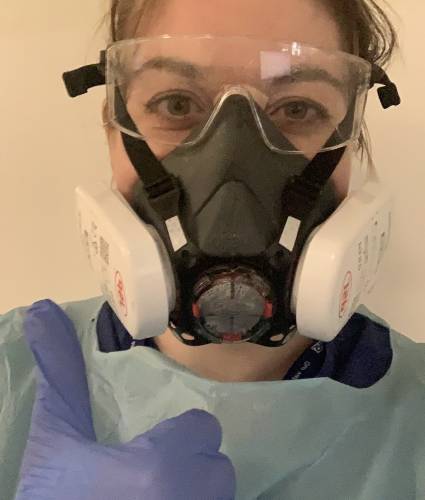
I’m a nurse with a particular interest in infection control and outbreak management. I previously worked as a health protection nurse where I investigated local outbreaks of infectious disease and other public health threats in London, and I advised on the actions people should take to slow the spread of infectious diseases in their communities. My PhD aims to help health professionals understand how we can best engage and include ordinary people as active partners in infection prevention and control in our hospitals.
How has the Professional Diploma in Tropical Nursing at LSHTM contributed to your career journey?
I completed the Professional Diploma in Tropical Nursing in June 2011. I had dreamt of quickly taking up a role with an international organisation and travelling the world as a nurse, but life did not work out that way for me. Instead, the PDTN gave me the knowledge and skills to forge a different career path, leading to a series of fulfilling roles in the UK. These included positions in local HIV services; in sexual health, where I used my microscopy skills; in outbreak management with the UK Civil Service; in travel and occupational health for an international non-governmental organisation, providing remote health support for colleagues deployed across Africa, Asia and the Pacific; and, most recently, in nursing academia, training the next generation of nurses.
I’ve also worked as an event medic for over 15 years, providing first-aid and emergency care for the crowds attending sports games and music concerts. Learning how to adapt my nursing practice for low-resource settings, like a field or a sports stadium instead of a hospital, was another skill that the PDTN helped me to develop. The PDTN really has been at the heart of my career, sometimes in unexpected ways! That’s why I’ve chosen to give back to LSHTM, to enable others to benefit from the same opportunities and experiences that have been so important to me.
Can you describe one moment from your work that has stayed with you?
Every health professional has a collection of career moments that stay with them, some are joyful memories when you feel like you’ve made a real difference, and some are painful memories when you feel you haven’t done enough or feel thwarted by things bigger than your individual practice. The PDTN helped me to engage with those “bigger things,” like health inequalities and ethics, and to understand the complications and limitations inherent within healthcare provision.
A specific moment that always gives me a wry laugh is when I’m reminded of how boring I thought health inequalities was as a topic during my undergraduate studies and how passionate I am about the same topic now – so perhaps a note of apology and thanks to Robert Hoskins at the University of Glasgow would be appropriate here!
What advice would you give to nurses or LSHTM students interested in global health?
Global health is a broad speciality and there are so many opportunities and avenues to explore, and I would encourage nurses and other LSHTM students to think deeply about what a role in global health could involve. As a white person from the UK, it can be all too easy to fall into an antiquated colonial mindset and think that of global health as something “out there” to discover and conquer! But global health issues are much closer to home if you know where and how to look for it – perhaps that is what the PDTN taught me most, how to have a global perspective whilst working in roles that tackled local health issues.