Asking the right questions: how my MSc in Epidemiology informed a Cholera response in Sudan
29 October 2026 London School of Hygiene & Tropical Medicine London School of Hygiene & Tropical Medicine https://lshtm.ac.uk/themes/custom/lshtm/images/lshtm-logo-black.png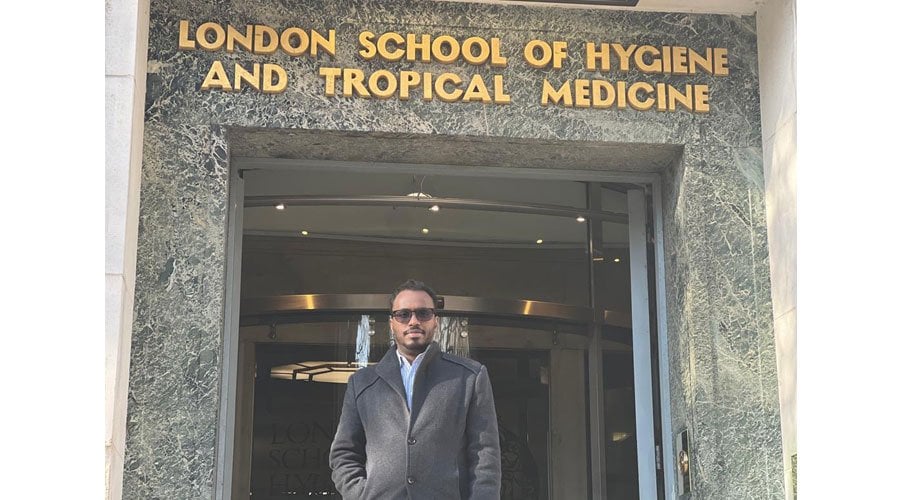
As a public health professional, I have always believed that good intentions alone are not enough to improve health outcomes. Lasting impact requires evidence, critical thinking, and the ability to translate data into action.
My passion for epidemiology began during my undergraduate studies. I was fascinated by the science behind disease patterns and how epidemiological evidence could influence health policy and save lives. I promised myself that one day I would study at one of the world's leading schools of public health. In 2021, that dream became a reality when I began my MSc in Epidemiology through LSHTM's distance learning programme while continuing my work in humanitarian.
Studying at LSHTM while leading health programmes in fragile settings was both demanding and rewarding. Balancing postgraduate study with full-time humanitarian responsibilities required discipline and resilience, while enabling me to immediately translate academic learning into practical solutions for complex public health challenges.
One experience demonstrated just how immediately applicable my LSHTM training had become.
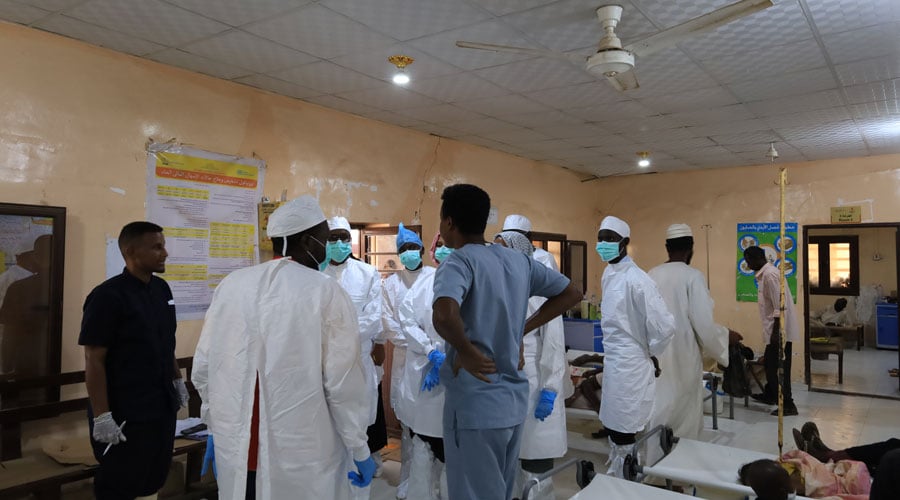
In November 2024, only days after submitting my MSc research project, I was deployed to support the cholera response in Gedaref State, Sudan. The humanitarian situation was deteriorating rapidly, particularly among internally displaced populations. During a visit to one of the Cholera Treatment Centres (CTCs), we observed more than 50 new admissions within just three hours. Many patients were arriving with severe dehydration and required unusually large volumes of intravenous fluids. While the treatment teams recognised the severity of the situation, there was limited epidemiological understanding of who was being affected, where cases were originating from, and how the pattern of admissions was changing over time. The potential factors contributing to delayed presentation and severe illness, including patients’ place of residence, exposure patterns, access to care, and delays in seeking treatment, had also not been systematically explored.
Rather than relying on assumptions, I approached the situation as an epidemiologist.
I requested the patient line list from the treatment centre and conducted a rapid epidemiological analysis using routinely collected surveillance data. Applying the epidemiological methods developed through my MSc, I conducted descriptive analysis by time, place and person, including an epidemic curve to characterise the outbreak trajectory, geographic distribution of cases, demographic and clinical characteristics, and the interval between symptom onset and admission. I also applied basic inferential statistical methods to assess associations between delayed presentation and selected epidemiological and patient characteristics.
The analysis revealed two important findings.
First, the epidemic curve demonstrated a rapidly propagating outbreak, with daily admissions increasing sharply over a short period. The temporal pattern, together with the geographic distribution of cases, suggested a common source exposure and helped direct the investigation towards potential sources of transmission. This explained the unexpectedly high consumption of medical supplies, particularly intravenous fluids, and the increasing pressure on the treatment centre’s capacity.
Second, and more importantly, the analysis showed that the challenge was not simply increasing transmission; it was also delayed access to care. Patients from specific sub-localities under Gedarif locality were presenting significantly later than others, with El Quresha and Sharg El Galabat sub-localities showing the longest intervals between symptom onset and admission. These findings pointed to important geographic and access related barriers to timely treatment. As a result, patients were arriving at the CTC with more advanced dehydration, increasing both the severity of illness and the volume of lifesaving treatment required.
This evidence shifted the response discussion from simply expanding clinical capacity to addressing the factors driving the outbreak and the late presentations.
I recommended targeting community health promotion and active case finding in the most affected sub localities, particularly El Quresha and Sharg El Galabat, with intensified risk communication, early care-seeking messages, and efforts to identify and address barriers to timely access. The analysis also helped explain the unexpectedly high consumption of intravenous fluids, enabling response partners to better anticipate supply requirements while addressing the underlying drivers of severe presentation.
For me, this was a powerful demonstration of the value of epidemiology. It allowed the response team to move beyond treating cases to understanding who was affected, where and when cases were occurring, and why patients were arriving late. It was also a clear demonstration of how my MSc in Epidemiology at LSHTM had translated directly into practice. The training strengthened my skills in epidemiological reasoning, outbreak investigation, critical appraisal, and data analysis, skills that enabled me to generate evidence and support decision making in a complex humanitarian emergency.
Perhaps the most important lesson I took from LSHTM was that epidemiology is not only about analysing data; it is about asking the right questions and using evidence to guide action.
I remain deeply grateful to LSHTM for an education that has fundamentally shaped the way I see the world through an epidemiological lens. For professionals considering studying at LSHTM while pursuing a career, my advice is simple: the programme is demanding, but its value extends far beyond the classroom. The knowledge and analytical skills you gain will shape the decisions you make, the emergencies you respond to, and ultimately the lives you have the opportunity to improve.