Alumni Spotlight: Dr Claudia Donkor
10 August 2026 London School of Hygiene & Tropical Medicine London School of Hygiene & Tropical Medicine https://lshtm.ac.uk/themes/custom/lshtm/images/lshtm-logo-black.png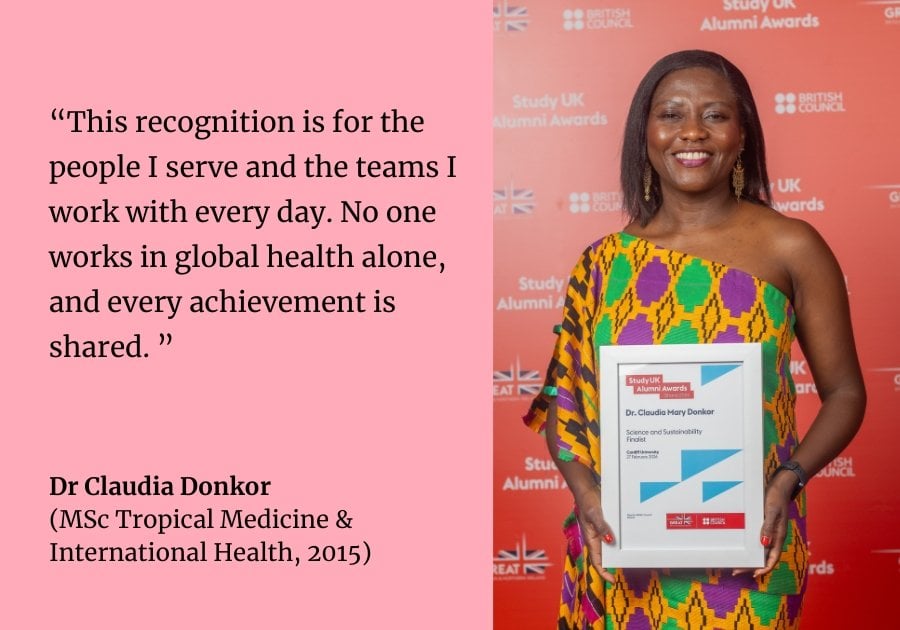
Could you briefly describe your current work?
Having had the honour of working in varied arenas- from consulting rooms, serving as the first female doctor aboard the Kwame Nkrumah MV21 Floating Production Storage and Offloading (FPSO) vessel in Ghana, to working with the United Nations Populations Fund (UNFPA) in Ghana, Somalia, and Syria - my professional life has certainly not been boring! My journey in international health has taken me across different countries, cultures, and healthcare systems, but at the heart of it all has always been one thing: people. Every setting has taught me something new — about resilience, humility, and the extraordinary strength people show even in the most difficult circumstances.
How has the MSc Tropical Medicine & International Health at LSHTM contributed to your career journey?
Looking back, my time in LSHTM - MSc in Tropical Medicine & International Health, and Professional Diploma in Tropical Medicine and Hygiene - was impactful, not just academically but personally. It contributed to the knowledge and skillset I use in my current role today as I serve the people of Syria as a Sexual and Reproductive Health Specialist. I enjoyed my social network in LSHTM, and I am pleased to have remained in touch with many. Some memories from that time still make me smile — having coffee with a close friend at a café set in a former Victorian public toilet, attending London Fashion Week with classmates, and even taking part in a Guinness World Record event for the largest gathering of people dressed as Spiderman.
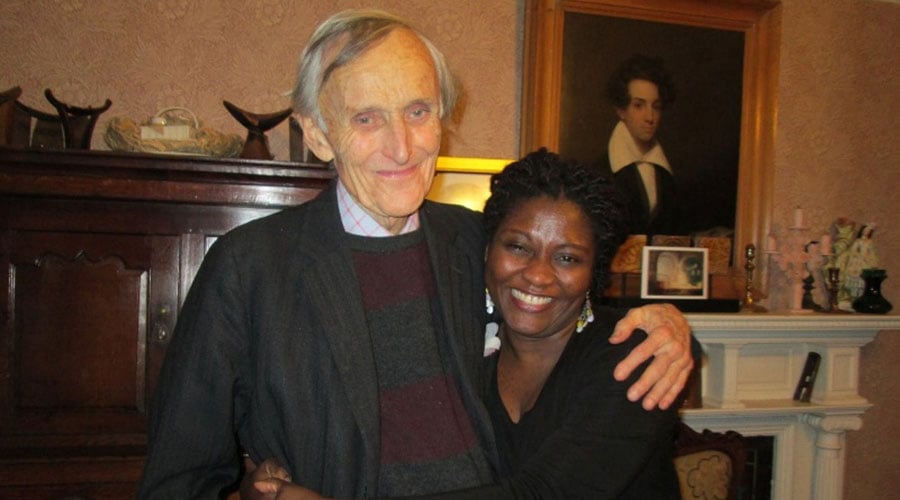
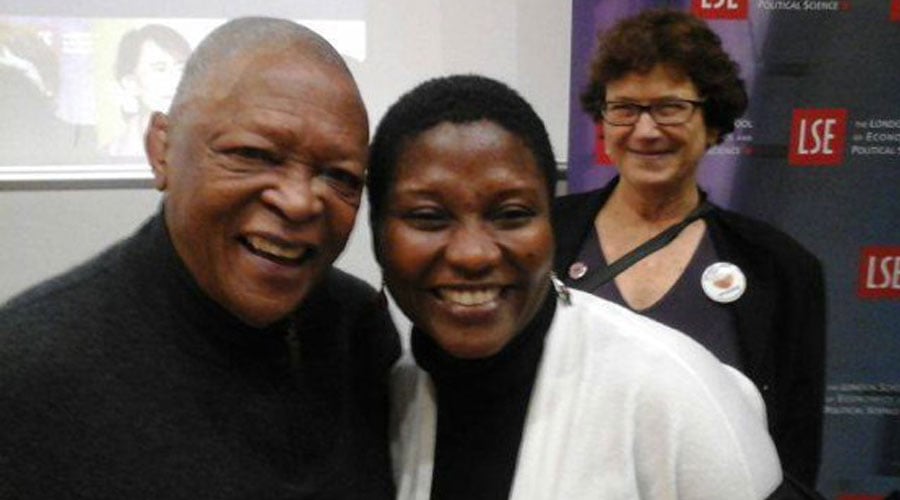
At LSHTM, I also had the honour of being taught by, and later dining with, the legendary Professor Parry, whose name I had known from the library where I studied during medical school in Ghana. Other surreal moments included meeting Hugh Masekela and attending Commonwealth Day at Westminster Abbey with the Duke and Duchess of Cambridge in attendance — memories that have stayed with me ever since.
You have worked across clinical medicine, public health, and programme leadership, including pioneering roles such as being the first female doctor on the Kwame Nkrumah FPSO. What have been some of the most defining moments in that journey?
Some of the work closest to my heart has been around Obstetric Fistula. This devastating childbirth injury, which leaves many women and girls incontinent of urine and faeces, is not only physically debilitating and deeply humiliating, but also carries profound psychosocial consequences, often isolating them from their families and communities. Being able to support them to undergo surgery and regain confidence and dignity after treatment, has been one of the greatest privileges of my career. My career journey has been anything but linear, taking me across clinical medicine, public health, and programme leadership, often in roles shaped by the urgency and unpredictability of humanitarian settings. Through it all, the following lessons remain constant for me: teamwork and continuous learning— working alongside dedicated teams, mentoring younger colleagues, and learning from others, including the communities I serve.
Congratulations on being named StudyUK country finalist for Ghana and a global finalist. How does it feel to receive this recognition, and what significance does it hold for you in your journey so far?
I was honoured to be named a finalist for the StudyUK Alumni Awards-Ghana and a global finalist. Receiving recognition for my work, which I am passionate about, has been humbling and genuinely thrilling at the same time. But more than anything, this recognition is for the people I serve and the teams I work with every day. No one works in global health alone, and every achievement is shared. I would like to thank the Commonwealth Secretariat, StudyUK Alumni, the British Council, LSHTM, my family, friends and all who have contributed to my success thus far.
As you look to the future, what are you most excited about in your work, and what advice or reflections would you share with fellow LSHTM alumni and emerging global health leaders?
As I think about the future, I remain excited by the possibilities ahead — especially in improving access to quality health care for all, particularly sexual and reproductive healthcare for women and girls, who are too often overlooked. One lesson that has stayed with me came from a school experiment where I volunteered to test mosquito repellents by being bitten by caged mosquitoes. It left me with an unexpected respect for these pesky, tiny yet remarkably powerful and adaptable insects. Over the years, I have often reflected on how similar that is to our work in global health — we may sometimes feel small or unseen, but our impact can still be significant. Like the mosquito, we adapt, persevere, and influence the world around us. The difference is that we can choose to use our skills for good: to heal, advocate, and create positive change, even through the smallest acts of service. Thank you.