London Climate Action Week: advancing action for climate and health
30 July 2025 London School of Hygiene & Tropical Medicine London School of Hygiene & Tropical Medicine https://lshtm.ac.uk/themes/custom/lshtm/images/lshtm-logo-black.png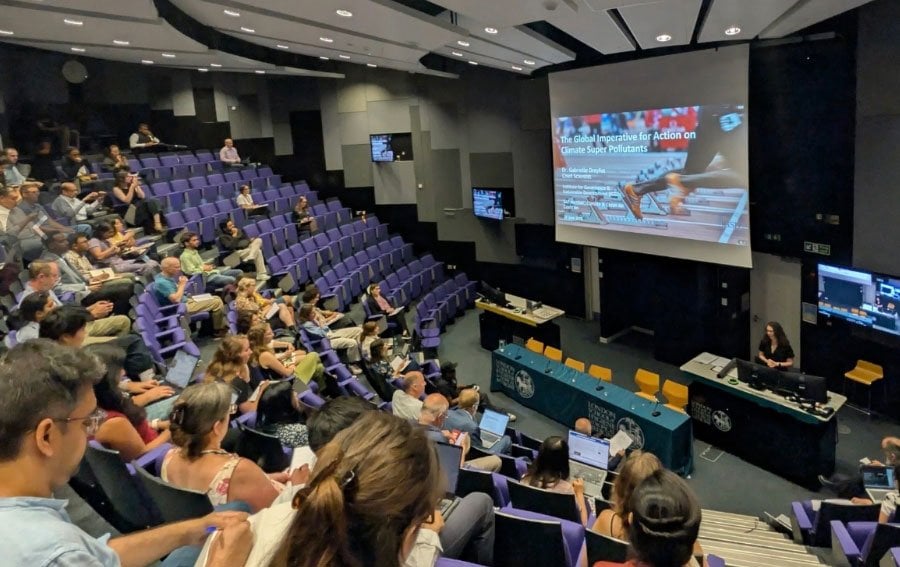
In its 7th year of successful running, London Climate Action Week (LCAW) was celebrated this year from 21st-29th June 2025 with the objective to accelerate climate action in London and globally, featuring events and activities from a wide range of climate and non-climate organisations.
As a recent MSc Public health alumnus from London School of Hygiene & Tropical Medicine (LSHTM) and a strong sustainability advocate, I attended a one-day event at the school: “From Global Evidence to Local Action on Climate and Health”. The talks and panel discussions were led by leading experts who are working to achieve real-world impact through generating global evidence and exploring local, scalable solutions for climate and health.
Being in the John Snow Theatre, I literally time travelled to the days when I took part in some of the amazing module sessions that focused on potential effects of climate change on public health and how these short- and long-term risks can be effectively mitigated. I was attracted to this event because of its unique focus on two key topics: healthy, sustainable cities, and action on short-lived climate pollutants (SLCPs) or “super pollutants”.
The health impacts of air pollution was a key topic in both sessions of the event. Even though we can’t always see air pollution, it kills more people than water pollution.
Conversations touched on the UK’s progress on adaptation particularly in the context of the ongoing heatwave; geopolitical instability; and growing anxiety about potential nuclear war. I was really impressed by how each of the speakers drew from their expertise and work in these areas.
A lot of discussion focused on how evidence synthesis can play a crucial role in developing smarter solutions for meeting net zero targets by 2030. I was able to completely resonate with this as my MSc Public Health summer project at LSHTM, in collaboration with UK Health Security Agency (UKHSA) focused on synthesizing available evidence on Thunderstorm Asthma (TSA - a phenomenon where thunderstorms can trigger asthma attacks or worsen existing asthma symptoms) and public health. Interestingly, the findings from the project report are currently being used to inform policy recommendations on addressing TSA in the UK.
The event also highlighted the risks of the urban heat island effect, where cities experience higher temperatures than surrounding areas due to their built environment trapping heat. It was inspiring to hear success stories about how infrastructural refinements in cities have contributed positively towards public health by combating the heat effects of climate change.
It was quite interesting to attend a session that was exclusively dedicated to super pollutants such as nitrous oxide, ozone, and black carbon. I was awestruck by the fact that even anaesthetic agents and asthma inhalers are contributors to greenhouse gas emissions.
This event logically and clearly summarised the interventions that must be implemented at the individual, local, national and international level to tackle climate change and improve public health. Equitable financing for climate and health research, complemented by the integration of multi-dimensional strategies across all sectors, are vital to accelerate action. As a sociable person, I enjoyed networking afterwards with the speakers and my fellow attendees, with this impression embedded in my mind throughout: while we talk about the carbon footprint, the footprints of humanity will carve the future of our wonderful planet.
My journey as a public heath student at LSHTM has been full of enrichment and motivation, especially due to being in a research focused environment. My passion for public health advocacy and health systems, resonates completely with LSHTM’s objectives to improve health and health equity worldwide and promote sustainability. I am continuing to carry forward my learnings in my current role as Research Administrator at the University of Lincoln, where I am supporting an Allied Healthcare Professionals Workforce Research Partnership that aims to reduce health inequalities in rural and coastal areas of the UK.