Alumni Profile: Dr Paul Litchfield
31 October 2025 London School of Hygiene & Tropical Medicine London School of Hygiene & Tropical Medicine https://lshtm.ac.uk/themes/custom/lshtm/images/lshtm-logo-black.png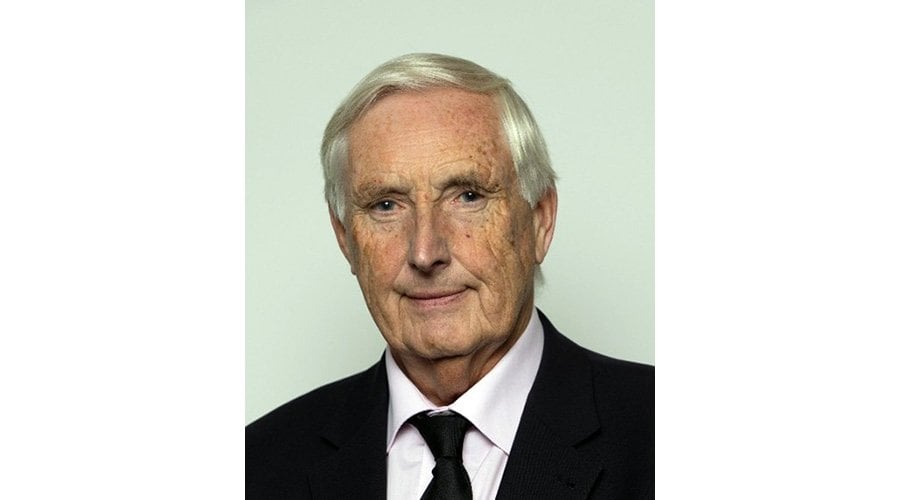
What is your current job title and organisation?
I currently work for myself, providing strategic advice to companies on the health and wellbeing of their workforces. I am the Independent Chief Medical Adviser to both Compass Group, the world’s largest catering company, and to ITV, the UK’s main commercial broadcaster.
Can you please tell us a bit about your career journey?
I qualified as a doctor from Manchester Medical School on 7/7/77 – a once in a century series of lucky numbers that has certainly brought me good fortune! I wanted to do something a bit different from working in the NHS so I joined the Royal Navy as a doctor. My first appointment as a fully-fledged doctor was looking after the civilian workforce in Chatham Dockyard and I was fascinated by the range of industrial processes, the varied hazards faced by workers and the multiple occupational diseases that I came across. That led me to decide to specialise in Occupational Medicine. I ended up staying in the Royal Navy for 18 years practising my discipline in a range of roles from the north of Scotland to Antarctica.
I then became the Medical Director for the Civil Service Occupational Health Service. I was responsible for advising on the health of some 500,000 employees in a variety of public sector departments. Following the privatisation of The Service in the late 90s, one of the contracts we won was to provide occupational health services to BT. As the lead for that contract, I got to know BT well, and when their Chief Medical Officer was retiring, they asked me to take on the role.
I joined BT on 01/01/01 which I thought might be another auspicious set of numbers and so it proved to be – I stayed there for 17 years. I was involved with external organisations such as the World Economic Forum, the European Commission, the World Health Organization, and the International Labour Organisation as well as the UK Government and a number of charities. Towards the end of my time with BT I was appointed as Chair of the What Works Centre for Wellbeing which the UK Prime Minister had asked to be set up in order to advance knowledge in that area and promote its use in public policy and the wider economy. BT generously agreed to second me half-time to take on that role, and supported the Centre in that way until I retired from the company in 2018.
On leaving BT, I thought I would put my feet up, but it didn’t turn out that way. I was approached by ITV to help them enhance their Duty of Care arrangements for people appearing in reality TV shows, notably Love Island. That developed into a broader medical advisory role which became critical when the COVID-19 pandemic hit, and we had to re-engineer TV production to provide cast and crew with a working environment safe from the threat of the coronavirus. At about the same time I was approached by former colleagues then working for Compass which also needed pandemic support for their workforce of 600,000. I’ve continued in Chief Medical Adviser roles for both ITV and Compass.
Why did you choose to study with LSHTM?
As part of my higher professional training to become a specialist, the Royal Navy sponsored me to undertake a MSc in occupational medicine. The TUC Centenary Institute of Occupational Health, based at LSHTM, was probably the premier academic unit for the discipline in the UK at that time and the Navy enrolled three of us on their full-time MSc course. The academic staff were all good and some were world class – Nicola Cherry who went on to hold chairs in Manchester and Canada particularly influenced me.
You have probably seen the field of occupational health change a lot over your career. What challenges have you faced throughout your career and what did you learn from them?
There was a heavy emphasis on toxicology when I began in occupational medicine and that was reflected in my clinical caseload – asbestos disease, lead poisoning and occupational asthma were all conditions I saw multiple times in my early years. Most chemical hazards and many of the physical ones, like noise and vibration, have either been controlled through better engineering or exported to laxer jurisdictions so they now feature far less in UK practice, except as legacy issues. In contrast, workplace psychological hazards are now far more prevalent, in part because they are better recognised and in part because of changing work demands.
The organisation of occupational health has also changed substantially. Historically, the specialty was centred principally on large companies in manufacturing and extractive industries, like coal and oil. Many of those large organisations were split up in the 1980s or ceased to exist as the economy shifted to be service-dominated, and their occupational health departments which had trained younger doctors, nurses, hygienists and others contracted, closed or were outsourced. The number of commercial occupational health providers expanded but their focus was primarily on sickness absence management and the breadth of challenge that had stimulated me intellectually, diminished. That’s why I chose to move into strategic roles where I could try to influence the wider work and health agenda.
You’ve worked in a broad range of companies and organisations, are there any health issues – physical or mental – that are common across all sectors?
People are people! Every industry likes to think it’s unique but the people they employ all react in the same way to physical and mental illnesses.
Half of the occupational health equation is about the impact of health on work. The common illnesses that present in the UK are musculoskeletal problems, heart disease, cancer and mental ill health (which is now probably the largest contributor). Those illnesses can affect anyone working in any sector at any level. The nature of the work dictates the adjustments that can be made to help keep someone in employment but with a bit of effort and imagination you can keep most people working productively and often the accommodation is only required temporarily.
The other half of the equation is about the impact of work on health. Most of the hazards are psychological and the recognised risk factors (demands, support, control, change, role and relationships) can apply in any form of work. All of us who work or are about to enter employment need to understand what those risk factors look like and how we can work safely and effectively without succumbing to the adverse effects of them. That duty is greater when we have responsibilities for others in a team leader or manager role.
What were your favourite memories from your studies with us?
The bulk of the students on my course came from outside the UK and it was an education for me to get to know some of them and to gain some understanding of their cultures. The largest contingent came from Nigeria, and I will never forget the December day when a dozen qualified doctors ran out into Keppel Street squealing with excitement because they had seen snow for the first time.
How has your LSHTM degree helped you in your career?
The course undoubtedly helped me to be more discerning in appraising scientific papers and in understanding how research methodology is a crucial element in determining the weight that should be applied to conclusions. It also gave me a proper grounding in epidemiology and statistics which has served me well on multiple occasions when trying to make sense of situations.
The world of work is evolving rapidly, and in challenging times people’s increasing workloads and stress levels can take a toll on our health and wellbeing. What advice would you offer to recent graduates entering work or at an early stage in their careers?
Your time spent as a student is just the first instalment of what will be a lifetime of learning. Knowledge is more accessible today than it has ever been in the history of humankind – understanding “what” to do is therefore relatively straightforward and the critical success factor at work is more often the “how” to do it. Some of that “how” can be gleaned from books and other information sources but most of it comes from experience. Spend at least 80% of your time listening and no more than 20% talking – listen to the people at work who have been around the block a few times and learn from them not just about when things went right but also when they went wrong. You often learn more from failure than from success.
Establish relationships early in your career – it gets harder as you get older and more senior. Nurture those relationships, especially when people move out of your immediate orbit. Show empathy and compassion to others – that cements relationships and it may well be that you will want to rely on those people at some point in the future. Be kind to yourself – none of us is perfect and if you get something wrong, learn from it and move on.