Frontline Medicine to Public Health: Megan's Distance Learning Journey
16 June 2026 London School of Hygiene & Tropical Medicine London School of Hygiene & Tropical Medicine https://lshtm.ac.uk/themes/custom/lshtm/images/lshtm-logo-black.png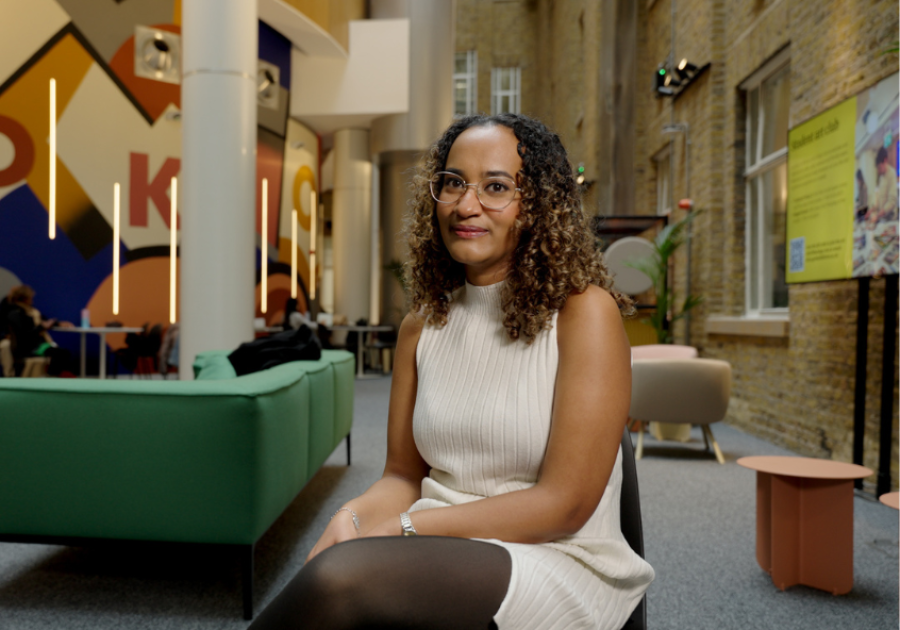
Hi! My name is Megan Munro - I'm from Trinidad and Tobago in the Caribbean, and I studied MSc Public Health by Distance Learning over four years. I'm a medical doctor by profession - I did my undergraduate medical school studies in Trinidad and Tobago at the University of the West Indies, and I've been working as a clinician full-time since 2017.
Why are public health studies important for medical practitioners?
While I was a medical student, I was quite interested in public health. Then, in the middle of the COVID-19 pandemic, it was quite overwhelming. I worked in the accident & emergency (A&E) department, so we were on the front line, and I saw firsthand the issues with health inequality and how they impact day-to-day lives.
I think the study of public health for medical practitioners is quite important, especially when working in a public health system - or any universal health care system - because health delivery, health equity and inequality are important. As a medical practitioner, fundamentally, healthcare provision is what I've been trained to do and what I enjoy doing. Sometimes, as a clinical doctor however, it can be quite easy to overlook all the other factors that definitely play a big part in people's health.
Why Public Health by Distance Learning at LSHTM?
I found LSHTM to be quite a reputable institution and prominent in the global health sphere. I did some research on public health master's programmes, and LSHTM had one of the top courses that also offered a distance learning route. This was great for me because I wasn't able to commit fully to in-person learning at the time.
How does distance learning study work in practice?
For distance learning students, all of your course material is given to you via an online platform (Moodle at LSHTM), and you gain access to all your lectures and course content at the start of the academic year in October. There are also group chats where you can connect with other students on WhatsApp, which I did find helpful as well. The exams could be completed online too, which gave me a lot of flexibility in terms of getting time off from work.
How did you find that balance between work and studies?
To me, distance learning is flexible, but you also have to be disciplined - which I did struggle with in the beginning, if I'm being honest!
The balance was definitely quite difficult to get right because most of the time, while I was studying, I was working full-time as a junior doctor in a busy urban centre. I also swapped jobs and moved during these four years, but the flexibility of the distance learning programme meant I could complete my studies in up to a maximum of five years, so I did add some time onto my original plan.
My advice for future students is to be disciplined and stick to your timelines. However, life happens, so don't be too hard on yourself and embrace the flexibility of distance learning study.
What do you feel you've gained from your distance learning studies?
Through my studies, I have gained a lot of global knowledge and perspective, which I think is important.
I've not been able to apply every single thing I have learnt just yet because I was working as a full-time clinician, and I am still in a junior clinician role. But when I conduct research, the course material is quite helpful. Figuring out what articles are relevant, as well as considering validity and reliability etc., are all useful practical skills I have learnt.
My studies also enabled me to identify a lot of problems in several departments that I have worked in. Unfortunately, I wasn't in a position to actually lead the change, but I did offer suggestions, and hopefully it will have a good outcome eventually.
What's your favourite memory from your time studying?
One of my standout memories would have been one of the additional activities - decolonising global health. I just thought it was so relevant because I'm from the Caribbean, and a lot of our services began in colonial times, and the institutions have sort of remained. They've never really been fully adapted to serve the actual population of the country, so I thought it was quite interesting to study this. I also appreciated that LSHTM as an organisation also acknowledged the role that they as an institution would have played in the colonisation of healthcare. As someone who comes from my background, I thought it was quite eye-opening.
How did you find the learning environment? Did you find that you could make connections with people around the world?
Many students create WhatsApp groups, and these made for really interesting conversations because it's quite a global class and everybody brings their experiences to the table. Everybody is generally quite helpful and willing to give advice, especially when you're picking modules and considering how intensively to study, depending on your life at the time.
Joining the graduation ceremony in London was the first time that I met a lot of people from the distance learning community in person, and it was nice to be able to put a face to the names. Everyone was pleasant and friendly, and graduation was a joyous environment and experience.
What are you up to now?
I currently work for the National Health Service (NHS) in the UK as a general practice trainee, which I started around the time I completed my studies. My long-term goal is to go more into healthcare admin. In my country, those roles typically ask for training in both public health and primary care, which was another reason for completing the MSc Public Health by Distance Learning programme.
How are you different today compared to the first day of studies?
Me four years ago feels like an entirely different person! I had no idea that life would have taken me where it did. I feel more knowledgeable in public health and of the public health sphere, as well as being more attuned to health inequality and how social factors and political factors influence it. I think it's quite important knowledge to have with all the things happening globally.
What advice would you give to someone about to start their distance learning studies?
My advice:
- Try not to be too hard on yourself and set too many goals to accomplish in one year.
- Be structured at the beginning of the academic year and stick to your study schedule. That way, when it is time for examinations or assignments, you don't feel as overwhelmed because I did feel overwhelmed at times.
- Embrace the opportunity to make new friends, too.
- And just enjoy it!
What are your hopes and dreams for your future career?
I have a lot of hopes and dreams for my future career, but the primary one is to make a difference in healthcare, especially in vulnerable populations. Whether it be globally or locally, it doesn't matter – I just hope to make healthcare a little bit better than it is. I am happy to complete this chapter and excited to see what the future holds.