Free workshops on food systems for LSHTM students - Matt's take
29 August 2025 London School of Hygiene & Tropical Medicine London School of Hygiene & Tropical Medicine https://lshtm.ac.uk/themes/custom/lshtm/images/lshtm-logo-black.png
Welcome Week at LSHTM was a whirlwind. Modules, blocks, assessments, Moodle, multi-factor authentication, centres, summer projects (already?) and teaching – all while trying to meet your classmates for the coming year. I felt like I'd been turned upside down, spun on my head, then told off for not making the most of my experience. My inbox overflowed with earnest and important-sounding schemes and initiatives which I should register for. But one thing particularly caught my eye among the noise - an invitation to sign up for IFSTAL.
Join IFSTAL when you start at LSHTM
“What on earth is IFSTAL?” I wondered. As it turned out, it stands for Interdisciplinary Food Systems Teaching and Learning – a collaboration between postgraduates from City St. George’s University of London, University of Oxford, University of Reading, LSHTM, Royal Veterinary College (RVC), University of Warwick and School of Oriental and African Studies (SOAS) who come together to think critically about food systems.
It sounded vaguely interesting, so I sent off an application (you do have to apply right at the start of the academic year – there’s a deadline). What followed from my application was a food systems extravaganza, which flavoured (sorry) and spiced up (sorry, again) my year at LSHTM.
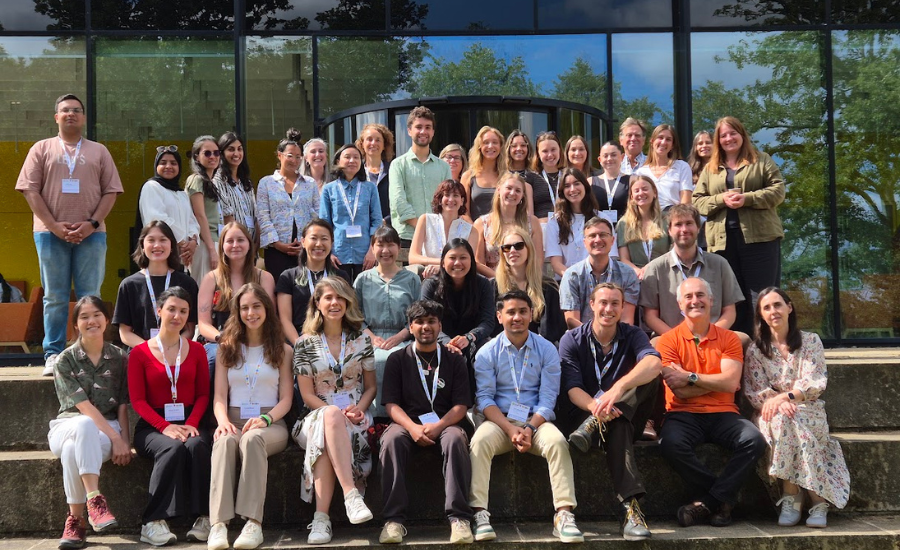
IFSTAL workshops & activities
IFSTAL consists of four workshops over the academic year, held on Saturdays at one of the partner institutions. Before these workshops, you have access to online lectures, learning and reading, which help introduce you to systems thinking techniques and to pressing issues in the food system. At the workshops, you work with colleagues across disciplines and institutions, applying these techniques to examine real-world food systems threats.
There's also a bunch of extra events which go alongside the workshops. The amazing IFSTAL team organise public lectures, networking events and careers workshops. And all of this for free! They will email you to let you know about workshops and events and give you plenty of time to sign up.
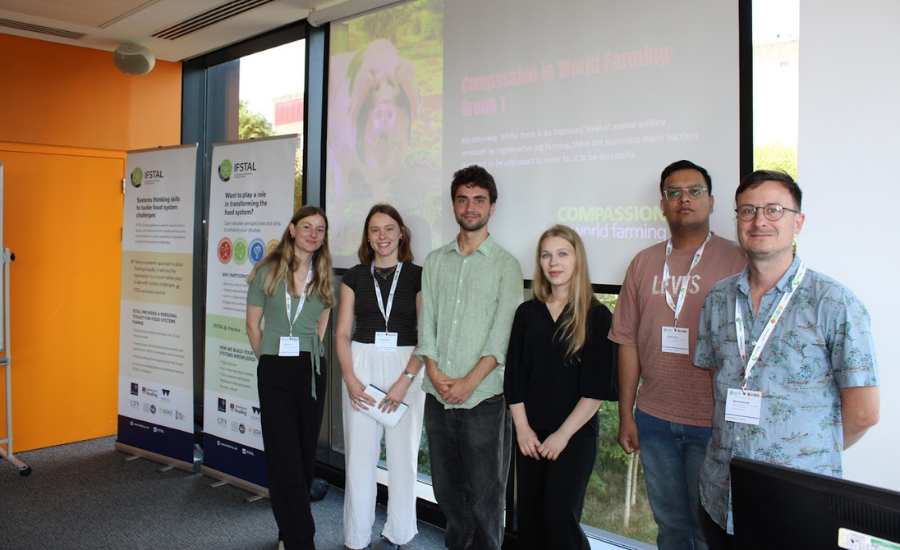
Then there's the summer school, affectionately dubbed the big food systems weekender. It's a 3-day residential at one of the participating institutions. Organisations like the UK's Department for Environment, Food & Rural Affairs provide IFSTAL with real-life research projects which they require extra input. Students then work in teams to deliver these projects and present them back to the organisation. My team delivered an analysis of the potential of regenerative pig farming to Compassion in World Farming, who have gone on to use our research to inform their policy. The summer school was an incredible opportunity to work on real-world, meaningful research for a client – it's certainly helped swing a few job interviews for me. (This is the only IFSTAL event which carries a fee, but they're helpful with financial support.)
Why I chose to join IFSTAL
So that's IFSTAL in a nutshell. Should you do it? It's up to you, but there are a few reasons why I think it's super useful for people interested in public health.
- It teaches you fundamental systems thinking methodologies. The food system has obvious relevance to public health, but the methodologies you learn on IFSTAL can help you think about other complex systems problems. Public health issues rarely have a clear, obvious solution, and getting close to fixing them requires an understanding of system dynamics.
- You work with people from different disciplines. Public health is all about interdisciplinary collaboration, and the chance to understand how anthropologists, economists, veterinarians and food scientists think and work together is invaluable for a public health thinker.
- You become part of a community. IFSTAL has been running for 10 years, so there's a whole bunch of people who have participated who are now working across academia, government, and civil society, and who are delighted to hear from future leaders in those fields. That's a pretty amazing addition to your network.
Finally...
Look, that's (nearly) the end of my IFSTAL pitch. It certainly gave me a lot. Conversations I had with IFSTAL colleagues, alumni and staff influenced my summer project, helped me get a job, and made me a better thinker. And it was a lot of fun. So, even though you're sure to have a lot on your plate (last one, sorry) in the first few weeks at LSHTM, do think about signing up.
- Learn more about IFSTAL
- Discover MSc Public Health & MSc Nutrition for Global Public Health.