
The study, published in mBio, analysed malaria parasites from travellers who returned to the UK after visiting Africa and were later diagnosed with malaria. By studying these samples, the team identified genetic signals that may help track how resistance to key antimalarial drugs is developing and spreading.
The team studied 50 malaria parasite lines established since 2012, examining how well they responded to major antimalarial medicines in laboratory tests. These results were then linked to the genetic profiles of the parasites and the treatment outcomes of the patients from whom they were collected.
Although malaria treatments are usually highly effective, researchers identified a small number of cases in which the standard combination therapy did not completely clear the infection. All cases of Plasmodium falciparum malaria in the UK are treated with artemether–lumefantrine, the same artemisinin-based combination therapy (ACT) used to treat more than half of malaria patients in Africa.
By combining laboratory drug testing with genetic analysis, the team identified new genetic types in several parasite isolates that were linked to reduced drug susceptibility in laboratory tests. These genetic changes may serve as new markers that researchers can use to track emerging drug resistance in malaria-endemic regions.
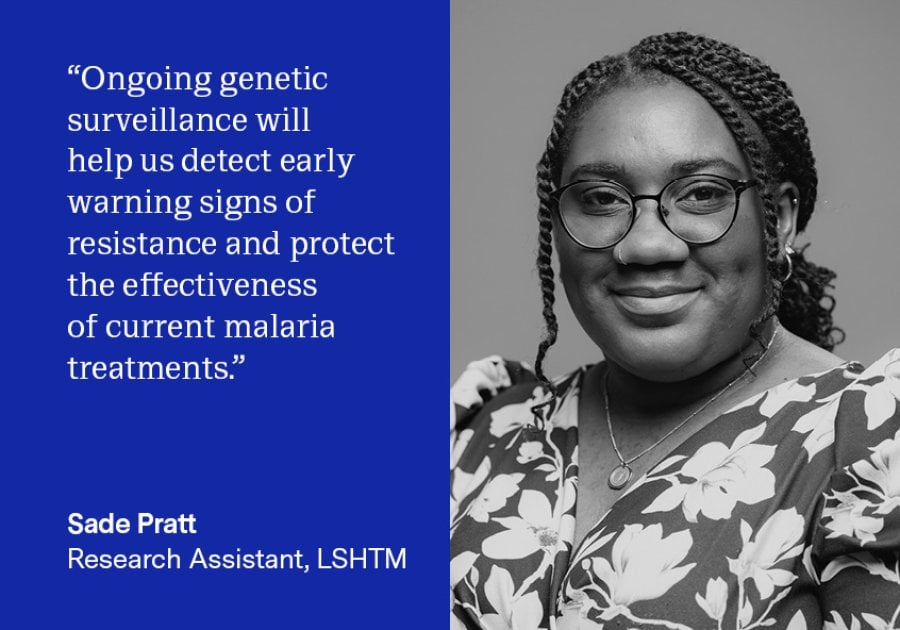
Sade Pratt, Research Assistant and lead author of this study said: “In this study we identified new genetic changes in Plasmodium falciparum that may affect how well key malaria drugs work. While these changes are not yet established markers of resistance, they show why it is so important to closely monitor parasite populations. Ongoing genetic surveillance will help us detect early warning signs of resistance and protect the effectiveness of current malaria treatments.”
The work has already had practical impact. The findings have helped inform malaria treatment guidelines in the UK, and the parasite lines developed during the study are now being shared with researchers worldwide. These cultured parasites provide benchmark reference strains, allowing laboratories to calibrate drug-susceptibility tests and compare results across different studies.
The research was carried out through collaboration between the UK Health Security Agency Malaria Reference Laboratory and research groups within the Department of Infection Biology at the London School of Hygiene & Tropical Medicine, including the Sutherland, Campino and Clark groups. The work was supported by the UKHSA and a research grant from the Medical Research Council (UK).
Publication
Pratt, S; Van Schalkwyk, DA; Stewart, L; Hocke, EF; Mannan, S; Berry, C; Muwanguzi-Karugaba, J; Nolder, D; Rogers, C; Chiodini, PL; Henrici, RC; Moss, S; Billows, N; Phelan, J; Clark, TG; Campino, S; Sutherland, CJ; (2026). "Novel Pfk13 and Pfubp1 genotypes in African Plasmodium falciparum isolates exhibiting reduced susceptibility to the antimalarials artemisinin and lumefantrine". mBio
If you enjoyed this article and would like to build a career in global health, we offer a range of MSc programmes covering health and data, infectious and tropical diseases, population health, and public health and policy.
Available on campus or online, including flexible study that works around your work and home life, be part of a global community at the UK's no.1 public health university.