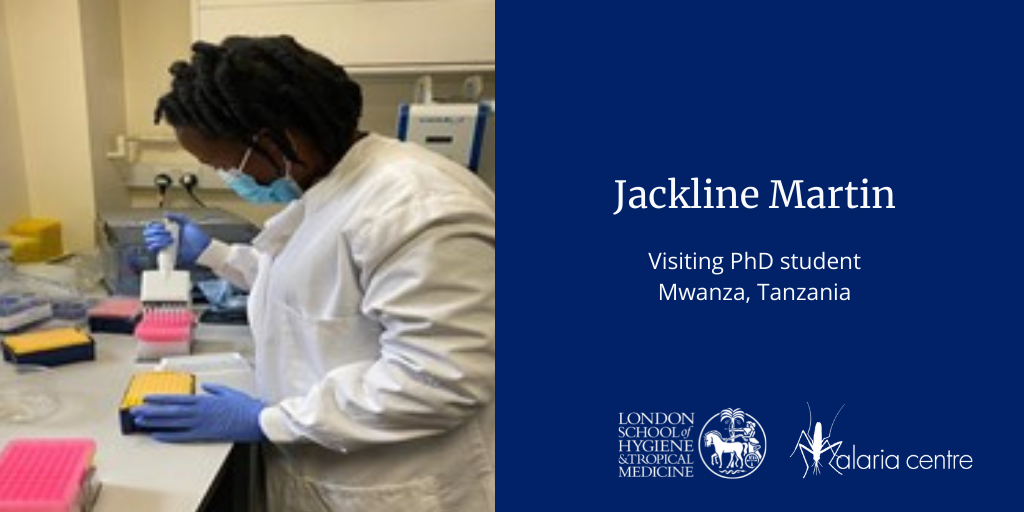
Meet Jackline
Tell us a bit about your PhD.
My PhD will evaluate efficacy and durability (insecticidal and physical) of next generation insecticide-treated bed nets against pyrethroid resistant malaria vectors in Tanzania
The first part of the study (WHO Phase III durability) will be carried out within a cluster randomized controlled trial in 40 clusters in Misungwi district, Tanzania. The following treatments will be evaluated: 1/ Interceptor®G2 combining chlorfenapyr and the pyrethroid alpha-cypermethrin, 2/ Royal Guard® treated with pyriproxyfen and alpha-cypermethrin, 3/ OlysetTM Plus which incorporates a synergist piperonyl butoxide and the pyrethroid permethrin, and 4/ a reference standard alpha-cypermethrin only LLIN (Interceptor®). 750 nets will be followed in 5 clusters per intervention arm at 6, 12, 24 and 36 months post distribution for survivorship and hole index assessment.
The second part of the study will assess the efficacy of the net after being used in the community at different timepoint in experimental hut trial parallel to supplementary assays such as cone and tunnel test. A total of 1950 nets per net type will be identified in 10 clusters, of which 30 LLINs will be withdrawn for bio-efficacy and chemical analysis every 6 months up to 36 months and another 30 collected for experimental hut trials every year. Bio-efficacy will be assessed using cone bioassays and tunnel tests against susceptible and resistant laboratory strains of Anopheles gambiae sensu stricto. Efficacy of field-collected nets will be compared in six experimental huts. The main outcomes will be Anopheles mortality up to 72 hours post exposure, blood feeding and egg maturation using ovary dissection to assess impact on fecundity.
Study findings will help develop bio-efficacy and physical durability criteria for partner A.I., in relation to the cRCT epidemiological and entomological outcomes, and refine preferred product characteristics of each class of LLIN. If suitable, the bioassay and hut outcomes will be fitted to transmission models to estimate correlation with cRCT outcomes.
What are you are here to do whilst you are at LSHTM?
While in London I will perform molecular techniques such as gene expression and species identification using Taq Man assays for the Anopheles mosquitoes samples collected from experimental hut trials at 12 and 24 months of net use. I'm also among the student who attend survival analysis and Bayesian course (MSc module) to gain knowledge on how to analyse my data.
Where are you from?
I’m from Mwanza district, Tanzania
What places would you like to visit in London/UK whilst you are here?
I would love to visit historical sites such as Science museum, British museum, Tower of London, and natural green parks.
What did you want to be when you were growing up?
I grew up calling myself scientist by nature. My first profile was written when I was secondary school carrying the same tittle. I love insects. When I was young, I used most of my time catching the grasshoppers in the field and observing how beetles were rolling the cow wastes. The sound made by crickets was amazing and I wanted to explore where does it coming from. From there I found myself like biology subject and that is where my career started.
What is your favourite film & book?
My favourite film is Sarafina and book is Poor Dad Rich Dad by Robert Kiyosaki.
What three words describe you?
Independent, motivated and transparent
If you had to eat one meal every day for the rest of your life, what would it be?
Definitely mushroom and broccoli noodles!