
What is your role at LSHTM?
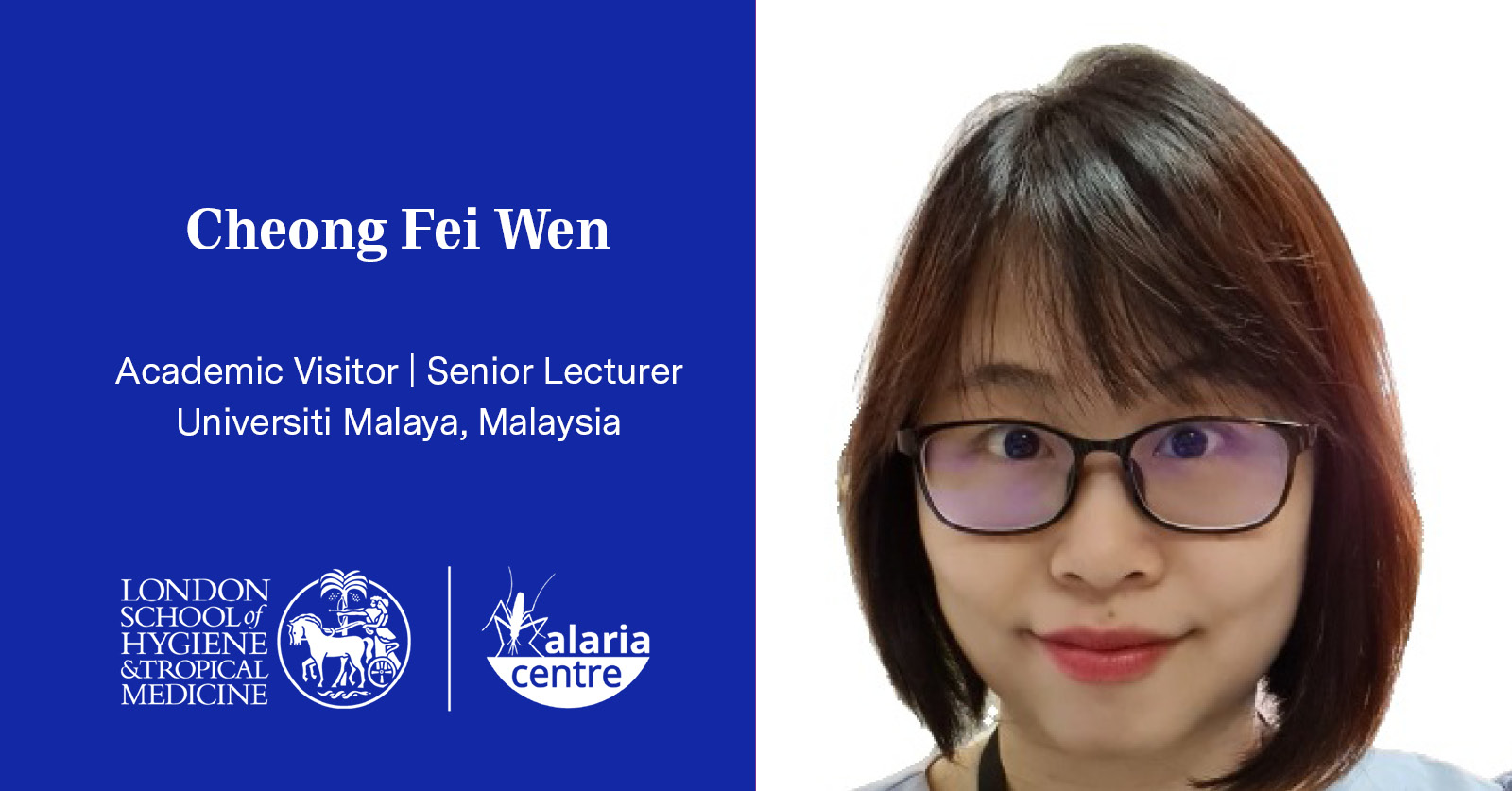
I am an academic visitor from Universiti Malaya, Malaysia, for a short research visit under the team of Associate Professor Robert Moon in LSHTM.
Could you share some insights into your current project?
This research visit is supported by the Wellcome Trust Discovery Award held jointly between LSHTM, University of Glasgow and Universiti Malaya. This project aims to understand the conserved processes required for commitment to transmission by malaria parasites, and also to unlock the transmission stages of Plasmodium knowlesi for further study. During this visit, the LSHTM team will share their expertise in CRISPR-Cas9 genome editing in P. knowlesi, covering the plasmid construct design, transfection and basic phenotypic assays. At the same time, Universiti Malaya team has established a new P. knowlesi line derived from a clinical isolate, and we will share our experiences to establish the culture in LSHTM.
How did you initially embark on your journey in malaria research?
During my bachelor's degree, I developed my interest in parasitology, and took the intermediate and advanced courses. P. knowlesi, a simian malaria species, is now found infecting humans and has become the main human malaria cause in my country. When I was looking for the opportunity to continue my PhD study, I took a P. knowlesi-related topic and explored into several aspects, including protein expression of the P. knowlesi merozoite surface proteins; immunogenicity study of the target proteins using animal model; and epitope mapping using phage display library.
Could you describe the work environment at the Malaria Centre?
I get the opportunity to talk to many people about their research aspects and future directions. I like the spirit of teamwork in the centre, where people communicate and discuss a lot between different research groups. It is an eye-opener and will definitely be beneficial for my future work.
Where is your hometown?
I was born in Petaling Jaya, Malaysia.
What were your childhood aspirations?
My childhood aspiration was to become a person who could save people’s life and contribute to the human well-being. I am now moving forward to the goal, by involving in both academic and health research fields.
What's the most enjoyable aspect of working with your team?
Everyone is very helpful and ready to share their knowledge. This makes me feel very comfortable to ask questions whenever I have doubts and I really appreciate their kindness.
Beyond work, what are your hobbies and interests?
I enjoy travelling around the world, to experience and embrace the differences in culture.
What do you find yourself doing when you're not working?
I spend quality time with my family, friends, and my cat. Importantly, I also enjoy having me-time, by watching movies and exploring new places alone.
Where do you envision yourself post-PhD?
As a lecturer and researcher in the university, I will continue to contribute to the society by educating the younger generations and be their inspiration for future directions.
Is there a personal mantra or philosophy that guides your life?
Carpe diem.
Any words of wisdom or inspiration for your fellow Centre members?
Research is never easy. Nonetheless, where there’s a will, there's a way. Let’s do the best we can and leave the rest to God.