
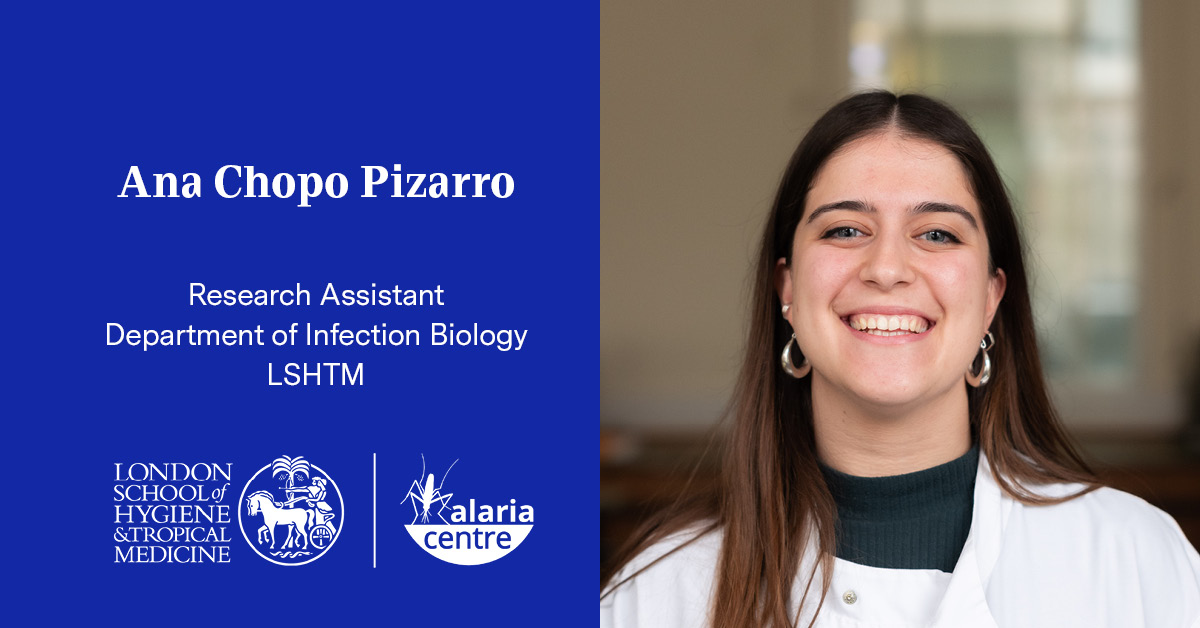
What is your role at LSHTM?
I am a Research Assistant in the Department of Infection Biology working with Associate Professor Khalid Beshir, Prof Cally Roper and Prof Colin Sutherland on a project called The Plus Project.
Tell us a bit about your current project.
Perennial malaria chemoprevention (PMC), formerly known as IPTi, is a strategy recently updated by the World Health Organization to protect infants from malaria infections contributing to the overall reduction of disease burden. To evaluate these guidelines, the Plus Project investigates the effect of PMC with sulfadoxine-pyrimethamine (SP) in seven African countries. The Plus Project is a partnership with Malaria Control Programmes to catalyse the implementation of PMC. There are many LSHTM researchers and other institutions involved in the project and our group’s main aim is to investigate the suitability of SP-PMC.
Why did you choose to work in malaria research?
I started working in malaria during my undergrad’s final project in 2019 at Barcelona’s Institute for Global Health (ISGlobal). I was part of the Malaria Immunology lab led by Dr. Carlota Dobaño working on a project to understand the cellular immune response to the booster dose of the RTS,S malaria vaccine in Mozambique. Subsequently, I worked on a Plasmodium vivax project in Antwerp with Dr Anna Rosanas. During the MSc of Immunology of Infectious Diseases at LSHTM, I reaffirmed my interest in malaria research. After working on a different project on lipidomics, I returned to the LSHTM to work on a malaria project.
What were your childhood aspirations?
I wanted to be an archaeologist because I was fascinated about discovering new civilizations (and probably because I loved Indiana Jones’ movies too).
Beyond work, what are your hobbies and interests?
I love doing outdoor activities, dancing, and watching and playing football.
Where do you see yourself in five years?
It’s hard to see myself in five years but I hope to have started a PhD, love what I do, and live somewhere near the sea.