
Written by Éimhín Ansbro, primary care physician and Assistant Professor at LSHTM
Non-communicable diseases (NCDs), such as cardiovascular disease, diabetes and cancer, are often overlooked in crisis settings. People spend on average 20 years as refugees, so crises often cast a long shadow on the health of affected populations, with repercussions for decades to come. Humanitarian crises disrupt access to care and medication, while exposing people to extremely stressful situations, therefore magnifying the risk of complications from existing chronic conditions. As a result, NCD deaths increase in crisis settings. Crises also amplify the interaction between chronic physical conditions and mental health conditions.
There is limited evidence and research funding around the extent of NCDs in these settings, the impact of care disruption, mental health impacts, and what effective NCD care would look like. Most humanitarian crises occur in low- and middle-income countries (LMICs), but COVID-19 and increasingly extreme climate events have demonstrated that no country is safe from emergencies.
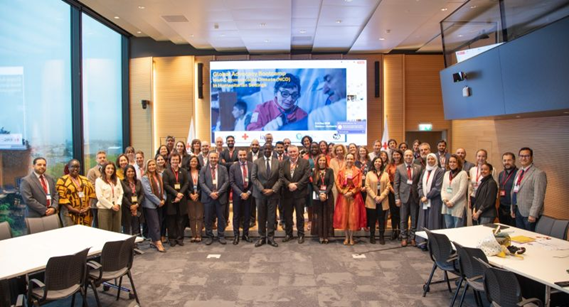
The United Nations 4th High-Level Meeting on the Control and Prevention of NCDs (HLM4), taking place in New York on 25 September 2025, is a key opportunity to mobilise countries to prioritise NCDs in their emergency preparedness and response plans. In preparation for HLM4, the International Federation of the Red Cross and Red Crescent Societies (IFRC) convened over 60 experts in Geneva in May 2025 to agree upon the urgent priorities for action on NCD prevention and control. Several LSHTM researchers were present, among other academics, policymakers, humanitarian actors, advocacy organisations and the WHO.
I led a commentary, published in The Lancet, which outlines seven priorities. Chiefly, that governments must uphold existing NCD commitments during and after humanitarian emergencies and mobilise long-term financing to support this. This includes reducing premature deaths from NCDs by one third by 2030. Co-authored by experts from IFRC, the International Alliance for Diabetes Action, and the Danish Red Cross, the commentary emphasises the need to break down siloes between NCD and mental health care, strengthen community-based care, ensure access to resilient primary healthcare, improve data on NCDs, and protect health workers and infrastructure. They underscored the crucial importance of integrating NCD and mental health care into all countries’ emergency preparedness, response and resilience activities.
Major challenges remain. Integrating NCDs into health system preparedness will require radical reorientation towards people-centred primary healthcare and reform of policy, legislation, health system infrastructure and training. Such reform requires long-term political commitment and financing. Access to affordable NCD medications and equipment is extremely unequal globally. Data needed to deliver NCD care, for planning and advocacy, are sparse. Until chronic conditions are fully embedded in health information systems and emergency assessment tools, guidance and research, NCDs in emergencies will continue to be overlooked and underfunded.
During emergency response, NCDs compete with other health threats, as well as shelter and protection needs. The number of people needing humanitarian assistance is rising globally, but resources are shrinking due to recent cuts in overseas development assistance. Global drivers, such as widening inequality, the climate crisis, increasing targeting of civilians in conflicts, and worsening human rights violations act synergistically to worsen humanitarian crises and limit resilience. Many fragile and conflict-affected settings are caught in protracted or cyclical crises, which prevent recovery and health system strengthening. Additionally, the increasingly systematic destruction of health infrastructure, supply-chain blockades, and targeting of health personnel severely disrupts continuity of care. This must stop.
During the negotiations at HLM4 and beyond, governments and policy makers must not forget people living with NCDs in crises. Implementing these recommendations will support continuity of NCD care in crises, and will empower people with NCDs, their families, and communities to live healthier lives, whatever the emergency.
If you enjoyed this article and would like to build a career in global health, we offer a range of MSc programmes covering health and data, infectious and tropical diseases, population health, and public health and policy.
Available on campus or online, including flexible study that works around your work and home life, be part of a global community at the UK's no.1 public health university.