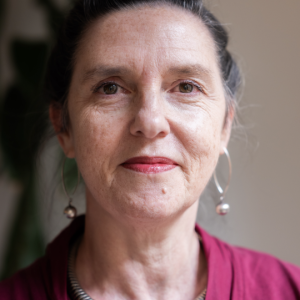
I have been working in public health since 1996 initially in community-based organisations supporting people living with HIV, then in the Department for Health supporting quality improvement of a range of services including mental health, sexual health and primary care services in England. In these various roles, I enjoyed being able to plan, evaluate and modify NHS and voluntary sector services, but had a yearning to contribute to the development of global public health. This led me to enrol on the Reproductive and Sexual Health Research MSc at LSHTM in 2001 which enabled me to shift my attention from HIV advocacy and service delivery to focus on research – although my passion and commitment for advocacy and improving service delivery have remained as core foundations of my research.
While working at the University of KwaZulu Natal in South Africa and subsequently the MRC Clinical Trials Unit at UCL, I was an investigator on a range of HIV prevention trials of vaginal microbicides (MDP301), oral pre-exposure prophylaxis (PROUD) and HIV self-testing (SELPHI. I joined LSHTM in 2017 as co-research director of the DFID funded STRIVE Research Consortium (https://strive.lshtm.ac.uk). The STRIVE consortium aimed to deliver new evidence, together with a synthesis of existing evidence, on individual and interrelated structural drivers of HIV, pathways of risk and infection, effective measurement tools of structural drivers, and evaluation of structural interventions. We undertook a range of qualitative, observaitional and experiemental studies exploring structural drivers of HIV, including gender inequalities and violence, harmful social norms, stigma and discrimination, lack of livelihood options and alcohol availability and harmful drinking norms.
Between 2019-2023 I led the Sustainable Development Goals Health and Wellbeing consortium (SDG-HaW) designing community health and wellbeing programmes to tackle SDG 3 targets prioritised by stakeholders in mining communities in Botswana, South Africa, Zimbabwe, Brazil, Chile, Peru, Australia, Canda and the UK. We developed interventions to improve HIV prevention and treatment, sexual and reproductive health services, mental health, alcohol and substance use and non-communicable diseases (https://www.lshtm.ac.uk/research/centres-projects-groups/sdg-haw).
From 2020 to the end of 2024, I was lead investigator for LSHTM on the EDCTP funded UPTAKE study which aimed to use qualitative and behavioural economic research methods to determine the factors that will influence the uptake of long acting and multipurpose HIV prevention technologies among adolescent girls and young women and women engaged in selling sex in Nairobi and Kampala (https://www.uptakestudy.org). The study included formative qualitative research with end users and key informants, cross sectional behavioural and preference studies, and a longitudinal study designed to improve the uptake of oral PrEP and long acting reversible contracpetives.
Over the last few years, I have also led a UNAIDS funded study to support the Myanmar Ministry of Health to develop a PrEP intervention for people who inject drugs (with Lucy Platt), and worked will colleagues on a number of HIV related health economic studies including the development of UNAIDS costing and budgeting guidelines for community-led HIV responses (led by Pitchaya Peach Indravudh), a health economics research strategy for bnAbs for HIV prevention (led by Sergio Torres Rueda) and cost effectiveness modelling of future HIV and multipurpose prevention technologies (led by Fiammetta Bozzani).
I am particularly interested in enhancing methods to improve the evaluation of complex public health interentions and up to September 2025 was co-Director of the Centre for Evaluation with Lucy Platt (https://www.lshtm.ac.uk/research/centres/centre-evaluation).
Affiliations
Centres
Teaching
I am co-director of the Doctorate of Public Health (DrPH) programme, with Joanna Schellenberg. You can find out more about the DrPH here: https://www.lshtm.ac.uk/study/courses/research-degrees/drph
I am module co-organise of the Sexual Health module, with Pippa Grenfell and Nour Horanieh. This module is compulsory for students enrolled on the Reproductive and Sexual Health Research (RSHR) MSc and is elective for students enrolled on other MSc programmes. In addition, the Sexual Health module is available as a standalone module for people not enrolled at LSHTM (https://www.lshtm.ac.uk/study/courses/modules/intensive-modules). On this module I lecture on the role of strutural interventions to improve sexual health and the evaluation of sexual health interventions. I am a member of the RSHR MSc programme committee and exam board.
I lecture on the online Sexual and Reproductive Health and Rights module which in a compulsory module for students enrolled on the joint LSHTM and University of Ghana Sexual and Reproductive Health Policy and Programming (SRHPP) MSc. I also lecture on external MSc programmes on a range of topics related to HIV prevention, structural interventions, process and impact evaluation, mixed methods research, and participatory approaches.
I tutor MSc students, usually enrolled on the RSHR, Public Health or Public Health for Global Practice MSc's, and supervise 3-5 MSc summer projects per year. Where appropriate, I suport students to translate their project reports for publication.
I am currently supervising 3 Research Degree students undertaking PhDs and DrPHs focusing on a range of topics but with a particular focus on sexual heatlh.
Research
I am a social scientist and focus on conducting qualitative, quantitative and mixed methods research. I am particularly interested in methodological research related to mixed methods, participatory approaches, and the design and evaluation of complex interventions. I am passionate about theory driven evaluation and promote the co-design of Theories of Change as part of intervention design and evaluation.
My research interests include HIV prevention, mental health and wellbeing, alcohol and other substance use including the sexualised use of drugs, and gender based violence. Nowadays, I tend to focus on prevention research, and structural or combination interventions. We have made great progress in expanding the HIV prevention options available over the last 20 years and I am passionate about implementation research that focuses on embedding what we know works, into policy and practice. This includes programme science approaches that can embed an evaluation approach into health programmes to improve and enhance delivery to meet the needs of end users.
Most of my research tends for focus on the needs of vulnerable and key populations and spans high, medium and low income settings.
In collaboration with the Centre for Evaluation, I am increasingly interested in the use of AI technologies to enhance evaluations, particularly in the context of participatory approaches to evaluation.
Below I highlight four bodies of evidence that have been particularly influential in shaping research, policy and practice.
1) Evidence from PROUD directly influenced WHO recommendations and a pathway to NHS commissioning. In addition to our primary clinical paper, I led 8 social science manuscripts providing evidence of PrEP in relation to sexual behaviour, adherence, depression, psychosocial factors, intimate partner violence, chemsex, acceptability and an in-press paper on interpersonal communication.
2) Evidence from SELPHI informed WHO HIV self-testing guidelines and scale-up of self-testing in England. I co-authored 9 papers on study design, acceptability, acceptability among trans men and women, attitudes among Asian, Black and Latin American GBMSM, testing kit usability, role of social networks on self-testing, perceptions of potential harm, access to gender-affirming health-care, and a behaviour change model for self-testing.
3) By synthesising evidence on structural and behavioural factors, I have provided foundational references for academics and policy makers. I have co-authored 8 literature reviews in the last 6 years on structural drivers of HIV among young people, PrEP adherence, chemsex behaviours, risks and benefit of chemsex , alcohol use among sex workers in LMICs, compartmental HIV prevention modelling, cost effectiveness of prevention interventions, and an in-press paper on substance use among sex workers in LMIC’s.
4) Across my research portfolio, I have generated evidence-based frameworks, methods and approaches informing how researchers, policymakers and practitioners conceptualise a range of global health issues. These contributions include gender sensitive product introduction, acceptability of novel technologies, adherence to innovative technologies, choice experiments to improve equity in product access, improving accuracy of self-reported data, methods and models of patient and public involvement, critiquing evidence-based policy making, decolonising implementation science, and recently proposing methodological frameworks to decolonising global health evaluations.
Selected Publications