New grant to investigate how Campylobacter survives and causes disease
5 January 2026 London School of Hygiene & Tropical Medicine London School of Hygiene & Tropical Medicine https://lshtm.ac.uk/themes/custom/lshtm/images/lshtm-logo-black.png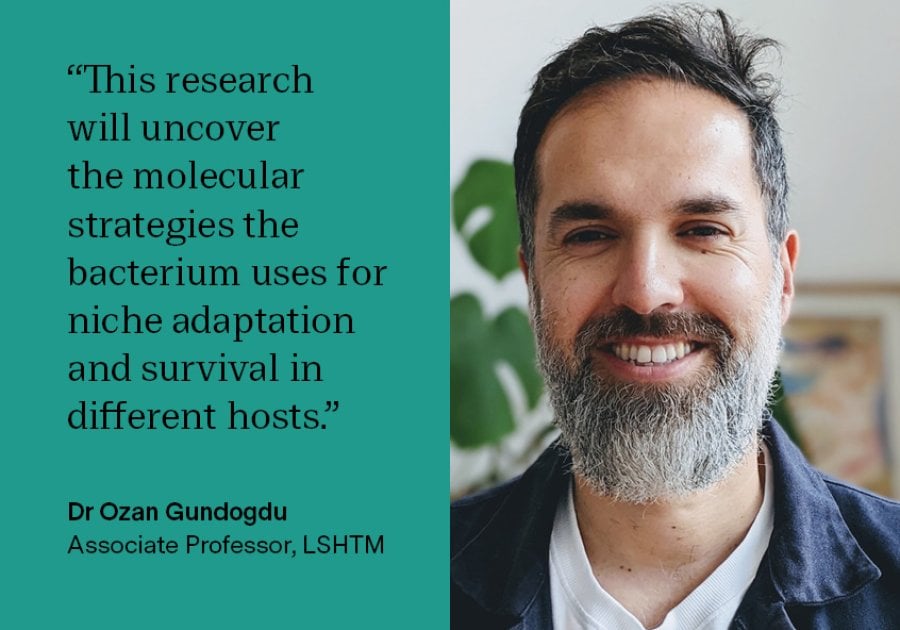
This follows a £850,000 award from the Biotechnology and Biological Sciences Research Council (BBSRC) through its responsive mode funding scheme.
Campylobacter is one of the four leading global causes of diarrhoeal disease. While the bacterium lives relatively harmlessly in the guts of poultry, ingestion of as few as 100 bacteria can cause severe illness in humans, including bloody diarrhoea, fever and abdominal pain. In low-resource settings, infections are particularly common among young children and are associated with high levels of morbidity and mortality.
The project will be led by Dr Ozan Gundogdu and his Enterics Research Team at LSHTM, with collaborators including Dr Ezra Aksoy at Queen Mary University of London (QMUL) and Professor Amirul Islam Mallick at the Indian Institute of Science Education and Research Kolkata (IISERK).
The rising threat of antimicrobial resistance (AMR) in Campylobacter highlights the urgent need for new approaches to prevent and control infection, particularly within the food chain.
Recent work by the LSHTM research team has identified that many disease-associated strains of Campylobacter jejuni possess a Type VI Secretion System (T6SS), a bacterial weapon used to inject toxic “effector” proteins into rival bacteria, giving Campylobacter a competitive advantage and supporting niche adaptation within complex gut environments.
This new project will investigate how the T6SS and its effectors function in both chicken and human gut settings, and how they influence bacterial competition, gut microbial communities and infection outcomes.
Dr Gundogdu said: “Despite its major public health impact, we still know relatively little about how Campylobacter causes disease compared to other gut pathogens. This research will uncover the molecular strategies the bacterium uses for niche adaptation and survival in different hosts.”
By understanding how these bacterial toxins work, we hope to support the development of new antimicrobials and vaccine targets that could reduce transmission through the food chain and improve health.”
If you enjoyed this article and would like to build a career in global health, we offer a range of MSc programmes covering health and data, infectious and tropical diseases, population health, and public health and policy.
Available on campus or online, including flexible study that works around your work and home life, be part of a global community at the UK's no.1 public health university.