How could school health check-ups improve adolescent health in Zimbabwe?
2 February 2026 London School of Hygiene & Tropical Medicine London School of Hygiene & Tropical Medicine https://lshtm.ac.uk/themes/custom/lshtm/images/lshtm-logo-black.png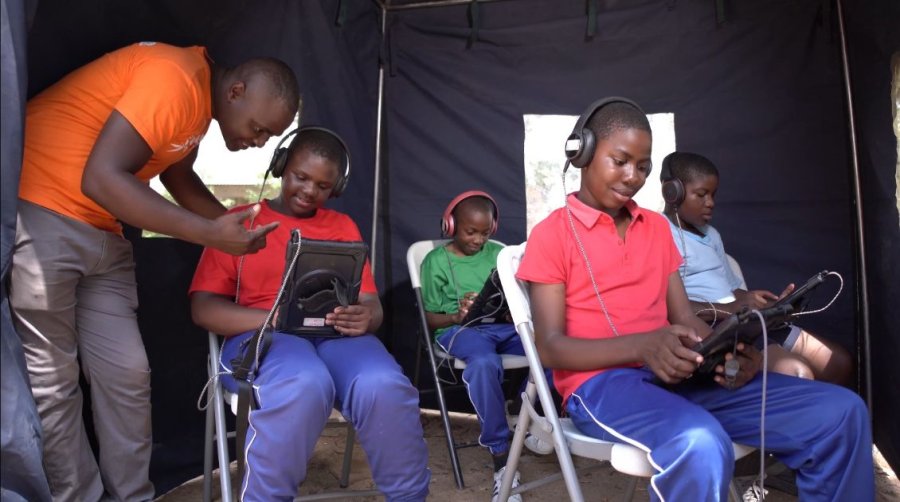
Adolescence is an important stage of life for shaping long term health and wellbeing. However, in many low- and middle- income countries, adolescents (young people between 10 and 19 years old) have limited access to healthcare services, especially services that focus on health promotion or disease prevention.
The World Health Organization is working closely with the London School of Hygiene & Tropical Medicine (LSHTM) to advance the evidence base on health check-up visits for adolescents to support the development of guidelines to strengthen school health services globally.
A new study, led by researchers at LSHTM and The Health Research Unit Zimbabwe (THRU ZIM), published in Nature Medicine looks at how practical it is to successfully implement health check-up services in school and community-based settings to promote engagement with healthcare services.
LSHTM’s Dr Aoife Doyle, Associate Professor, and Dr Farirai (Farrie) Nzvere, research degree student, discuss learnings from such an intervention – the Y-Check programme based in the city of Chitungwiza, Zimbabwe.
What is the Y-Check programme?
Dr Aoife Doyle:
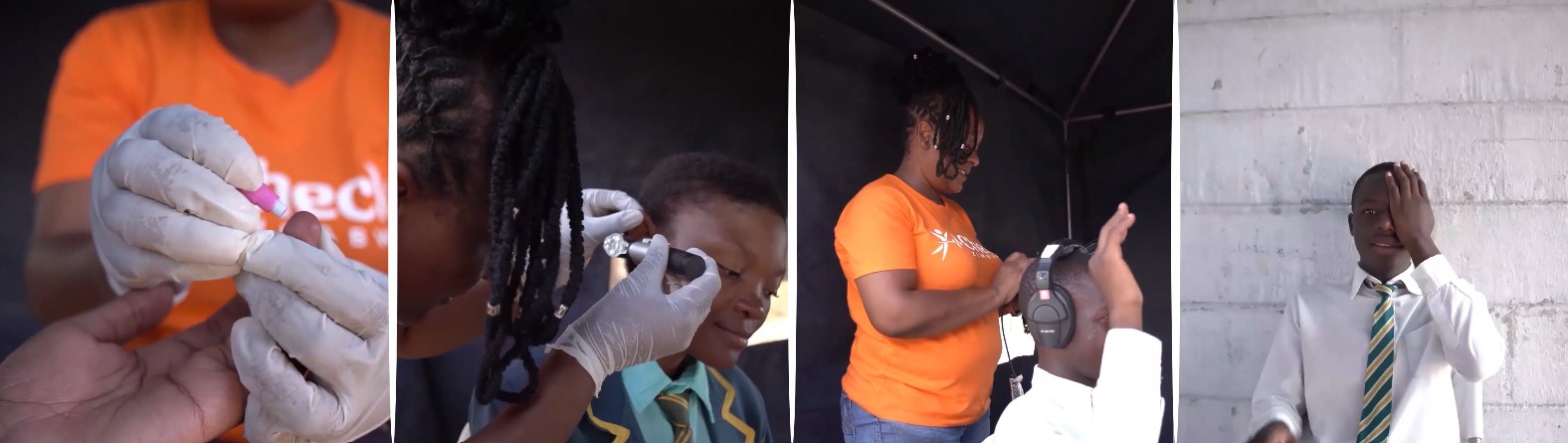
Y-Check, a multi-country study led by the World Health Organization, is a health check-up intervention for adolescents which strives to address the gap between adolescents and healthcare. The intervention involves screening young people for health conditions and offering health advice, on-the-spot treatment and, if required, referral to appropriate healthcare providers.
Many key health conditions and behaviours in adolescence can have negative impacts on other aspects of life, such as education, and can lead to more serious health issues later in life.
Interventions like Y-Check aim to improve health outcomes for adolescents, which will subsequently improve their adult health and wellbeing and the health of their children.
How was the intervention designed?
Dr Farirai Nzvere:
The intervention was designed to be delivered through easy-to-access facilities, such as the schools or community venues young people are already attending. Y-Check goes beyond what some existing school health screening programmes offer and looks at 25 high priority health issues, such as obesity and HIV, as well as risk behaviours like limited physical activity and poor oral hygiene.
We worked with technical experts in Tanzania, Ghana, Zimbabwe and Europe, along with young people, teachers and service providers to co-create the intervention. The inputs of local partners helped ensure its appropriateness for the adolescents we aimed to engage with and the context in which we were working.
Conditions that had accurate and affordable screening tests and locally accessible and affordable interventions were selected for the check-up programme.
In our study in Zimbabwe, over 2,000 adolescents in primary and secondary schools and community venues completed digital questionnaires and clinical tests to screen for health issues and risk behaviours.
What did your evaluation of Y-Check find?
Dr Farirai Nzvere:
9 out of 10 adolescents screened in the study in Zimbabwe had at least one untreated condition or risk behaviour and around 70% of participants who were identified as having at least one health issue received either on-the-spot care, or successfully attended a referral for further care. The most prevalent conditions were psychosocial issues, elevated blood pressure, common mental disorders, anaemia and oral health conditions.
Participants were followed up six months after the initial check-up. At this stage, we could see improvements in many clinical issues, such as a decrease in the number of underweight adolescents and lower rates of anaemia among 15-19 year olds.
We also observed improvements in other aspects of young people’s lives, such as educational outcomes where there were reductions in school days missed due to menstruation or illness, and psychological aspects where we saw an improvement in self-esteem.
Overall, we were able to show that it was possible to implement a check-up service that could screen for multiple issues and link participants with the care they required. We had a good uptake of the service, especially in primary schools, with participants in all settings rating it highly as a “youth-friendly” service.
Were there any challenges faced in rolling out this type of programme?
Dr Farirai Nzvere:
While our results are positive and show that those receiving Y-Check had improved health and educational outcomes, we did not see the expected changes for all conditions and outcomes.
Participation was high in primary schools and in community settings, but was lower in secondary schools. We found that the engagement and support of parents and teachers was key to the uptake of the service. Some parents of older adolescents were resistant to health interventions in schools and concerns around confidentiality or false rumours about the intervention did create some barriers.
Understanding this, we are continuing to work with partners to further refine the intervention ahead of a planned multi-country randomised controlled trial.
Now that you have identified the potential of the Y-Check programme, what happens next?
Dr Aoife Doyle:
Following on from the study in Zimbabwe, Y-Check was initiated in Cape Coast in Ghana and in Mwanza in Tanzania.
We are also pleased that there are already programmes in action. Health check-ups for adolescents, led by WHO and UNICEF and informed by the Y-Check programme, are now being implemented in other countries.
The findings from this study will inform upcoming WHO implementation guidance on check-up visits in adolescence, which will help to support adoption of interventions like these at a national level.
Globally, there are now more adolescents than ever before, and we must ensure that they have the support to lead happy, healthy and fulfilling lives. Interventions such as Y-Check bring us one step closer to addressing the comprehensive health and well-being needs of this important population.
Publication
Doyle, A.M., Nzvere, F., Manyau, S. et al. Implementation and evaluation of the Y-Check comprehensive adolescent health check-up intervention in Zimbabwe: a pre−post mixed-methods study. Nat Med (2026). https://doi.org/10.1038/s41591-025-04156-x
If you enjoyed this article and would like to build a career in global health, we offer a range of MSc programmes covering health and data, infectious and tropical diseases, population health, and public health and policy.
Available on campus or online, including flexible study that works around your work and home life, be part of a global community at the UK's no.1 public health university.