How conflict shapes Ebola outbreaks in eastern DRC
27 May 2026 London School of Hygiene & Tropical Medicine London School of Hygiene & Tropical Medicine https://lshtm.ac.uk/themes/custom/lshtm/images/lshtm-logo-black.png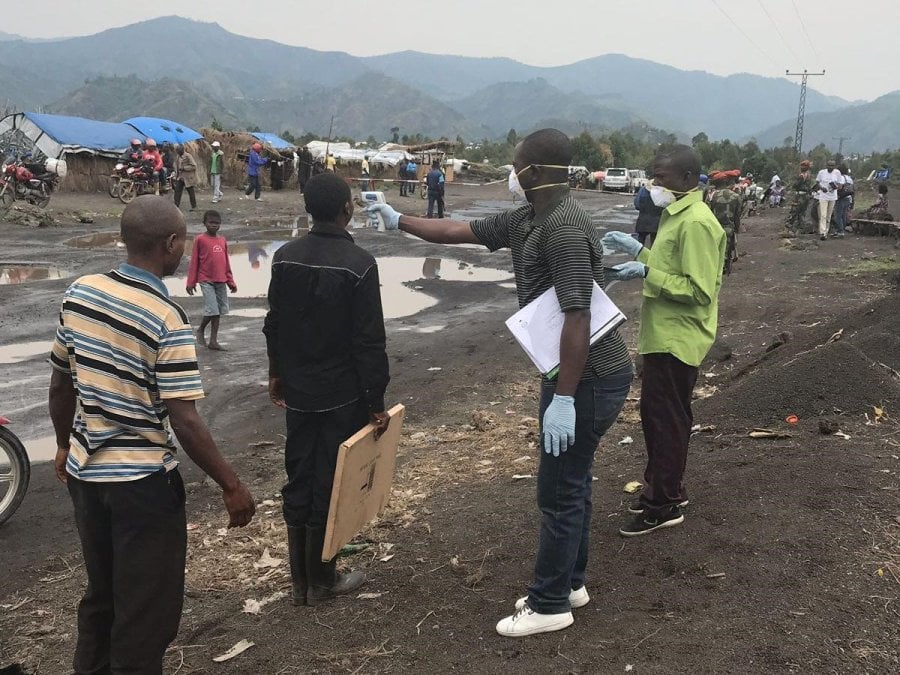
The latest Ebola outbreak in north-eastern Democratic Republic of Congo (DRC) is raising concerns across Central and East Africa. More than 900 suspected cases and 220 deaths have already been reported, mostly in DRC’s Ituri province, close to the borders with Uganda and South Sudan. Health experts warn that the true scale may be far greater, with the virus likely circulating undetected for weeks or even months before identification.
This outbreak involves the Bundibugyo strain of Ebola and is the largest documented outbreak of this strain to date. Unlike the Zaire strain, which has caused most major Ebola epidemics and for which vaccines exist, there is currently no approved vaccine for Bundibugyo Ebola.
A region shaped by conflict and high mobility
The outbreak is unfolding in a region shaped by decades of conflict, displacement and political instability.
Both Ituri and North Kivu provinces have experienced sustained intercommunal violence since 2017 alongside terrorist attacks. Parts of the region remain under the influence of armed groups involved in trafficking and extortion, with roadblocks disrupting movement and access to services. Health facilities have also been targeted by attacks, and food insecurity is widespread. As a result of this chronic instability, nearly one million people are displaced across the province.
People living in the borderlands spanning DRC, Uganda and South Sudan routinely cross between countries – often through informal routes – to maintain trade, social networks and livelihoods. This high level of regional connectivity can accelerate the spread of infectious disease. Population movement may also increase as people flee violence or seek to avoid areas perceived to be at risk from Ebola.
Pontiano Kaleebu, Professor of Virology and Head of Viral Pathogens research at MRC/UVRI and LSHTM Uganda Research Unit, said:
“The scale of movement between DRC, Uganda and South Sudan means Ebola preparedness cannot stop at national borders. Investments made since previous outbreaks in surveillance, laboratory capacity and regional coordination are critical, but these systems remain under pressure in settings affected by conflict and displacement.”
Why Ebola response is harder in conflict settings
Conflict creates major challenges for Ebola preparedness and response. Non-pharmaceutical interventions – including community engagement, active case finding, contact tracing, isolation of suspected cases and safe and dignified burials – remain the cornerstone of outbreak control. But these measures become significantly harder in insecure settings where violence, mistrust and misinformation are widespread. People living in overcrowded displacement sites, as well as people in caregiver roles – who are mainly women – are particularly vulnerable.
During the 2018–20 Ebola outbreak in eastern DRC, which caused more than 2,200 deaths, health workers faced repeated attacks on treatment centres and clinics. The World Health Organization reported dozens of violent incidents targeting healthcare staff and facilities. In some areas, aid organisations were forced to suspend operations entirely.
Anthropological research conducted alongside the EBOVAC vaccine trial conducted between 2020-21 in Goma during the COVID-19 pandemic found that mistrust and misinformation during outbreaks in DRC are deeply rooted in people’s experiences of conflict, political instability and unequal access to healthcare. During both Ebola and COVID-19 responses, many communities questioned why large amounts of international funding and resources appeared during epidemics, while local health systems remained chronically under-resourced. Some people viewed outbreak responses as benefiting political elites, foreign organisations or humanitarian actors more than local communities themselves.
Shelley Lees, Professor of Anthropology of Public Health at LSHTM, said:
“Effective Ebola surveillance and reporting depends on trust between communities and health authorities. That trust is built through sustained, meaningful community engagement. This is especially important, although more challenging, amid conflict, displacement and overlapping humanitarian crises experienced in eastern DRC.”
What has changed since previous outbreaks?
Despite these challenges, important lessons and investments have emerged from previous outbreaks. Capacity strengthening efforts across the region have focused on improving surveillance systems, cross-border coordination and community-based approaches to outbreak response. There is growing recognition that epidemic preparedness must go beyond emergency medical interventions alone.
Addressing the drivers of Ebola reemergence means tackling the wider conditions created by conflict and inequality. Displacement camps and overcrowded settlements often lack adequate water, sanitation and healthcare services, increasing vulnerability to infectious diseases. Humanitarian and public health responses increasingly emphasise the importance of supporting peacebuilding efforts, strengthening local health systems and reducing stigma against marginalised populations such as refugees and internally displaced people.
Jennifer Palmer, Associate Professor at LSHTM, said:
“Our research tracking the use of community feedback since the 2018–20 Ebola outbreak in DRC shows that important lessons have been carried into subsequent responses to Ebola, mpox and cholera in the country. Experts helped institutionalise greater respect for engagement of communities who were key partners in controlling the 2025 Ebola outbreak in Bulape, Kasai region. The need to contextualise responses for different populations in different settings based on social science research was also a key feature of the mpox response.”
As the current outbreak evolves, experts stress that effective Ebola control in conflict-affected settings depends not only on medical expertise, but also on trust, long-term investment and sustained, respectful engagement with communities living through crisis.
If you enjoyed this article and would like to build a career in global health, we offer a range of MSc programmes covering health and data, infectious and tropical diseases, population health, and public health and policy.
Available on campus or online, including flexible study that works around your work and home life, be part of a global community at the UK's no.1 public health university.