Expert comment: Developing a systems approach to health misinformation
14 July 2026 London School of Hygiene & Tropical Medicine London School of Hygiene & Tropical Medicine https://lshtm.ac.uk/themes/custom/lshtm/images/lshtm-logo-black.png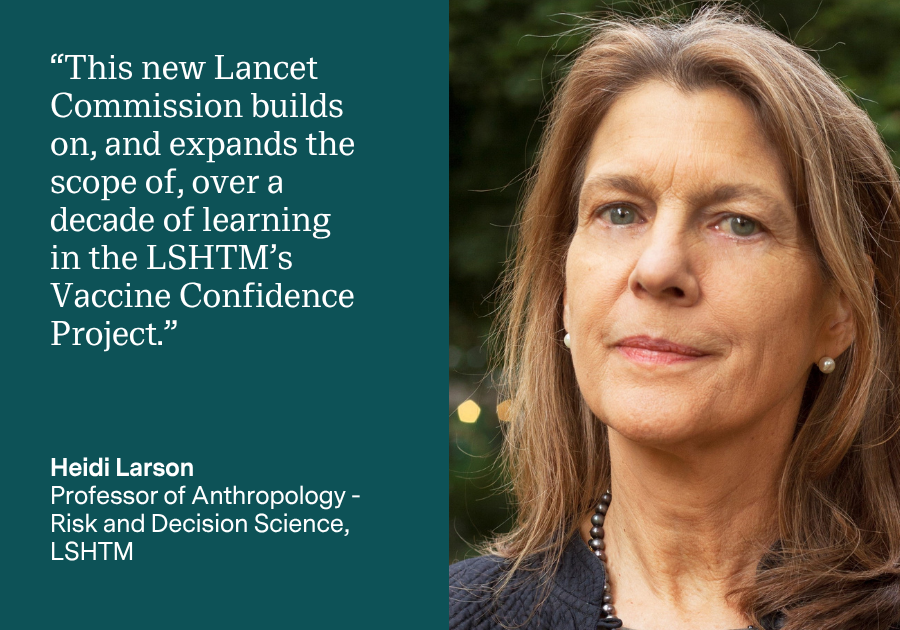
The new ‘Lancet Commission on rethinking misinformation, health, and human security’, launched on 27 June 2026, aims to analyse the ways in which misinformation and disinformation affect health. It will examine the mechanisms and pathways through which misinformation interacts with factors such as trust and distrust, and how they disrupt research, undermine trust in science and health, and impact on health outcomes.
Professor Heidi Larson, Director of the Vaccine Confidence Project at the London School of Hygiene & Tropical Medicine (LSHTM), will co-lead the new Commission. She said: “What is often referred to as “misinformation” is more complex than being merely an information issue. It recognises that information lives in and is driven by a complex web of personal and collective beliefs and emotions, political persuasions, individual and community histories, and motivations and needs a system approach to have any substantial impact on reducing the risks and harms.
“The Commission recognises that many of the narratives which are undermining trust in science and medicine, and impacting human security, are manipulating emotions, instilling fear, leveraging underlying anxieties, and polarising society. Sometimes what is termed misinformation is actually a real, albeit small, risk that has been distorted and amplified to seem much bigger risks than what they are.
“The framing of misinformation as largely an information issue has led public health communication in a direction that has sometimes harmed the relationships it needs to strengthen, by missing these critical factors. Sometimes multiple uncoordinated messages create confusion that communities view as inconsistency. Delayed institutional responses when things are going wrong, because scientific and health institutions err towards being cautious, appear to the public as being evasive.
“This new Lancet Commission builds on, and expands the scope of, over a decade of learning in the LSHTM’s Vaccine Confidence Project, which has been investigating the roots of vaccine hesitancy and refusals globally, unravelling histories, grievances, hopes and opportunities in its work. The Vaccine Confidence Project also developed the Vaccine Confidence Index which has become the only global measure of changing vaccine confidence over time and helped to anticipate communities and geographies particularly vulnerable trust and susceptibility to misinformation.
“The new Commission will draw on transdisciplinary evidence from other misinformation-vulnerable domains – including climate and counter-radicalisation. It will examine the motivations (profit, political, alternative health beliefs) and mechanisms through which misinformation has undermined, disrupted, or led to the suspension of clinical trials and impacted uptake of health interventions. Finally it will identify practical strategies to strengthen resilience, and assess novel approaches with particular attention to AI’s dual role as an accelerant of harmful narratives and as a tool for earlier detection and more targeted responses.”
If you enjoyed this article and would like to build a career in global health, we offer a range of MSc programmes covering health and data, infectious and tropical diseases, population health, and public health and policy.
Available on campus or online, including flexible study that works around your work and home life, be part of a global community at the UK's no.1 public health university.