Vaping at a young age may act as a gateway to smoking, review suggests
20 August 2025 London School of Hygiene & Tropical Medicine London School of Hygiene & Tropical Medicine https://lshtm.ac.uk/themes/custom/lshtm/images/lshtm-logo-black.png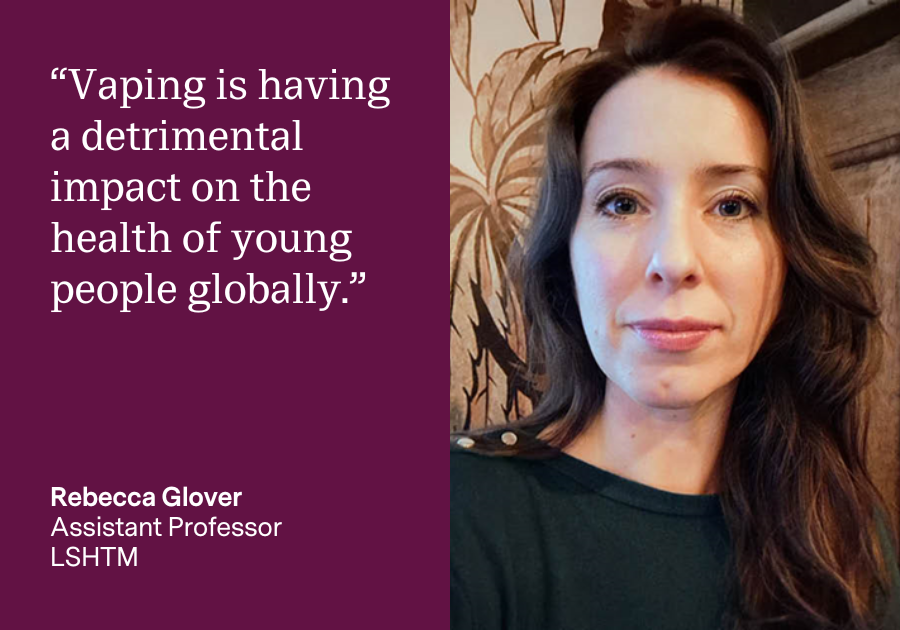
The largest review to date of research studies on vaping has found that teenagers and young adults who start using e-cigarettes may be around three times more likely to go on to smoke tobacco.
The study, led by researchers at the London School of Hygiene & Tropical Medicine (LSHTM) and the University of York, is the first review to focus on the full range of potential physical and mental health impacts of vaping on young people.
The finding are published in Tobacco Control.
There is ongoing concern about vaping’s harms in young people and whether the use of e-cigarettes may increase the uptake of tobacco smoking. In 2024, the US Center for Disease Control and Prevention (CDC) estimated that 5.9% of American middle- and high-school children currently use e-cigarettes. A survey of secondary school pupils conducted by the UK’s National Health Service (NHS) the same year, found that almost 1 in 10 children in the UK currently vape.
The researchers reviewed a total of 56 reviews conducted between 2016 and 2024 on the impacts of vaping in teenagers and young adults up to the age of 24. Data on vaping in adults over 24 were excluded from the analysis.
Of these, 21 systematic reviews conducted across 14 countries including the UK, USA and Canada, looked at the association between vaping in young people and subsequent tobacco smoking. Other studies also looked at a range of health harms including substance use, respiratory health conditions and possible effects on mental health.
The team’s analysis found that young people followed up between 4 to 24 months after they reported vaping, appeared to be around three times more likely to go on to smoke tobacco than those who had not used e-cigarettes previously.
They also found consistent associations between vaping and the use of other substances, including marijuana and alcohol, an increased risk of respiratory health issues, including cough and asthma, and poorer mental health. A range of studies also reported significant injuries sustained from failing e-cigarette devices.
The risks of vaping to young people’s health and follow-on tobacco smoking were broadly found to be consistent across populations in different countries, even when differences in age, sex and socioeconomic status were taken into account.
The study, commissioned by the UK government’s Department of Health and Social Care (DHSC), did not compare the health risks associated with e-cigarette use with tobacco smoking, or which factors may be influencing young people to start up vaping, such as marketing and advertising.
A limitation of the study was the lack of long-term research into the effects of vaping on health, compared with the extensive evidence already published on tobacco-related harms. The study adds to growing calls for more research into the impacts of nicotine addiction in young people.
Dr Greg Hartwell, Clinical Assistant Professor at the London School of Hygiene & Tropical Medicine and joint first author of the study, said: “Our review provides the most comprehensive picture to date on the range of risks vaping poses to young people. In particular, we found consistent evidence around transitions to smoking which of course, in turn, opens the door to the multitude of harms that conventional cigarettes bring.
“We know that the surge in youth vaping has been driven in part by the ready availability of disposable vapes. The UK Government’s ban on these is very welcome, but we’re already seeing the tobacco industry finding ways to circumvent this ban and continue to make vapes appealing to teenagers, a group who are particularly vulnerable to peer pressure and have a tendency towards risk-taking behaviours.
“As the UK government’s Chief Medical Officer states, marketing vapes to children is always unacceptable, and our review shows exactly why further restrictions on the tobacco industry, who control the vaping market, are so important.”
Dr Rebecca Glover, senior author of the study, Assistant Professor at LSHTM, and Deputy Director of the NIHR Public Health Policy Research Unit (PH-PRU), said: “To the best of our knowledge, our review of the current body of research on vaping is the largest of its kind.
“Our study didn’t compare the health impacts of vaping versus tobacco smoking, so we’re not saying that e-cigarettes cause less or more harm than conventional cigarettes. What we are saying, is that vaping is having a detrimental impact on the health of young people globally and vaping appears to be a gateway to other substances.
“Of particular surprise and concern to us, is that when these findings were adjusted for differences between countries, age, sex and socioeconomic status, the risks were still broadly the same. Our study provides the strongest evidence to date that young people globally face a serious range of physical and psychological harms from vaping and are at higher risk of transitioning to smoking.
“An ounce of prevention is worth a pound of cure: any regulations that aim to support a Smoke Free Generation should include vaping restrictions.”
Dr Su Golder, Associate Professor in Health Science at the University of York and joint first author of the study, said: “The consistency in the evidence from over 300 studies is striking, young people who use e-cigarettes are three times more likely to take up smoking cigarettes in the future. This is devasting given the promising public health success story for smoking.
“The negative impact on asthma and other respiratory outcomes also clearly shows e-cigarettes are physically harmful and is concerning given their uptake in such young people.”
Publication
Golder S, Hartwell G, Barnett LM et al. Vaping and harm in young people: umbrella review. Tobacco Control. DOI: 10.1136/tc-2024-059219.
If you enjoyed this article and would like to build a career in global health, we offer a range of MSc programmes covering health and data, infectious and tropical diseases, population health, and public health and policy.
Available on campus or online, including flexible study that works around your work and home life, be part of a global community at the UK's no.1 public health university.