Spotlight: Yoshiko Sakuma
23 October 2025 London School of Hygiene & Tropical Medicine London School of Hygiene & Tropical Medicine https://lshtm.ac.uk/themes/custom/lshtm/images/lshtm-logo-black.png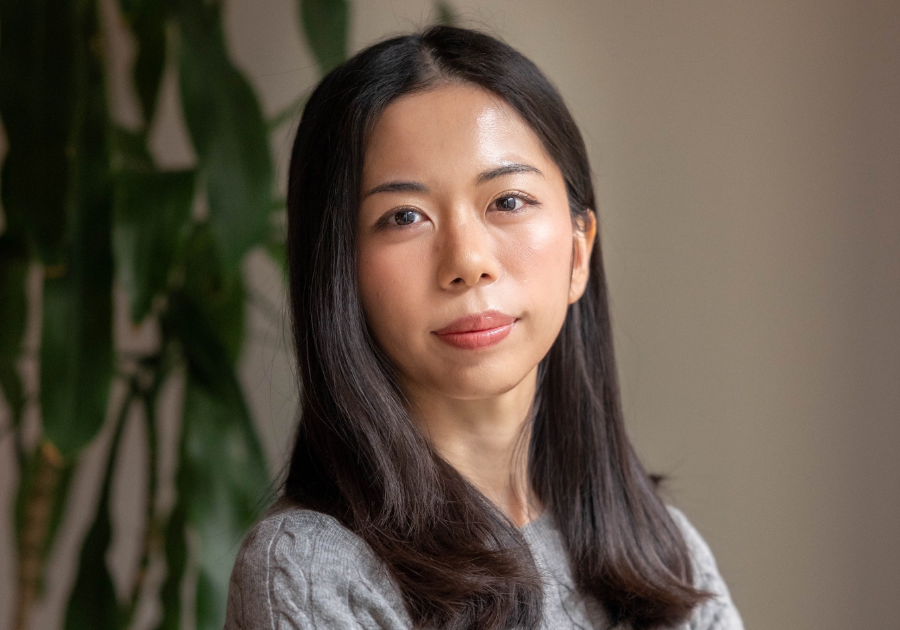
Tell us about your career journey, and why you decided to work at LSHTM
I am a physiotherapist by background; I worked at the only 24/7 tertiary emergency hospital in a medically underserved area with an ageing population—nearly 40–50% are over the age of 65. Patients often had to travel two to three hours just to get their care.
I first came to the UK in 2021 to pursue my master’s degree at Imperial College London to learn how we could create and implement more accessible models of healthcare to support the hospital for the underserved community.
Until I completed my master’s, I imagined myself working on the front line as a clinician with patients. But through my dissertation project (SHINE project), I found a spark in doing research - listening to people’s stories and exploring questions beyond what we were taught in school. Soon after, when I came across a Research Assistant position at LSHTM that used participatory approaches, I realised there could be a way to stay closely connected with communities while also building a career in research. That was when I decided to take a leap into the research world, even though I had no clear roadmap ahead.
How did you first become interested in your research into sexual and reproductive health among people with disabilities?
I have long been interested in disability, partly because of my close connection to it through my work as a physiotherapist and through caring for my grandmother. From the hospital bedside to the home, I have witnessed that anyone, regardless of who they are or where they live, could become disabled at some point in their life.
After completing my master’s degree, my first research project at LSHTM was the Sexual Health in Older Adults Research (SHOAR) study. At that point, I was still exploring which path I wanted to take in my life and career. The project’s focus on middle-aged and older adults (including those with disabilities) showed me how sexual and reproductive health and disability could intersect as a research field, and how much remained unexplored in that space.
That experience also brought me back to my days in the hospital, when a young woman in a critical condition once asked me: “Do you think that I can continue my relationship with a partner, and even have a baby in the future? Where should I go? Who can help me with this?” At the time, I did not have a clear answer for her. That was the moment when the dots finally connected for me.
You’ve started your PhD this September. Could you tell us about the focus of your research?
As part of the NU–LSHTM Joint PhD programme, my research will focus on improving access to cervical cancer screening for women with disabilities in both the UK and Japan, using participatory and community-driven approaches. This is an area that has been largely overlooked, even though women with disabilities are more likely to be diagnosed with and die from cervical cancer than those without, as highlighted by Prof. Kuper and colleagues at ICED.
How does your upcoming PhD studentship use evaluative methods?
My PhD research is about co-designing an intervention to improve access to cervical cancer screening for women with disabilities. For me, evaluation is not only about whether the intervention works, but also about how it is implemented, how women experience it, and how context shapes outcomes in different settings such as the UK and Japan. That is why being part of the Centre for Evaluation feels so important: it offers both the frameworks and the supportive community to carry this work forward. Hopefully, beyond my PhD, the project can move into its formal implementation phase.
You were also working on the SHOAR project, which recently won the Best Poster Presentation Award at the STI & HIV 2025 World Congress in Monteria. Could you tell us a bit more about this?
The poster was based on our work in the SHOAR project, where we organised a participatory designathon workshop (which is a time-based, three-stage participatory activity guided by design thinking) together with middle-aged and older adults, including people with disabilities. Instead of taking a traditional top-down research approach, we co-created the process with the very communities we wanted to learn from. What made the project special was that, even on a sensitive topic like sexual health for older people and those with disabilities, meaningful and successful research is possible when built in partnership with communities.
What impact do you hope your work will have in future?
When I explain that my research focuses on sexual and reproductive health among people with disabilities and among middle-aged and older adults, I am often told it sounds like a very ‘niche’ topic. But this is not a problem we can leave for others, as everyone is a candidate to be disabled. It is a compelling reminder of why this work needs to be done, and it motivates me to continue in this field. I hope our research can shine a brighter light on the field and help it receive the attention it deserves.
What’s your favourite thing about working at LSHTM?
What I love most about the LSHTM is always the people. From the researchers to the professional service staff, everyone is dedicated, professional, and genuinely supportive. It feels as if we are a family-like community where people from all over the world come together with a shared passion for tackling global health challenges. As an early-career researcher, I feel nurtured and encouraged at every moment of my work, which makes it such an exciting place to be.
What do you like to do outside of LSHTM?
Fifty-fifty between active pursuits and indoor pastimes. I love collecting fossils, scuba diving, reading (please pin your recommendations!), taking afternoon naps, and savouring good food.
How can we get in contact with you?
I usually work on the ground floor of TP2, and you can reach me either through my LSHTM email or via my personal website.
If you enjoyed this article and would like to build a career in global health, we offer a range of MSc programmes covering health and data, infectious and tropical diseases, population health, and public health and policy.
Available on campus or online, including flexible study that works around your work and home life, be part of a global community at the UK's no.1 public health university.