The PHASE Survey: Understanding HPV, STIs, and Antimicrobial Resistance in The Gambia
18 December 2025 London School of Hygiene & Tropical Medicine London School of Hygiene & Tropical Medicine https://lshtm.ac.uk/themes/custom/lshtm/images/lshtm-logo-black.png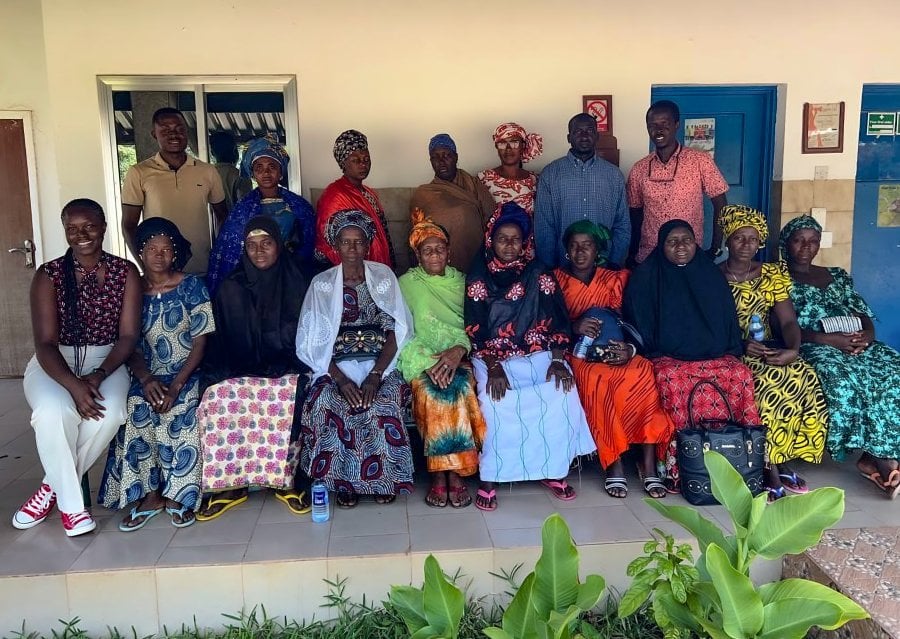
MRC Unit The Gambia at LSHTM is conducting a study on the Prevalence of Human papillomavirus (HPV), Antimicrobial resistance and Sexually transmitted infections Estimation (The PHASE survey protocol), an investigation into how common certain infections are among Gambian women, particularly human papillomavirus (HPV) the world’s most widespread sexually transmitted infection and the leading cause of cervical cancer.
Each year, cervical cancer claims the lives of hundreds of thousands of women worldwide, with majority of deaths occurring in low-income countries like The Gambia. This cancer is largely preventable through HPV vaccination, regular screening, and early treatment of pre-cancerous lesions. In 2019, The Gambia introduced the HPV vaccine Gardasil, which protects against HPV types 6, 11, 16, and 18. However, earlier studies in The Gambia suggest that HPV types 16, 32, and 52 are the most common locally. This mismatch highlights the urgent need for updated data to guide public health policies.
The PHASE survey was initiated to gather essential data on HPV and related infections among Gambian women. By filling this critical gap, the study will generate critical data to support the Gambian Ministry of Health strengthen vaccination, screening, and treatment strategies, ultimately improving women’s health outcomes.
To achieve its goals, the PHASE survey is recruiting participants in the Upper River Region, south bank, where a Health and Demographic Surveillance System (HDSS) is already in place. This system enables researchers to randomly select participants, ensuring results that reflect the wider population. In a multi-stage cluster survey design, 55 villages of different sizes and locations were randomly chosen. The goal is to survey more than 10,000 women aged 15–49 years, providing a robust picture of HPV and other sexually transmitted infections in The Gambia.
The survey’s main objective is to measure the prevalence of different HPV types among Gambian women. Some types can cause cervical cancer, while others don’t; understanding both is crucial. In addition to HPV testing, participants are asked about their health, sexual history, pregnancies, and prior cervical cancer screening. Samples are also tested for other infections, including hepatitis B, hepatitis C, HIV, chlamydia, syphilis, and gonorrhea. This will allow researchers to explore links between HPV and co-infections.
The study has already achieved key milestones. Survey activities were launched in February 2024, and the MRCG Basse laboratory was set up for HPV DNA molecular analysis in March 2024. More than 10,000 women have already been surveyed and their samples analysed locally, and 50 community sensitisation meetings have been held to build awareness. Remarkably, the survey deployed the use of digital data collection – Audio computer-assisted self-interview (ACASI) for collecting sexual behaviourinformation, the first time this tool will be used in The Gambia and at such a scale in West Africa and so far, have recorded more than 99% completion rate.
Professor Ed Clarke, Vaccines and Immunity, Theme lead and Principal Investigator of the project, stated: “This has been a major undertaking, and the development of tools needed to understand sensitive issues related to sexual behaviour has required detailed work with the communities involved. We thank them for their interest and participation. We hope the data generated will ultimately help us to combat cervical cancer and to more effectively treat other sexually transmitted infections in The Gambia and elsewhere in West Africa.”
According to Adedapo Bashorun, the Survey Coordinator, “The study will show how common HPV and other infections are among women in The Gambia, providing us with reliable data that has never been collected on such a large scale before.”
For the first time, all laboratory analyses for HPV have been conducted at the MRCG Basse laboratory. This achievement marks a significant step in strengthening local research capacity. Passing international HPV proficiency testing demonstrates the team’s ability to conduct world-class HPV research within The Gambia.
As the study advances toward its 2026 completion, it is already yielding valuable insights and is expected to provide critical evidence to guide vaccine policies, strengthen prevention programs, and ultimately lessen the burden of cervical cancer and other sexually transmitted infections in West Africa.
The PHASE survey is funded by UK Medical Research Council and Gates Foundation.
If you enjoyed this article and would like to build a career in global health, we offer a range of MSc programmes covering health and data, infectious and tropical diseases, population health, and public health and policy.
Available on campus or online, including flexible study that works around your work and home life, be part of a global community at the UK's no.1 public health university.