Expert Comment: WHO report shows rising antibiotic resistance in common bacteria
17 October 2025 London School of Hygiene & Tropical Medicine London School of Hygiene & Tropical Medicine https://lshtm.ac.uk/themes/custom/lshtm/images/lshtm-logo-black.png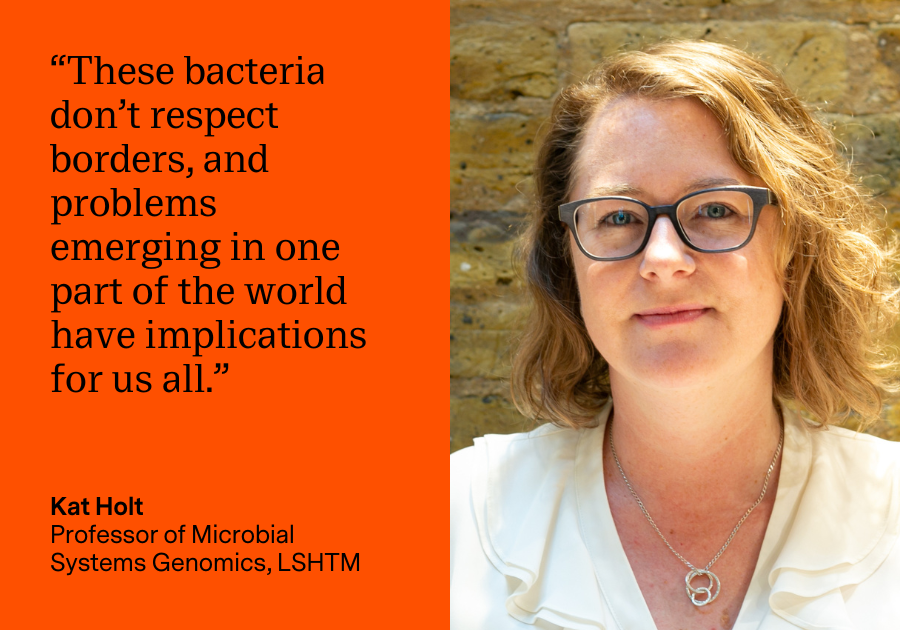
The latest WHO Global Antimicrobial Resistance and Use Surveillance System (GLASS) report reveals a sharp rise in antibiotic resistance in Escherichia coli and Klebsiella pneumoniae. These two bacteria, which commonly cause bloodstream, urinary tract and hospital-acquired infections, are becoming increasingly resistant to antibiotics that underpin modern medicine.
Antimicrobial resistance (AMR) develops when bacteria evolve to survive exposure to drugs used to kill them. In 2021, bacterial infections caused an estimated 7.7 million deaths worldwide. Drug resistance contributed to 4.71 million of these deaths, with 1.14 million directly attributed to AMR. The result is a worsening global health crisis, especially in regions where access to effective treatment remains limited.
According to the new GLASS data, one in six laboratory-confirmed bacterial infections in 2023 was resistant to antibiotics. Between 2018 and 2023, more than 40% of the antibiotic–pathogen combinations tracked by WHO showed increasing resistance, indicating that many frontline antibiotics are losing their effectiveness.
Globally, more than 40% of E. coli and over 55% of K. pneumoniae isolates are now resistant to third-generation cephalosporins, antibiotics that are a mainstay treatment for these infections. In the WHO African Region, resistance now exceeds 70%. E. coli and K. pneumoniae are among the leading AMR pathogens in bloodstream infections, conditions that can quickly progress to sepsis, organ failure and death.
Professor Kat Holt, the Co-Director of the AMR Centre and Professor of Microbial Systems Genomics at LSHTM, is an expert in pathogen genomic epidemiology, which includes using sequencing bacterial genomes to support AMR surveillance and to track the emergence and spread of AMR in Klebsiella and other pathogens. She leads the KlebNET Genomic Surveillance Platform and a team developing the AMRnet dashboard for genomic AMR surveillance.
She said: ”The latest GLASS data shows resistance to essential drugs remains worryingly high in Klebsiella and E. coli, and is increasing in many places. Sequencing the genomes of these microbes lets us peak underneath these headline resistance rates, and shows us that while each country has their own unique set of bacterial strains and genes that cause resistant infections, there are also some globe-trotting strains that have disseminated across continents including Africa, Asia, Europe and the Americas.
"These bacteria don’t respect borders, and problems emerging in one part of the world have implications for us all. This is one reason that global coordination is essential to tackle AMR.”
Globally, drug resistant K. pneumoniae is responsible for around a quarter of sepsis in newborns in Africa and Asia.
Professor Holt said: “In vulnerable newborns, prevention is much better than cure. Whilst new drugs or repurposed drugs have a role to play, we need to act right now to improve infection prevention and control in neonatal units in low-resource settings. Prevention through probiotics is another interesting possibility being explored.”
It has also been proposed that a maternal vaccine, given to pregnant women, might protect newborn babies against K. pneumoniae sepsis through antibodies passed to the baby via the placenta and through breastmilk. Professor Holt comments that such a vaccine “could prevent 80,000 newborn deaths, and over 100,000 doses of antibiotics, each year.”
Professor José Bengoechea, is Dean of the Faculty of Infectious and Tropical Diseases at LSHTM and an expert in Klebsiella pneumoniae researching how the bacterium evades the immune system and develops resistance to last-line antibiotics.
He said: “It remains one of the most pressing global health problems the rising number of infections resistant to several antibiotics. This makes challenging and in some health settings impossible to treat these infections. Currently, there are no compounds in late-stage development for treatment of resistant Klebsiella infections, making this pathogen exemplary of the mismatch between unmet medical needs and the current antimicrobial R&D pipeline.
"Worryingly, in the case of Klebsiella, there is evidence showing that the microbe is even becoming more competent to evade our defences. This makes it imperative to better understand the various Achilles heels of our defences, and thereby more precisely shore-up these vulnerable hot spots by novel treatments.”
If you enjoyed this article and would like to build a career in global health, we offer a range of MSc programmes covering health and data, infectious and tropical diseases, population health, and public health and policy.
Available on campus or online, including flexible study that works around your work and home life, be part of a global community at the UK's no.1 public health university.