World-wide trends in patterns of care and survival from cancer: VENUSCANCER and CONCORD-4
Updates from the largest projects to date on world-wide patterns of care for women’s cancers (VENUSCANCER) and on global trends in cancer survival (CONCORD-4).
This event is part of the London Global Cancer Week 2025. The session will focus on topics of interest to clinical professionals, researchers, and staff from cancer registries. Join us for an engaging discussion that promises to foster valuable insights and collaboration among experts in the field.
CONCORD is an ambitious global public health programme for the long-term surveillance of population-based cancer survival. In 2018, the third cycle of CONCORD (CONCORD-3) documented wide global differences in survival trends over the period 2000-2014, for most cancers in adults, and for brain tumours and haematological malignancies in children.
The VENUSCANCER project, embedded in the CONCORD programme, aims to examine whether global differences in survival for three of the most common cancers in women are attributable to differences in disease biology between populations, or patterns of care, or socio-economic status. Cancer registries were invited to submit data for a single year of complete incidence during 2015-2018, for which availability and completeness of high-resolution variables (e.g., stage, staging procedures, biomarkers, treatment) were highest. VENUSCANCER offered financial support to 11 registries in LMIC to enable collection of these data.
During this seminar, we will present key results from VENUSCANCER on indicators of consistency with clinical treatment guidelines and time to initial treatment, derived from over 250,000 anonymised individual records of women diagnosed with breast, cervical, or ovarian cancer during 2015-2018 in 39 countries. These results were recently published in The Lancet.
We will also present progress from the fourth cycle of the CONCORD programme, CONCORD-4, which has received anonymised individual data on over 95 million adults diagnosed with one of 22 cancers during 1990-2019 (accounting for 86-90% of the global cancer burden), and on over 600,000 children diagnosed with any cancer, from 381 population-based cancer registries in 75 countries world-wide. CONCORD-4 will examine 30-year trends in 5-year net survival for 22 cancers in adults, and all cancers in children.
Programme
- 13:00-13:05 Welcome and introduction
- 13:05-13:15 The VENUSCANCER project - Overview
Claudia Allemani, LSHTM
- 13:15-13:30 VENUSCANCER – World-wide patterns of care for breast cancer
Claudia Allemani, LSHTM
- 13:30-13:45 VENUSCANCER – World-wide patterns of care for ovarian cancer
Veronica Di Carlo, LSHTM
- 13:45-14:00 CONCORD-4 – World-wide trends in cancer survival, 1990-2019
Michel Coleman, LSHTM
- 14:00-14:30 Panel discussion
Chair: David Leon
Speakers
- Claudia Allemani, Professor in Global Public Health, LSHTM
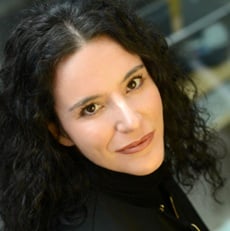
Claudia Allemani is Professor of Global Public Health at the London School of Hygiene and Tropical Medicine. She has over 20 years’ experience in international comparisons of trends in cancer survival, patterns of care (“high‐resolution” studies) and avoidable premature deaths, with focus on their impact on cancer policy. She leads the data management, quality control and survival analyses for the global surveillance of cancer survival trends (CONCORD Programme), for which she is co‐Principal Investigator.
In 2017, she obtained a prestigious European Research Council Consolidator grant to carry out a world‐wide study on inequalities in survival from cancers of the breast, cervix and ovary (VENUSCANCER). She collaborates with the Organisation for Economic Co-operation and Development (OECD) and with other international agencies, including the International Atomic Energy Agency (IAEA), the World Health Organisation (WHO), the US Centers for Disease Control and Prevention (CDC), the US National Cancer Institute (NCI), the American Cancer Society (ACS) and the French National Cancer Institute.
Claudia is co-Chair of the CONCORD-Lancet Global Commission on Cancer.
- Veronica Di Carlo, Research Fellow in Epidemiology, LSHTM
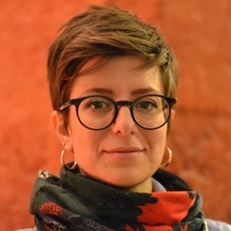
Veronica Di Carlo graduated in Economics and obtained a MSc in Statistics from the University of Bologna (Italy), followed by a PhD in Epidemiology and Population Health from the London School of Hygiene and Tropical Medicine, where she focused on global variation in population-based survival from malignant melanoma.
For the past ten years, she has been part of the Cancer Survival Group, contributing to the CONCORD programme for global surveillance of trends in cancer survival. She also works on the VENUSCANCER project, a high-resolution study aiming at explaining the reasons for world-wide disparities in survival for women's cancer. She is also involved in the modelling of life tables for countries participating in both CONCORD and VENUSCANCER.
- Michel Coleman, Professor of Epidemiology and Vital Statistics, LSHTM
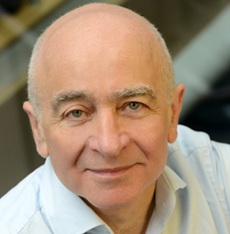
Michel Coleman qualified in medicine at Oxford, and practised in hospital medicine and general practice. He has been a Professor of Epidemiology and Vital Statistics at the London School of Hygiene and Tropical Medicine since 1995. He has worked for WHO at the International Agency for Research on Cancer in Lyon (1987-1991), and was the Medical Director of the Thames Cancer Registry in London (1991-1995).
He was the Deputy Chief Medical Statistician (Office for National Statistics) 1995-2004, and the Head of the WHO UK Collaborating Centre on the Classification of Diseases 1996-2004. He has published widely on cancer and public health. His main interests include trends in cancer incidence, mortality and survival, and the application of these tools to cancer control. He has been an advisor on cancer registration, cancer research and cancer control to governments in the several countries and to the European Union. He is the co-PI of the CONCORD programme and co-Chair of the CONCORD-Lancet Global Commission on Cancer.
Chair
- David Leon, Professor of Epidemiology, LSHTM
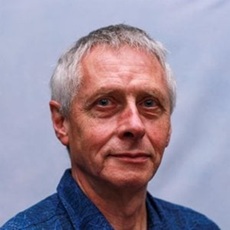
David Leon is a Professor of Epidemiology at the London School of Hygiene and Tropical Medicine.
My career in epidemiology began in the late 1970s when I was employed by a London Hospital to identify which bladder cancer patients they treated had been exposed to chemicals known to cause this malignancy and to also identify other unknown risk factors. Having a first degree in sociology and philosophy I quickly realised that I needed a new set of skills, which led me to visit LSHTM. Eventually in 1985 I joined LSHTM as a lecturer working on occupational cancer (the topic of my PhD) and also on socio-demographic differences in cancer incidence using a pioneering Census linkage project now known as the ONS Longitudinal Study. In the 1990s I set up and led a series of widely cited studies on the fetal origins of adult disease in Sweden. At the same time I became interested in health in the former communist countries of Europe. From the mid-1990s I started working on mortality and health in Russia drawn to the challenge of understanding why the collapse of the Soviet Union led to huge falls in life expectancy at the time. This work led me to establishing long-term creative collaborations at the interface of epidemiology and demography.
I have sat on and chaired numerous advisory and funding panels in the UK and elsewhere, and have been particularly involved with the work of UK Medical Research Council. I currently co-chair the LSHTM Ethics Committee and am Head of the Department of Non-Communicable Diseases Epidemiology.
Admission
Contact