Effects of nurse practitioners’ full practice authority on long-term care services
Examining whether granting nurse practitioners full practice authority affects long-term care utilisation.

Many U.S. states have granted nurse practitioners (NPs) the right to practice and prescribe drugs without physician oversight, increasing the number of independent primary care providers. While existing studies show that full practice authority (FPA) increases access to primary care, thereby reducing the use of hospital services, less is known about its impacts on long-term care services.
Using the Health and Retirement Study (HRS), we examine whether granting NPs full practice authority affects long-term care utilisation. Exploiting the staggered adoption of states’ Scope-of-Practice laws during 1998-2018, we find that NP full practice authority has no significant impacts on nursing home use but individuals living in states with no practice restriction are less likely to use home care services.
In FPA states, we find that individuals living in medically underserved areas experience a larger reduction in the use of long-term care services and inpatient care than the same individuals living in states with no primary care shortages. Regarding health outcomes, we find evidence that individuals living in states with FPA are less likely to report being in poor health and have fewer functional limitations.
These findings indicate that granting NPs full practice authority does not have any negative health consequences. This is also suggestive evidence that FPA can help improve population health in medically underserved areas and achieve cost-saving through reductions in costlier services.
Speaker
Professor Brenda Gannon
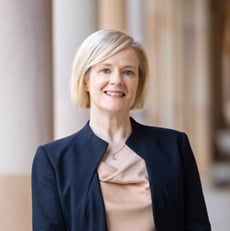
Brenda Gannon is a Professor in Health Economics at the University of Queensland, Australia. She is an Affiliate Professor at the Mater Research Institute, Brisbane and an Adjunct Professor at University of Galway, Ireland. She is an international interdisciplinary leader providing evidence and solutions for health and social care systems, spanning across economics, medicine and social science, in collaboration with academia and industry.
Working at the interface of health service delivery, strategic planning and practice influence, and health economics more broadly across many sectors enables her research to inform optimisation of health care and workforce organisation. Her work has been influential in the development of programs for falls preventions, informing policy on disability and social inclusion, and shaping healthcare funding and research strategy, and has positively impacted on the health of many older people across the world.
Her research is funded by her position as chief investigator on projects from the Australian Research Council, National Health and Medical Research Council, Medical Research Futures Fund, EU H2020, Health Research Board, Ireland and the National Institute for Health Research, UK, amounting to over $35 million. Brenda has provided advice to government at senior levels, and had a Ministerial appointment, on the Australian Medical Services Advisory Committee Evaluation Sub-Committee 2017-2021, influencing decisions on medical care rebates. She has been invited to give several talks at international fora, including a keynote talk on ageing and longevity at the National Academy of Medicine, Global Roadmap to Healthy Longevity, in Washington DC and to the World Health Organisation symposium on workforce.
Event notices
- Please note that you can join this event in person or you can join the session remotely
- Please note that this session will not be recorded
Admission
Contact